15 DIY Duck Pond Ideas for a Beautiful Backyard Habitat
Discover 15 DIY duck pond ideas for a beautiful backyard habitat that keeps your flock happy, healthy, and swimming in style.
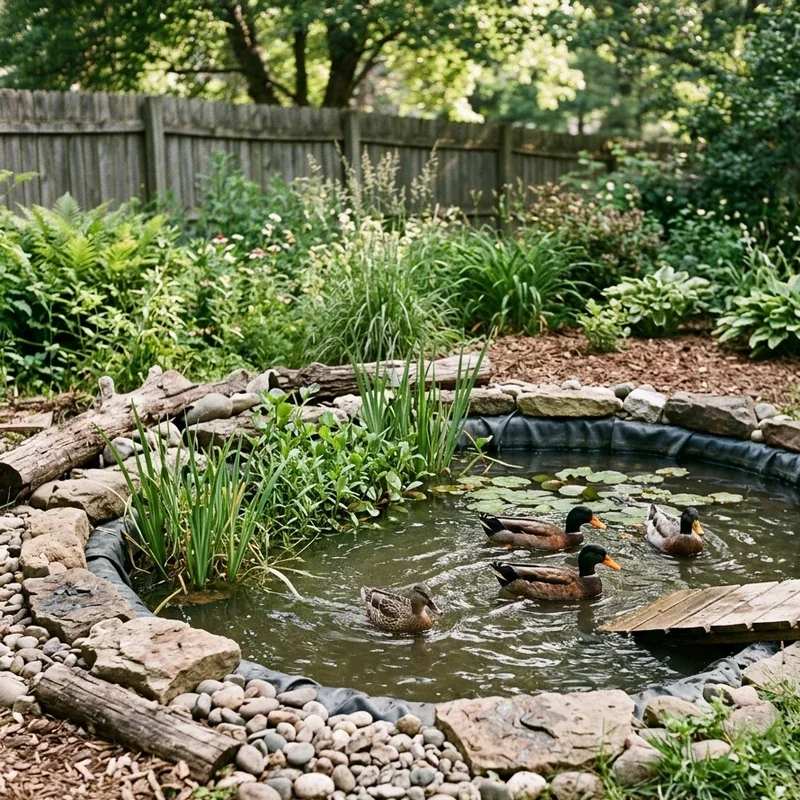
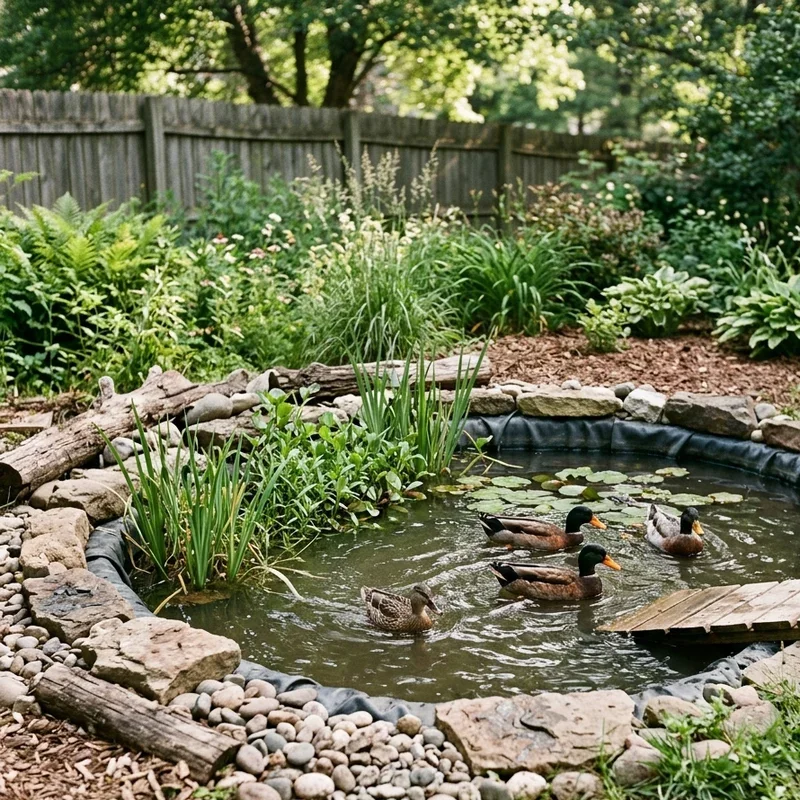
Building a duck pond in your backyard gives your feathered flock exactly what nature intended them to have, a personal swimming paradise where they splash, preen, forage, and thrive in ways that dry land living simply never allows. Have you ever watched ducks discover fresh water for the first time and witnessed that explosion of pure, unbridled joy as they dive headfirst into happiness? That moment alone makes every shovelful of dirt completely worthwhile. Think of a backyard duck pond as installing a luxury wellness center your ducks never knew they desperately needed until the water arrived. These fifteen DIY pond ideas create beautiful habitats any flock loves.
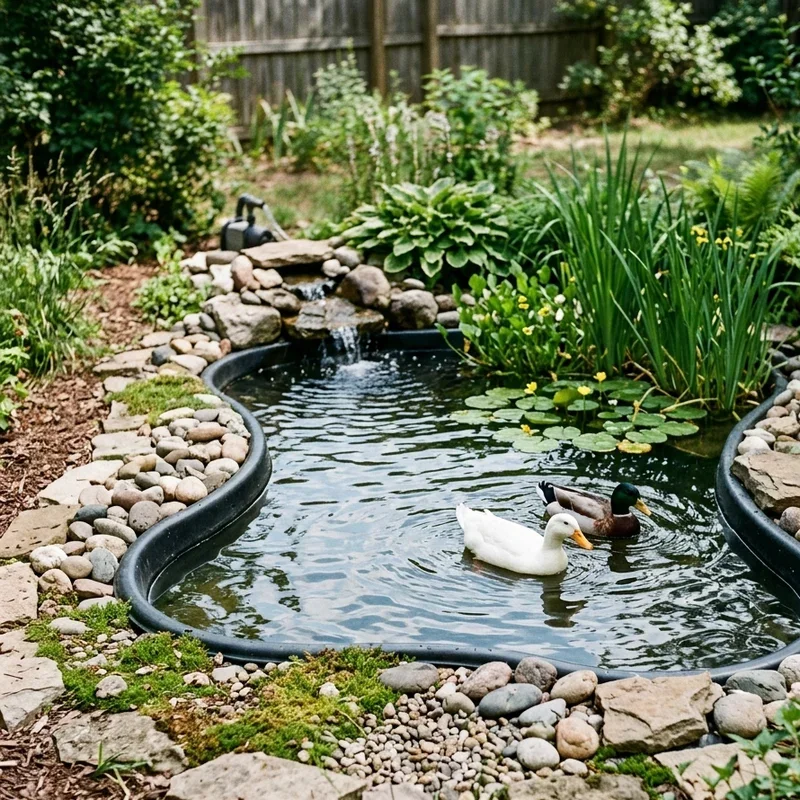
1. Preformed Plastic Liner Pond
A preformed plastic liner pond uses a rigid, factory-molded polyethylene shell that you simply dig a matching hole for and drop into the ground, creating an instant duck-ready water feature that eliminates the guesswork of custom liner shaping while providing a durable, leak-proof basin your flock starts enjoying the same afternoon you finish installing it. Preformed ponds work like buying a bathtub specifically designed for your backyard, the predetermined shape saving you from engineering decisions while the rigid walls prevent the shifting and wrinkling problems that flexible liners sometimes develop under heavy duck traffic. Choose kidney-shaped or oval models offering at least 150 liters of water capacity. Build a gradual stone ramp at one edge providing easy entry and exit access for ducks of all sizes.
2. Stock Tank Simple Swim Pond
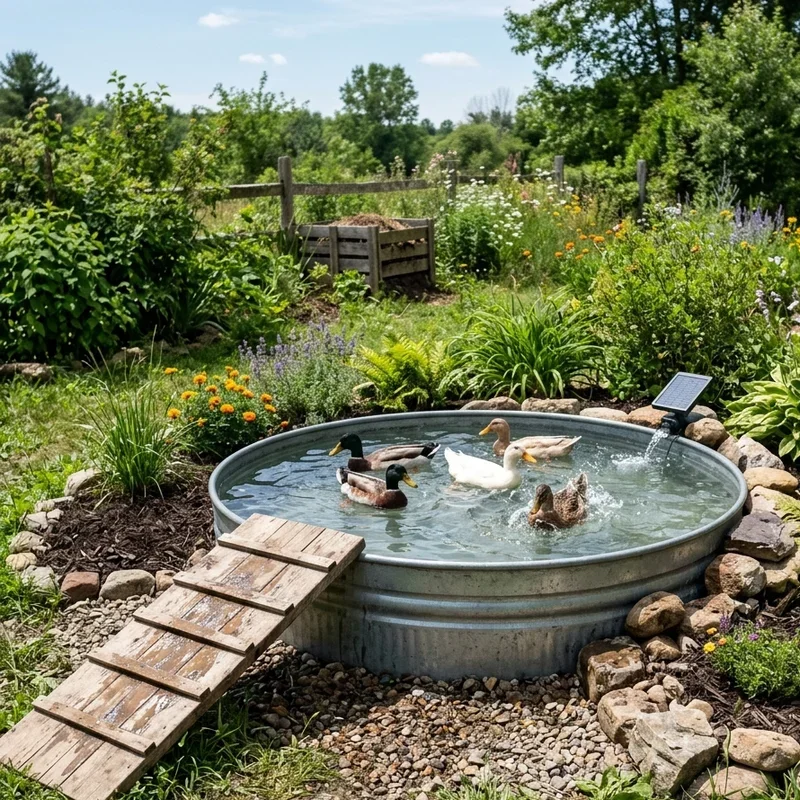
A stock tank simple swim pond repurposes a galvanized steel or heavy-duty plastic livestock watering tank into a ready-made duck swimming pool that requires zero digging, no liner installation, and minimal setup time while providing a deep, sturdy, portable water vessel your ducks treat like their own personal resort swimming pool immediately upon introduction. Stock tanks work like delivering a prefabricated duck paradise directly to your backyard on the back of a pickup truck, the industrial durability handling years of enthusiastic duck paddling without showing meaningful wear or structural fatigue. Select tanks between 300 and 600 liters for small to medium flocks. Install a simple drain plug at the bottom by drilling and fitting a threaded pipe coupling, making water changes dramatically faster and easier.
3. Natural Clay Bottom Pond Design
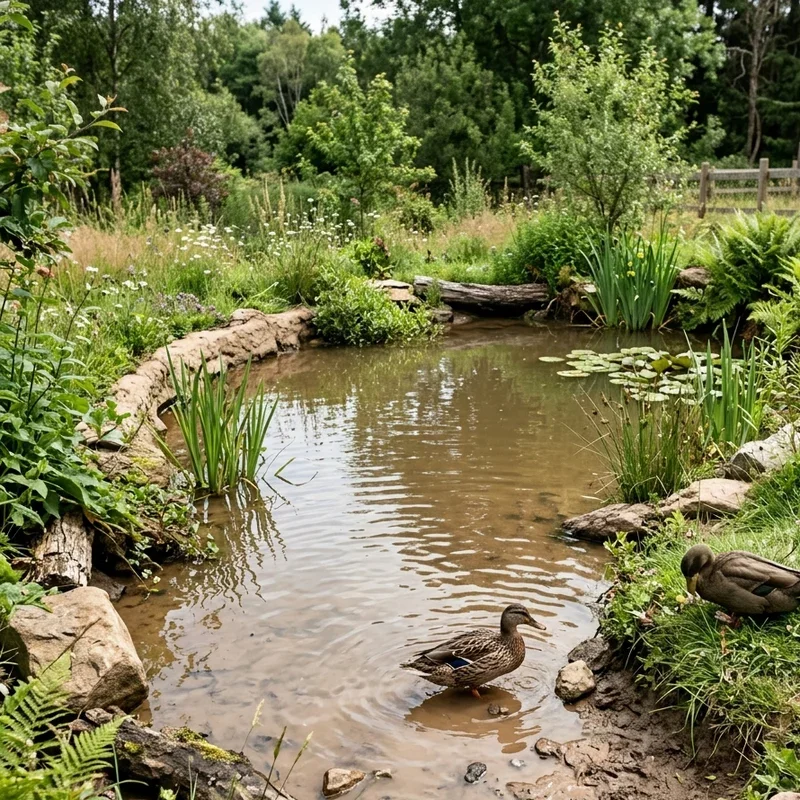
A natural clay bottom pond design excavates a depression in naturally clay-rich soil, compacts the base thoroughly using mechanical tamping, then fills with water that the impermeable clay layer retains naturally without any synthetic liners, creating the most authentically natural duck habitat possible using only the earth beneath your property. Clay bottom ponds work like discovering your backyard already contained the raw materials for a pond hiding just beneath the grass, the dense soil structure holding water the same way nature has constructed ponds for millions of years. Test your soil's clay content by forming a tight ball that holds shape when squeezed. Compact the excavated bottom using a plate compactor or heavy roller creating an impermeable seal that strengthens as the clay absorbs initial water saturation.
4. Kiddie Pool Quick Duck Bath
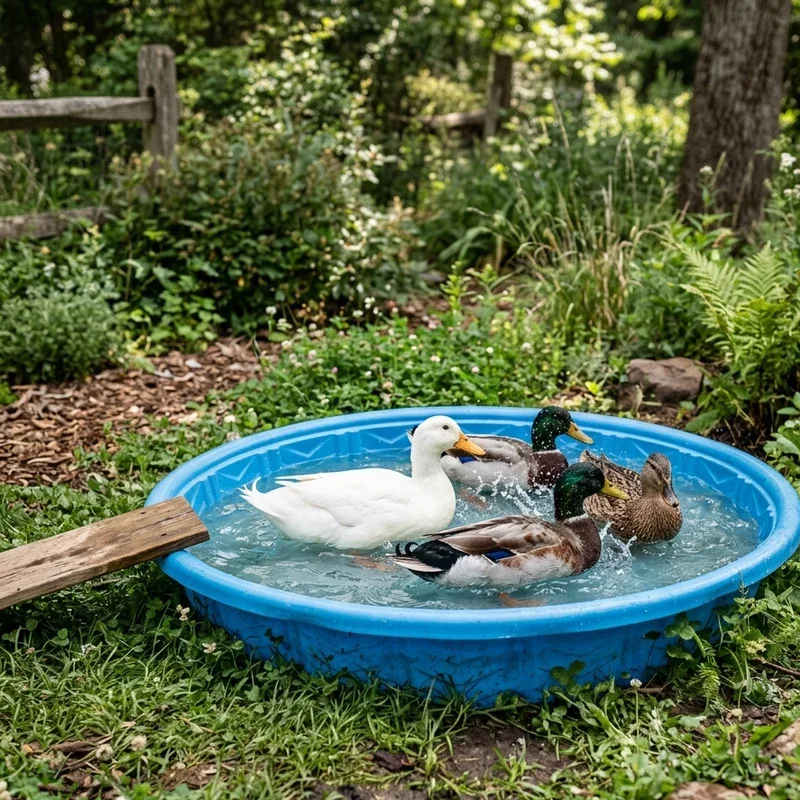
A kiddie pool quick duck bath provides an instant, ultra-affordable water source using a standard rigid plastic children's wading pool placed at ground level or slightly recessed into a shallow depression, giving small duck flocks immediate swimming access while you plan and build a more permanent pond solution during upcoming weekends. Kiddie pools work like booking your ducks into a temporary hotel while their dream house gets built, the cheap plastic shell providing essential water access that keeps your flock healthy and happy during the transition period before their real pond arrives. Replace water daily since kiddie pools lack filtration or drainage systems. Position the pool on level ground near a drainage area where daily dumping and refilling causes minimal mud accumulation around the surrounding yard space.
5. Buried Bathtub Recessed Pond
A buried bathtub recessed pond gives an old cast iron or steel bathtub a second career by burying it to ground level in your duck yard, the existing drain hole providing built-in water drainage while the tub's generous depth and smooth interior surfaces create a surprisingly functional duck swimming vessel recycled from household renovation waste. Buried bathtubs work like performing the ultimate upcycling magic trick, transforming bathroom demolition debris into a perfectly functional duck pond that cost absolutely nothing beyond the effort of digging a rectangular hole in your backyard. Excavate a hole matching the tub dimensions plus ten centimeters on each side for backfill. Connect a garden hose to the drain fitting running to a nearby garden bed where nutrient-rich duck water irrigates plants naturally.
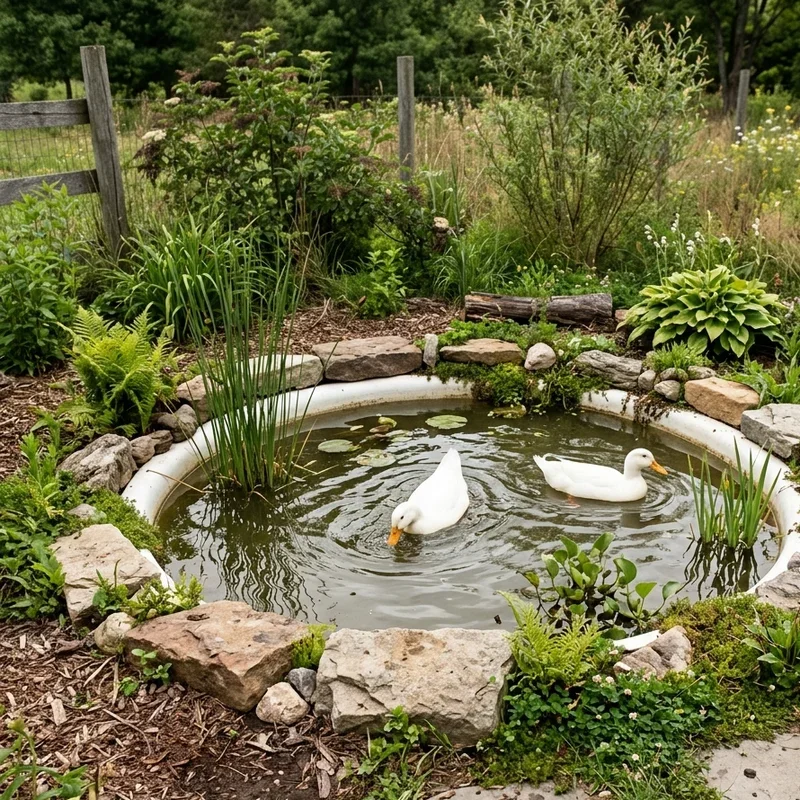
6. EPDM Rubber Liner Custom Pond
An EPDM rubber liner custom pond uses a flexible synthetic rubber membrane laid across an excavated hole of any custom shape and depth, conforming perfectly to whatever creative pond design you imagine while providing a waterproof barrier rated to last over twenty years under constant UV exposure and temperature fluctuation. EPDM liner ponds work like tailoring a custom waterproof suit for whatever hole you dig, the flexible material adapting to your exact vision rather than forcing your design into a predetermined factory shape like rigid preformed alternatives demand. Calculate liner dimensions by adding twice the maximum depth plus thirty centimeters overlap to both length and width measurements. Layer protective underlay fabric beneath the liner preventing sharp stones and roots from puncturing the rubber membrane over time.
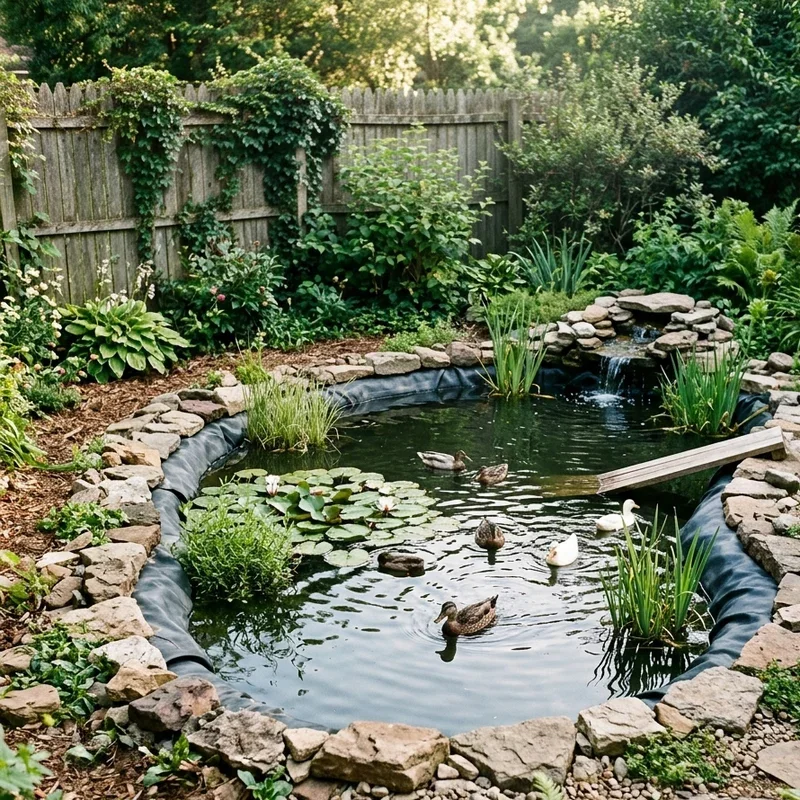
7. Tiered Waterfall Duck Pond System
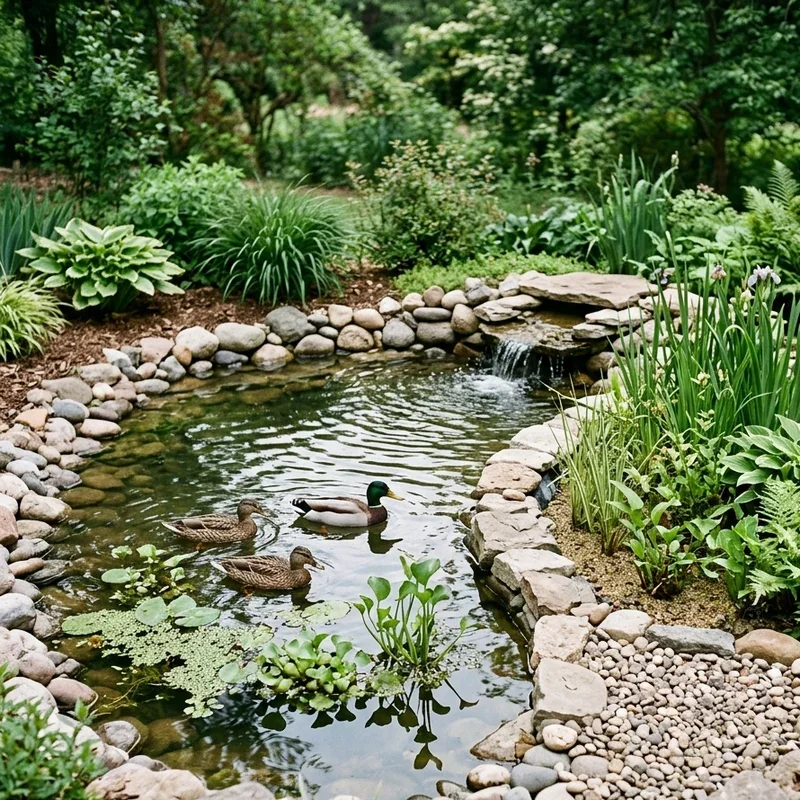
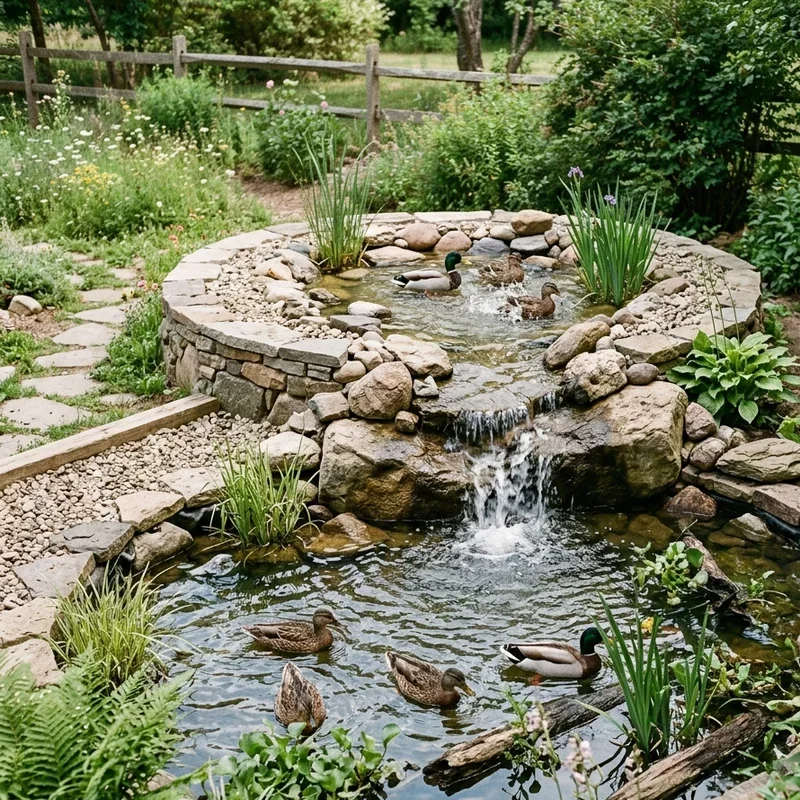
A tiered waterfall duck pond system creates a multi-level water feature where a pump circulates water upward to a higher basin that cascades down natural-looking rock formations into the main swimming pond below, providing continuous water movement, natural aeration, and the beautiful sound of flowing water that enhances your entire backyard atmosphere. Waterfall ponds work like installing a mountain stream inside your property boundary, the falling water oxygenating the pond naturally while creating an entrancing visual and auditory experience that benefits both ducks and the humans watching them paddle contentedly below the cascade. Use a submersible pump rated for your pond volume cycling the entire water capacity at least once hourly. Stack flat flagstone or natural boulders creating spillway ledges that spread water evenly across a wide cascade face.
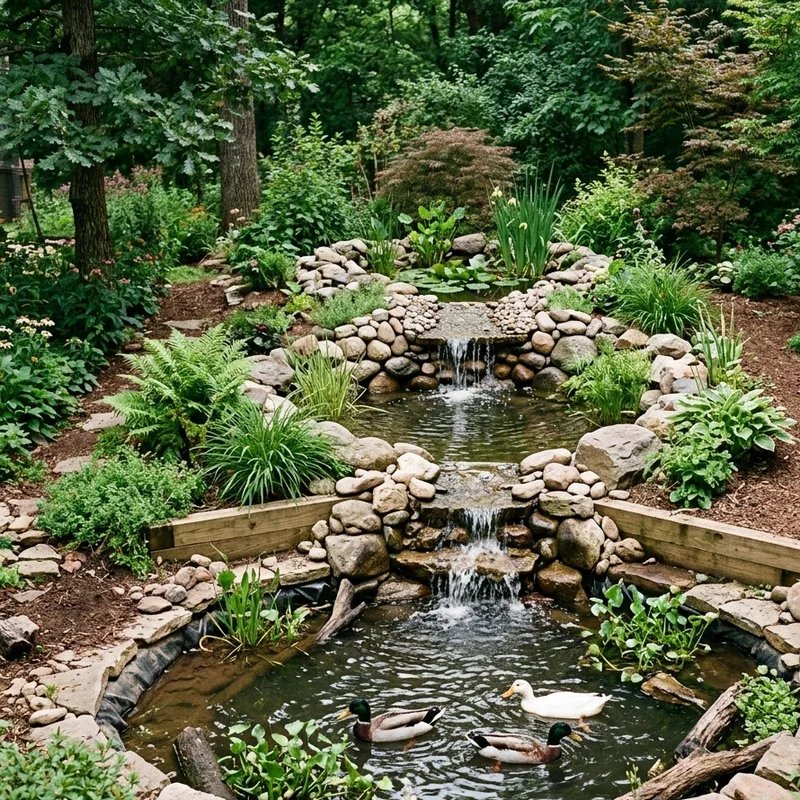
8. Rain Barrel Fed Gravity Pond
A rain barrel fed gravity pond positions elevated rain collection barrels above the pond level, capturing rooftop rainwater through gutter downspout diversions and releasing it into the duck pond through gravity-fed pipes, reducing municipal water consumption while providing your flock with chemical-free, naturally soft rainwater your ducks instinctively prefer. Rain barrel systems work like hiring the sky itself as your personal pond filling service, every rainstorm automatically topping off water levels without you lifting a finger or turning a single faucet handle outdoors. Install barrels on elevated platforms or hillside positions ensuring adequate gravitational pressure for steady flow rates. Connect overflow pipes between multiple barrels creating a cascading collection system that maximizes water capture during heavy rainfall events benefiting your duck pond consistently.
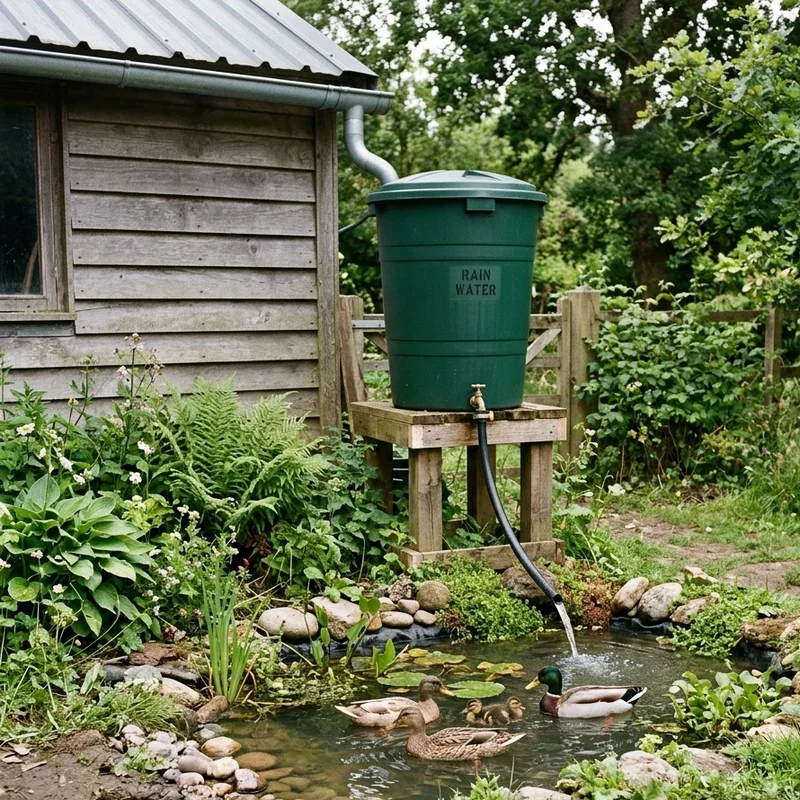
9. Concrete Block Raised Pond Build
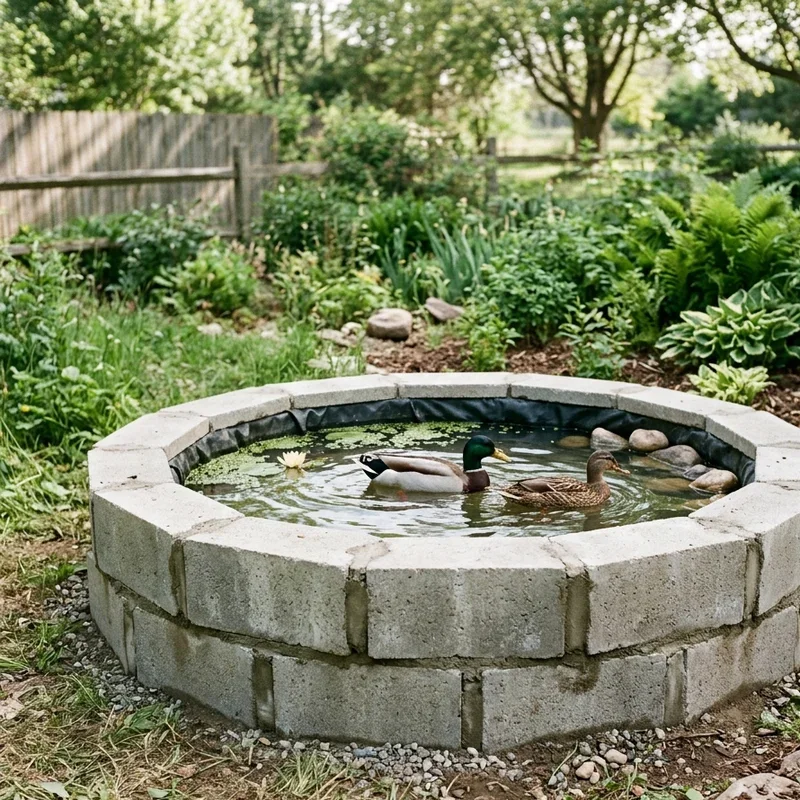
A concrete block raised pond build stacks standard concrete masonry blocks into a rectangular or square above-ground wall structure, lines the interior with EPDM rubber or heavy pond liner, then fills with water creating a sturdy raised pond that eliminates all excavation work while providing easy water-level maintenance access. Raised block ponds work like building a swimming pool for your ducks using oversized building bricks, the modular construction allowing you to choose any dimensions and height without owning specialized tools or construction skills beyond basic block stacking abilities. Stack blocks in a staggered bricklaying pattern using construction adhesive between courses for structural stability. Build integrated steps using half-blocks along one wall creating a graduated entry ramp ducks waddle up and down comfortably accessing the water.
10. Stream and Channel Running Water Pond
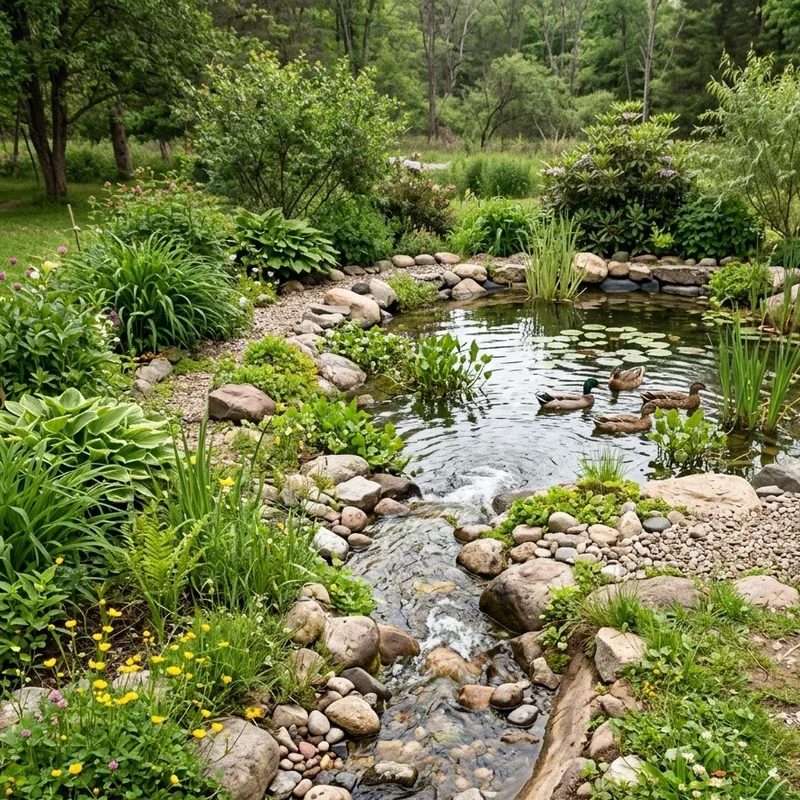
A stream and channel running water pond excavates a narrow winding channel connecting to a wider swimming basin, then uses a recirculating pump creating continuous flowing water throughout the entire system that mimics natural creek environments where ducks instinctively forage, dabble, and explore moving water enthusiastically. Stream channels work like building a lazy river amusement ride designed exclusively for your duck flock, the gentle current encouraging natural swimming behaviors while preventing the stagnation problems that still-water ponds inevitably develop without mechanical intervention. Line channels with river pebbles creating a naturalistic streambed appearance. Plant aquatic marginal plants along channel edges providing shade, filtration, and natural foraging opportunities where ducks pick insects and vegetation from the water's edge during daily exploration.
11. Solar Powered Filtered Duck Pond
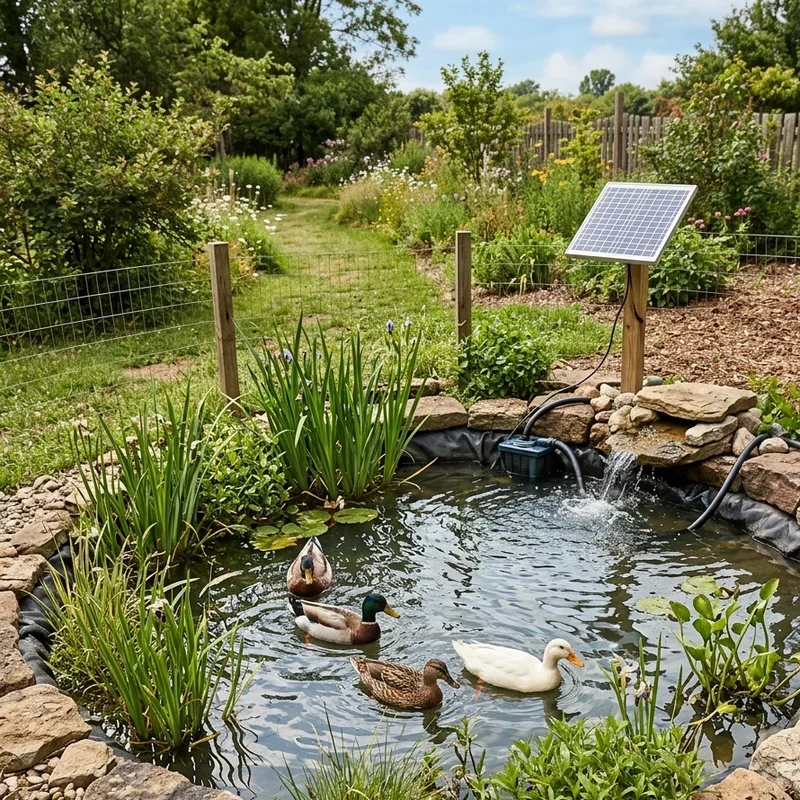
A solar powered filtered duck pond integrates a solar panel powered pump with a biological and mechanical filtration system that cleans, circulates, and aerates pond water continuously using free renewable energy, dramatically reducing water change frequency while maintaining cleaner, healthier swimming conditions for your ducks without ongoing electricity costs. Solar filtered ponds work like giving your duck pond its own self-cleaning circulatory system powered entirely by sunshine, the technology handling the dirty maintenance work while you simply enjoy watching your flock swim in consistently clean water. Position solar panels in full southern exposure locations maximizing daily energy collection for pump operation. Choose filter systems combining mechanical debris screening with biological media where beneficial bacteria colonies break down organic duck waste naturally.
12. Pond with Planted Filtration Zone
A pond with planted filtration zone creates a separate shallow gravel-filled area densely planted with aquatic filtering species like water hyacinth, duckweed, cattails, and watercress, through which pond water circulates before returning cleansed to the main swimming area, using living plants as a natural biological water treatment system. Planted filtration zones work like hiring an army of botanical cleaning specialists that work around the clock purifying your pond water using nothing but sunlight, nutrients, and their own natural biological processes requiring zero chemical inputs whatsoever. Separate the filtration zone from the swimming area using a submerged wall allowing water flow while preventing ducks from destroying the filter plants. Size the planted zone at approximately 30 percent of total pond surface area for effective filtration results.
13. Multi Level Splash and Swim Pond
A multi level splash and swim pond excavates two or three connected pools at different depths, creating shallow wading zones where ducklings safely explore alongside deeper swimming sections where adult ducks dive, preen, and exercise with adequate water depth supporting their natural aquatic behaviors across every life stage simultaneously. Multi level ponds work like designing a waterpark with a dedicated kids pool and an adults-only deep end, every member of your flock finding the perfect depth matching their size, confidence, and swimming ability within the same connected water system. Create the shallowest section at five to ten centimeters deep for ducklings and nervous newcomers. Connect levels using gentle sloped transitions rather than abrupt depth changes, allowing ducks to waddle between zones naturally and safely.
14. Repurposed Livestock Trough Pond Setup
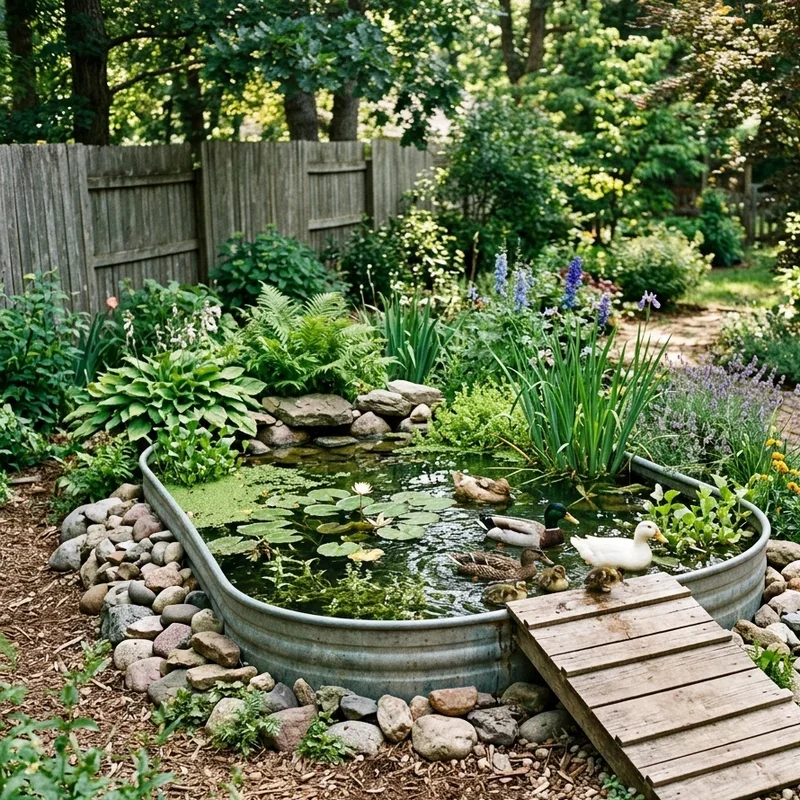
A repurposed livestock trough pond setup transforms old metal or plastic feed troughs, water troughs, or agricultural containers into functional duck swimming spaces by adding simple ramp access, basic drainage modifications, and optional filtration attachments that convert farm surplus equipment into dedicated waterfowl bathing stations at minimal cost. Trough ponds work like visiting a farm salvage yard and seeing a duck pond hiding inside every dusty old container sitting behind the barn, the repurposing potential limited only by your willingness to clean rust and drill a couple of drain holes. Position troughs on level ground preventing wobbling under the combined weight of water and enthusiastic duck activity. Build exterior wooden step platforms or textured ramp surfaces ensuring safe, non-slip access for wet-footed ducks entering and exiting repeatedly.
15. Natural Swimming Hole Earthen Pond
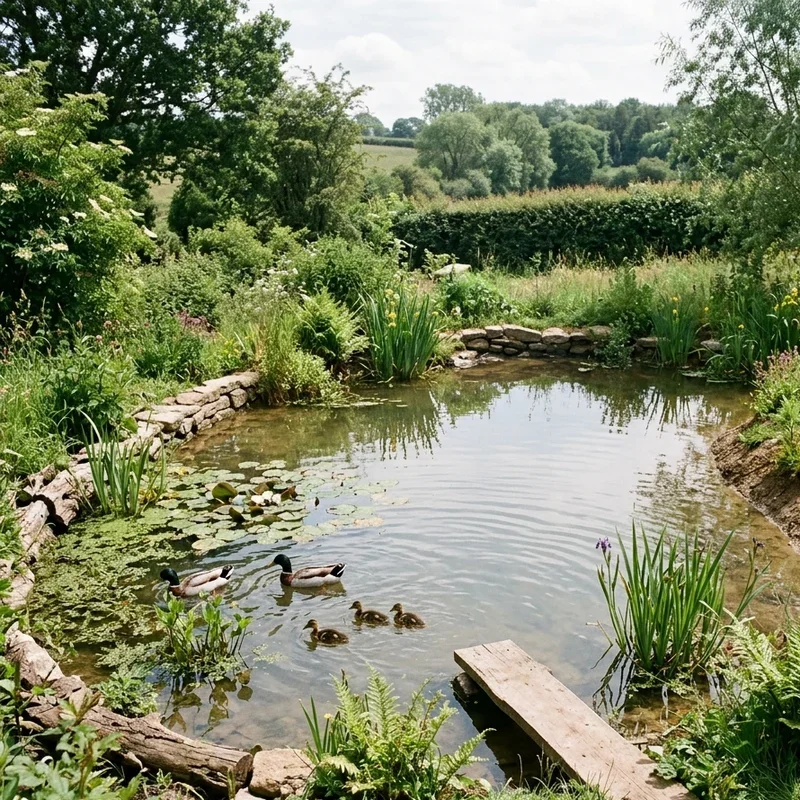
A natural swimming hole earthen pond excavates a large, irregularly shaped depression using a small excavator or considerable manual digging effort, creating a substantial natural-looking pond with gently sloping banks, native plantings around the margins, and enough water volume that biological ecosystems establish naturally supporting clean water conditions. Earthen ponds work like carving a small lake into your backyard property, the generous scale providing your ducks with genuine open-water swimming conditions that smaller container solutions simply cannot replicate no matter how cleverly they are designed. Obtain necessary permits before excavation since many municipalities regulate pond construction above certain volume thresholds. Plant native grasses and sedges around the banks preventing erosion while creating natural transition zones between dry land and water that ducks navigate instinctively.
Conclusion
DIY duck ponds transform ordinary backyards into thriving waterfowl habitats where your flock swims, preens, forages, and lives the water-filled life that nature designed them to enjoy every single day. From simple stock tank setups to elaborate solar-filtered systems and natural earthen swimming holes, these fifteen ideas prove that building a duck pond suits every budget, skill level, and backyard size imaginable. Always prioritize safe entry and exit ramps, manageable water change systems, and adequate pond depth for your flock's size, because a well-designed duck pond creates healthier, happier birds and a genuinely beautiful backyard habitat.
Read next: 16 DIY Outdoor Dog Kennel Flooring Ideas for Durable Setup
Frequently Asked Questions
Q1: How deep should a backyard duck pond be for safe swimming and diving?
A: Build ponds between 30 and 60 centimeters deep for comfortable duck swimming and bathing.
Q2: How often do I need to change the water in a duck pond?
A: Change unfiltered pond water every two to three days preventing bacterial buildup and algae growth.
Q3: Can I keep fish in the same pond where my ducks swim daily?
A: Ducks eat small fish, so only stock large hardy species like koi in filtered duck ponds.
Q4: What plants grow best around duck ponds without being destroyed by the flock?
A: Plant sturdy native sedges, rushes, and cattails that tolerate duck traffic around pond margins.
Q5: Do I need a permit to build a duck pond in my residential backyard?
A: Check local municipal regulations since many areas require permits for ponds exceeding specific volume limits.
Stay up to date with our latest ideas!