How 3D Printing Is Redefining Custom Home Decor
Explore how 3D printing and 3MF files allow low-cost custom home decor. Learn how DIY3D supports 3MF files, AIGC designs, and shared uploads.

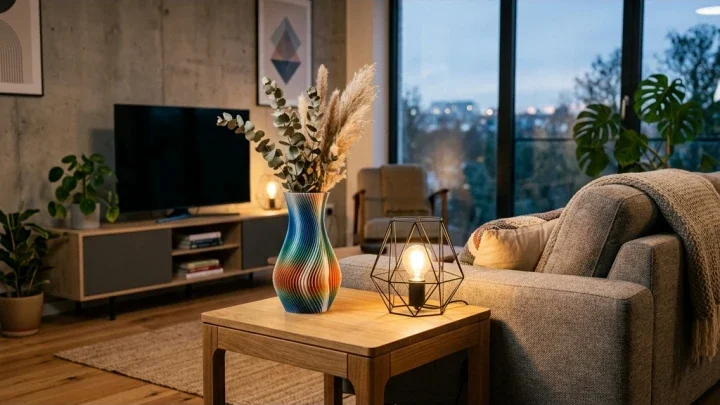
Interior design has always relied on customization to make living spaces feel unique. However, procuring bespoke handles, modern vase designs, and customized wall mounts has traditionally been expensive and slow. The rise of desktop fabrication tools has changed this dynamic, allowing homeowners to manufacture unique decor items right in their living rooms. To source ready-to-use digital designs, design enthusiasts are turning to platforms like DIY3D, an open database where makers can download existing designs or upload their own original work. This platform offers access to high-quality, free 3D printing files that fit any home style.
Similar to MakerWorld, DIY3D focuses on maximizing user success by prioritizing modern 3MF format files. Storing color configurations and printing parameters directly within the files reduces the configuration process, making the technology highly accessible for beginners.
The Aesthetic Advantages of 3MF Formatting
Standard 3D files often strip away the color layouts and slicing directions, leaving designers with uncolored geometries that require manual setup. Using 3MF format files changes this experience by saving specific material boundaries and layout coordinates.
Preserves multi-color designs for multi-spool printing configurations.
Stores orientation setups to ensure smooth surface finishes on display models.
Includes precise wall thickness values to ensure durable parts.
Utilizing AIGC for Organic Home Accessories
Beyond traditional CAD models, the inclusion of AIGC models introduces organic shapes that are difficult to design manually. These AI-crafted elements bring a modern aesthetic to home decoration.
Fast generation of curved geometries like sculptural planters and lampshades.
Access to unique patterns that mimic natural textures.
Seamless integration with modern slicing software for immediate physical prints.
Building a Collaborative Design Database
A shared community enables continuous improvement and new designs. By uploading custom designs, makers contribute to a growing public catalog of digital assets.
Active feedback loops from community members to optimize print setups.
Broad categories of home goods, organizational tools, and structural parts.
Open access to slicer parameters tested by other makers.
Incorporating modern additive manufacturing into home decoration allows for high levels of personalization. Through platforms like DIY3D, homeowners can access customizable files, reducing the cost of bespoke interior styling and making custom home decor highly accessible.
Stay up to date with our latest ideas!