Why New Gardens Look Empty (And Why That’s a Good Sign)
Learn why new gardens often look empty at first and how this stage signals healthy growth, proper spacing, and long-term landscape success.

New gardens often feel sparse at first, but that early “emptiness” is a sign of good garden design: strong structure, breathing space, and planting that’s allowed to mature naturally over time.
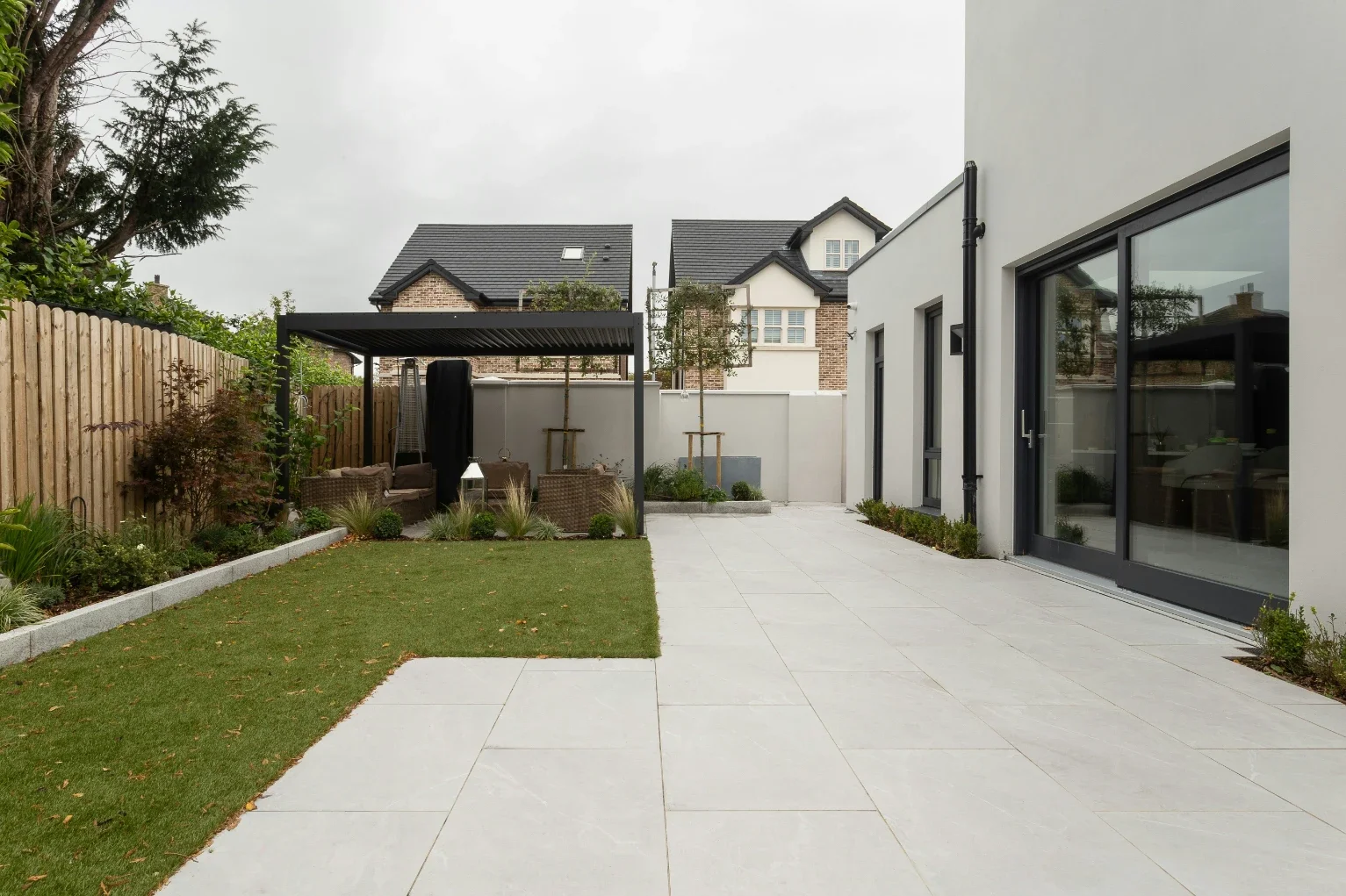
When a new garden is first completed, I often hear the same response: “It looks a bit empty.” After months of planning, decisions and anticipation, it can feel strange to be greeted by open space, young planting and clearly defined edges rather than fullness. The expectation is often that a finished garden should feel lush and abundant straight away. Yet in considered garden design, that initial sense of emptiness is not a problem to solve. It is a sign that the garden has been given the time and space it needs to succeed.
A garden is not a static thing. It is a living system that unfolds gradually, shaped as much by time as by design. What you see at the beginning is not the end result, but the foundation on which everything else depends.
Seeing the framework clearly
The early stages of a new garden reveal something that is often hidden later on: structure. Paths, steps, retaining edges, terraces and the positioning of trees and large shrubs form the underlying framework of the space. These elements are the bones of the garden, quietly guiding how it will be used, how it will feel, and how planting will eventually settle around it.
When planting is still young, the geometry and flow of the garden are easiest to read. Sightlines become clear. You can see where the garden opens out, where it narrows, and where the eye is meant to pause. This clarity is deliberate. A well structured garden does not rely on density to feel complete. Instead, it creates balance through proportion, rhythm and restraint.
If a garden is filled too quickly, that framework is easily lost. Overcrowding can blur edges, hide changes in level and overwhelm the space. What looks generous in the first year can become confused and difficult to manage by the third. Space, used carefully, is one of the most powerful tools in garden design.
Why space matters
Open ground is often mistaken for wasted ground. In reality, space performs several vital roles. It allows light to reach the soil, air to move through planting, and plants to grow into their natural forms rather than being forced into competition. It also gives the garden room to adapt as conditions change.
Gardens rarely behave exactly as planned. Some plants thrive more than expected, others struggle. Trees cast more shade over time. Rainfall patterns shift. A garden that has been designed with breathing space can respond to these changes without losing its sense of balance.
There is also a human aspect to space. Open areas allow the garden to be read and understood. They create moments of calm and give contrast to areas of richer planting. Just as in architecture or interior design, restraint makes what is present feel more intentional.
Young plants and long horizons
One of the most challenging things for people to accept is that plants take time. Young shrubs, perennials and trees rarely look impressive in their first season. They are planted with gaps between them, often surrounded by visible soil or mulch. This can feel counterintuitive, especially when garden centres present plants at their peak.
However, spacing is one of the clearest indicators of thoughtful design. Plants that are allowed room to establish strong root systems grow healthier and more resilient. They develop natural shapes rather than being forced upwards in competition for light.
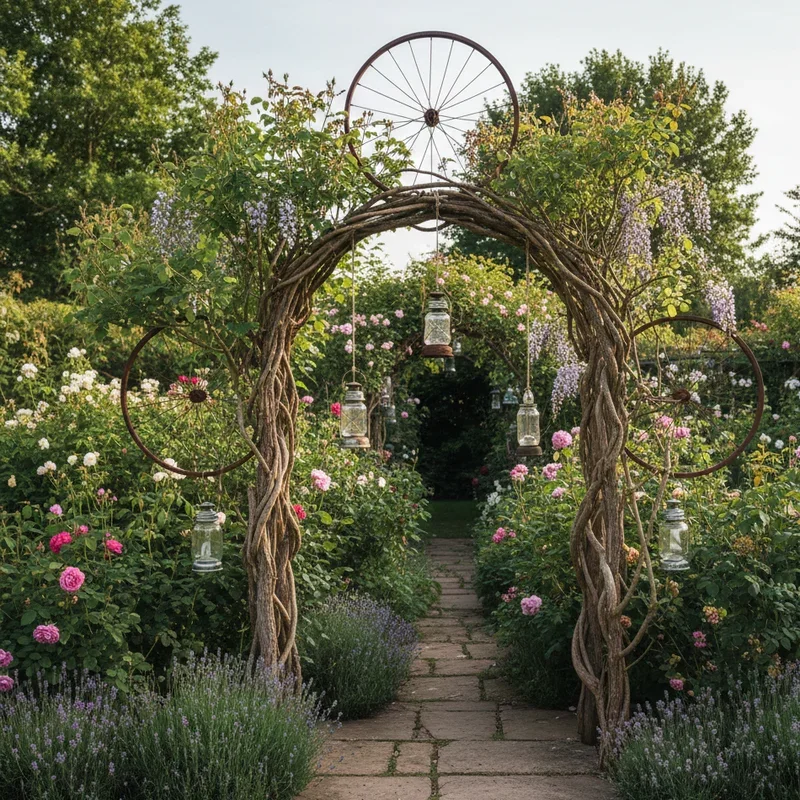
Good garden design works on a long horizon. It asks how the garden will feel not just next summer, but in five or ten years. At that point, planting that once felt sparse will have knitted together, creating layers of texture and seasonal interest. The garden begins to feel settled, as though it belongs to its surroundings rather than sitting on top of them.
Trying to accelerate this process often leads to problems later on. Plants that are squeezed together may look generous at first, but they soon require constant pruning, removal or replacement. What begins as abundance can quickly turn into maintenance fatigue.
Learning patience in the first year
The first year of a garden is a period of adjustment. Plants are putting energy into roots rather than visible growth. Hard landscape elements are weathering and softening. The garden is learning its conditions, and the gardener is learning the garden.
This is why the first year can feel underwhelming if expectations are not set carefully. Yet it is also a valuable moment. With less foliage to distract the eye, the quality of the design and build is more apparent. Lines are clean. Levels are clear. The way the garden connects to the house and the wider landscape can be fully appreciated.
Rather than seeing this phase as unfinished, it helps to see it as a beginning. The garden is not asking to impress yet. It is preparing itself.
How maturity changes everything
By the third year, most gardens begin to change character. Planting fills out, gaps close, and the relationship between structure and softness becomes more nuanced. Light filters differently through foliage. Seasonal rhythms become more pronounced.
By the fifth year, a well designed garden often reaches a point where it feels inevitable, as though it has always been there. This sense of belonging is difficult to manufacture quickly. It is earned through patience, observation and trust in the original framework.
The emptiness of the early stages is what makes this transformation possible. Without space at the beginning, there is no room for maturity to express itself fully.
Embracing the beginning
Every established garden you admire once looked open, raw and incomplete. The difference between a garden that matures beautifully and one that constantly feels unsettled often comes down to how much restraint was exercised at the start.
Learning to accept a garden in its early form is part of understanding how gardens truly work. Emptiness, when used intentionally, is not absence. It is possibility. It allows structure to speak, plants to grow properly, and time to do the work that design alone cannot.
In that sense, a new garden that feels empty is not lacking anything at all. It is simply telling the truth about where it is in its life, and quietly promising what it will become.
Stay up to date with our latest ideas!