15 DIY Basement Ceiling Ideas to Upgrade Your Space
Discover 15 creative DIY basement ceiling ideas that transform dark spaces into stunning rooms. Upgrade your basement affordably!
What's stopping your basement from becoming the amazing living space it could be? For most homeowners, the answer hangs right overhead! Basement ceilings present unique challenges including exposed pipes, ductwork, wiring, and those notorious low clearances that make standard solutions feel impossible. But here's the exciting truth: DIY basement ceiling projects can transform that neglected underground space into a stunning extension of your home without requiring professional contractors or breaking your renovation budget. The ceiling often determines whether basements feel like dreary dungeons or inviting living areas where families actually want to spend time together. Exposed joists and mechanical systems constantly remind occupants they're underground, while thoughtfully finished ceilings create illusions of proper rooms with intentional design throughout. These projects range from simple paint treatments requiring only brushes and rollers to more ambitious installations involving new materials and construction techniques. The right ceiling solution addresses your specific challenges whether that's maintaining access to plumbing, maximizing limited headroom, or simply creating finished appearances that complement your renovation vision. Your basement represents valuable square footage that deserves the same design attention you'd give any other room in your home. Ready to discover how ceiling upgrades can unlock your basement's hidden potential? Let's explore 15 ideas that prove DIY solutions can transform underground spaces dramatically!
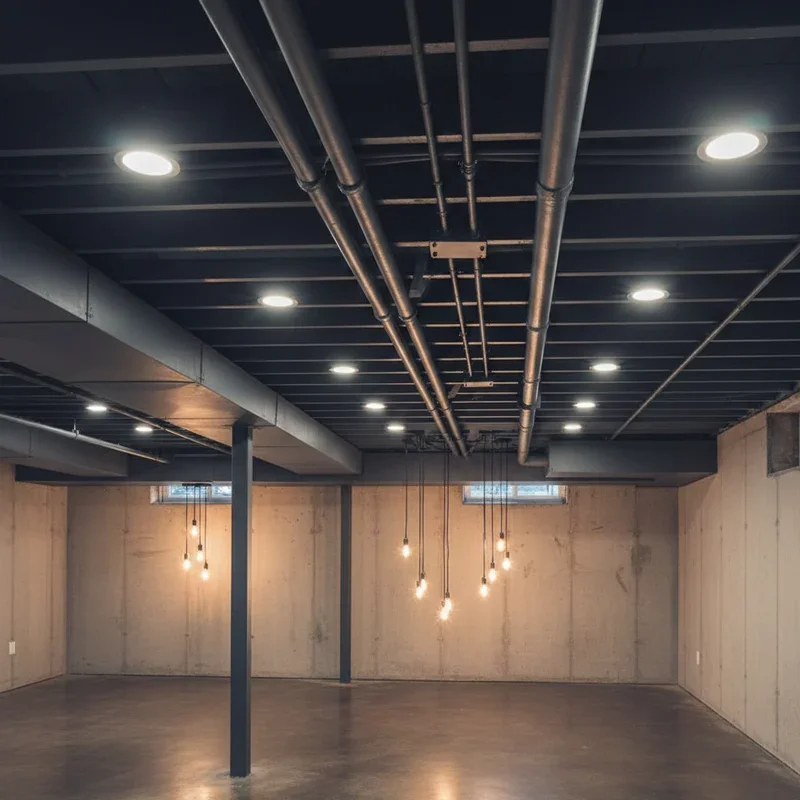
1. Painted Exposed Ceiling Treatment
Transform exposed basement ceilings instantly through strategic painting that unifies chaotic overhead elements into cohesive design statements affordably. This simplest approach involves painting everything above including joists, pipes, ducts, and wiring in single coordinating colors throughout. Dark colors like black, charcoal, or navy create dramatic effects while making mechanical elements recede visually into shadow overhead. White or light colors brighten basements while maintaining the exposed aesthetic through unified color application throughout ceiling areas. The approach maintains full access to all mechanical systems without concealment that complicates future repairs or modifications necessarily. Spray painting provides fastest coverage while brush application reaches detailed areas that sprayers miss during application processes. Painted exposed ceilings prove that simple treatments create dramatic basement transformations.
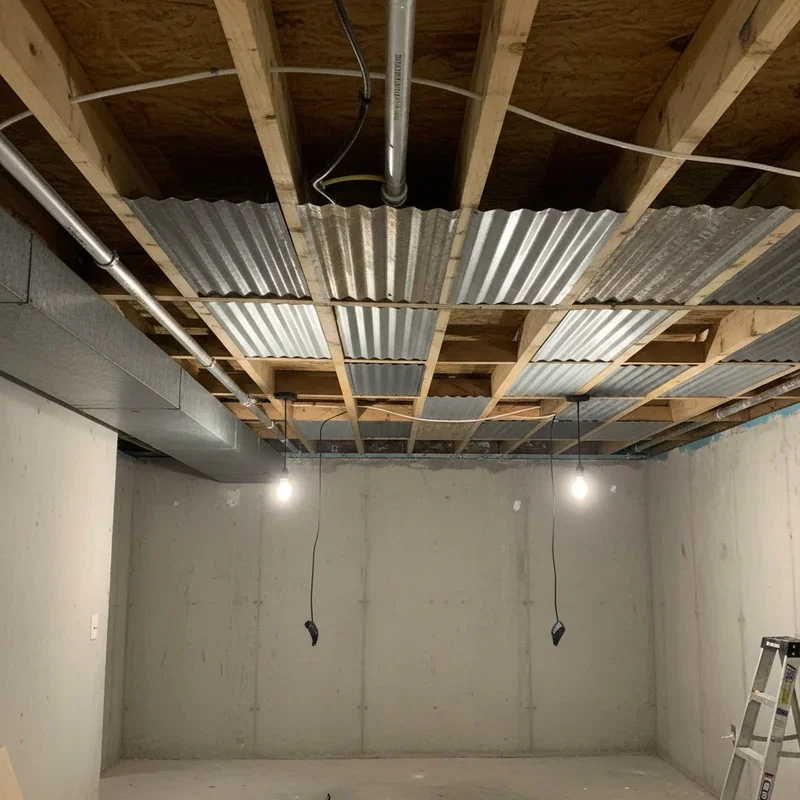
2. Corrugated Metal Panel Installation
Add industrial character through corrugated metal panels that create distinctive ceilings while concealing mechanical systems behind durable surfaces effectively. These lightweight galvanized panels install directly to ceiling joists using screws that penetrate through corrugation peaks securely throughout installations. The reflective surface brightens basements by bouncing available light throughout spaces that typically lack natural illumination significantly. Corrugated metal suits industrial, farmhouse, and modern basement designs where metallic textures enhance rather than contradict aesthetic directions. The material withstands basement moisture better than many alternatives, resisting damage from humidity that affects organic materials negatively. Include proper vapor barriers and ventilation preventing condensation issues that metal surfaces can encourage in humid environments. Corrugated metal proves that industrial materials create distinctive basement ceilings.
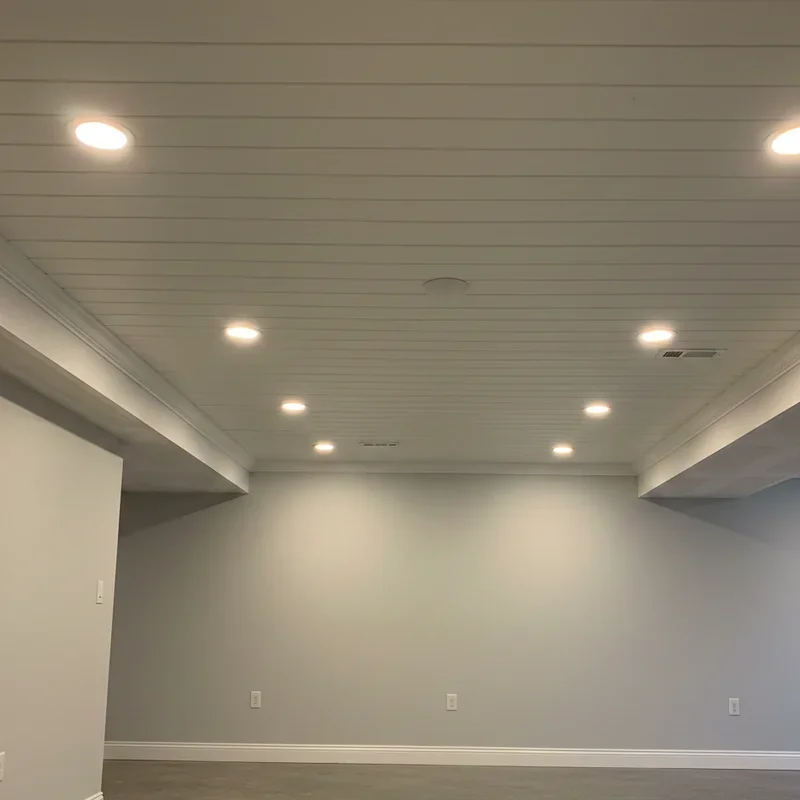
3. Beadboard Ceiling Application
Create cottage charm through beadboard ceiling panels that provide traditional aesthetics while concealing basement infrastructure behind attractive surfaces. These tongue-and-groove planks install directly to joists or furring strips creating continuous ceiling planes with distinctive linear patterns throughout. Pre-primed beadboard accepts paint easily, allowing color customization matching overall basement design schemes throughout finished spaces. The lightweight panels handle easily during installation, making overhead work manageable for DIYers working alone throughout projects. Beadboard works particularly well in basement spaces designed as bedrooms, playrooms, or family areas where cottage aesthetics complement intended uses appropriately. Consider varying plank widths and orientations creating custom patterns that distinguish your ceiling from standard installations throughout basement designs. Beadboard proves that traditional materials create charming basement ceilings.
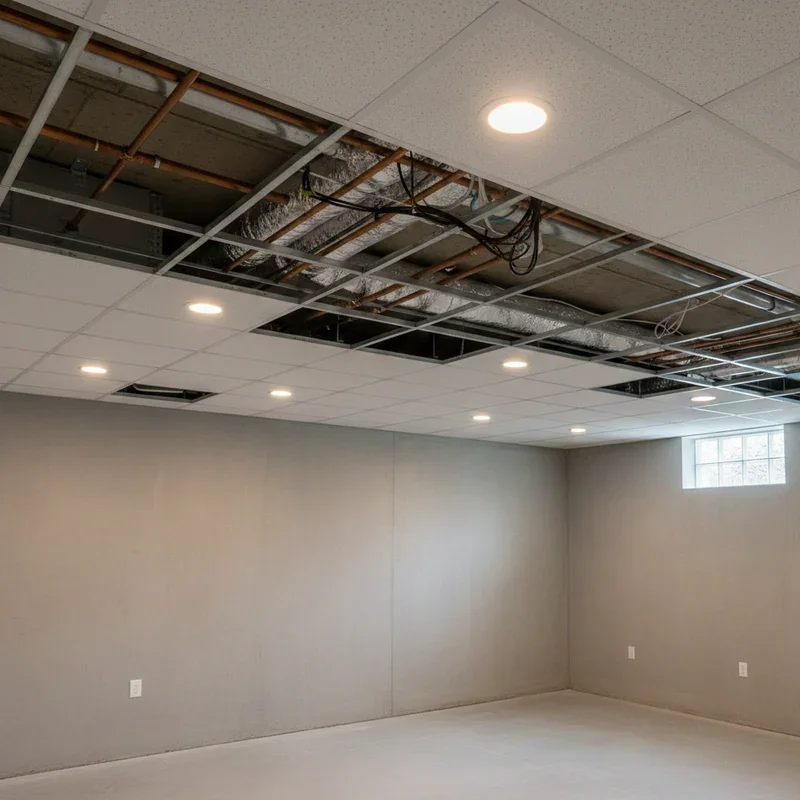
4. Drop Ceiling Tile Systems
Maintain mechanical access through suspended drop ceiling systems that conceal infrastructure while allowing easy tile removal for future maintenance needs. Metal grid frameworks hang from ceiling joists on wires, supporting lightweight tiles that rest within grid tracks throughout installations. The system accommodates basement obstacles including ductwork, pipes, and beams through adjustable hanging heights throughout various ceiling areas. Modern tiles offer improved aesthetics beyond institutional appearances, including wood-look, textured, and decorative options that suit residential applications appropriately. The straightforward installation process suits DIY approaches, requiring basic tools and following systematic grid layout procedures throughout projects. Include recessed lighting integration that grid systems accommodate easily through tile replacement with light fixtures throughout installations. Drop ceilings prove that accessible systems serve practical basement needs.
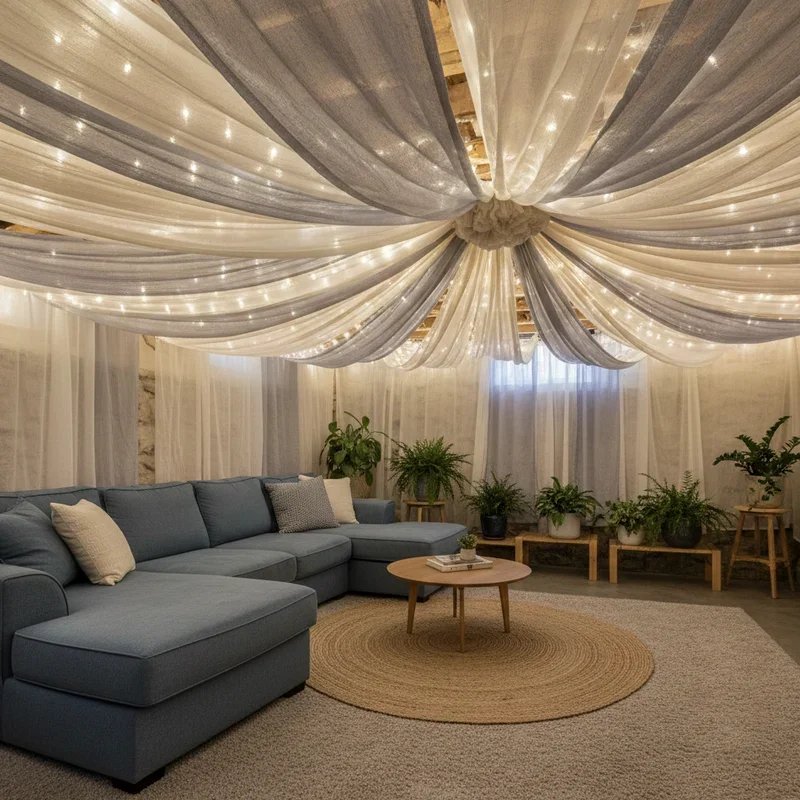
5. Fabric Draped Ceiling Design
Add softness through fabric draped ceilings that create romantic, tented effects while hiding overhead infrastructure behind flowing textile installations. Lightweight fabrics like muslin, canvas, or decorative textiles attach to perimeter frameworks draping across ceiling spans creating billowing overhead surfaces. The approach suits basements used as bedrooms, media rooms, or relaxation spaces where soft aesthetics enhance intended atmospheres appropriately. Fabric installations accommodate irregular ceiling heights and obstacles that rigid materials cannot navigate as easily throughout challenging spaces. The relatively affordable materials allow experimenting with dramatic ceiling treatments without significant financial investment throughout projects. Include fire-retardant fabric treatments ensuring safety compliance for overhead textile installations throughout occupied basement spaces. Fabric ceilings prove that soft materials create unique basement atmospheres.
6. Wood Plank Ceiling Installation
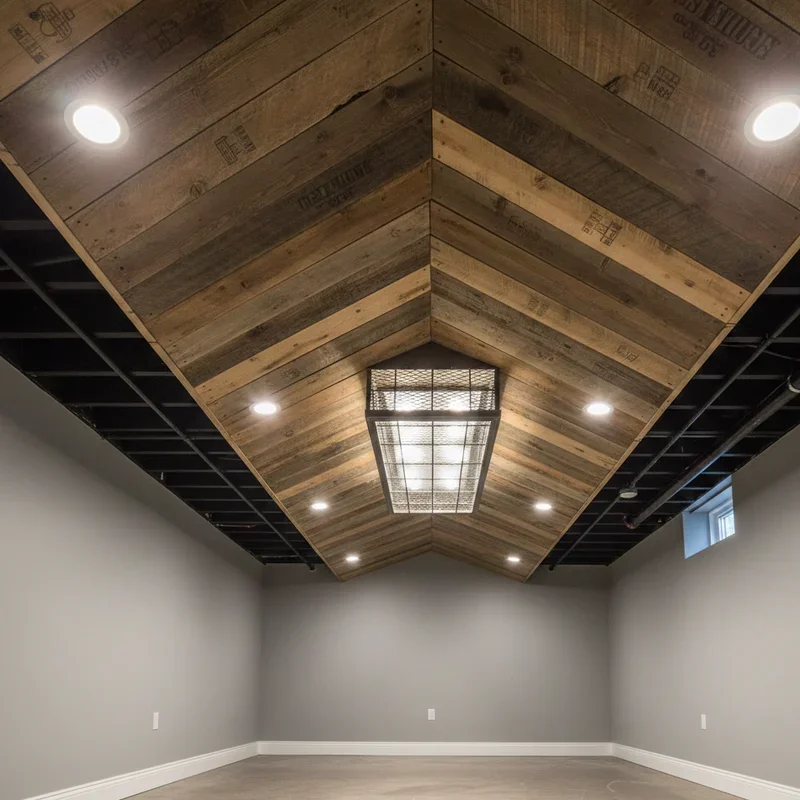
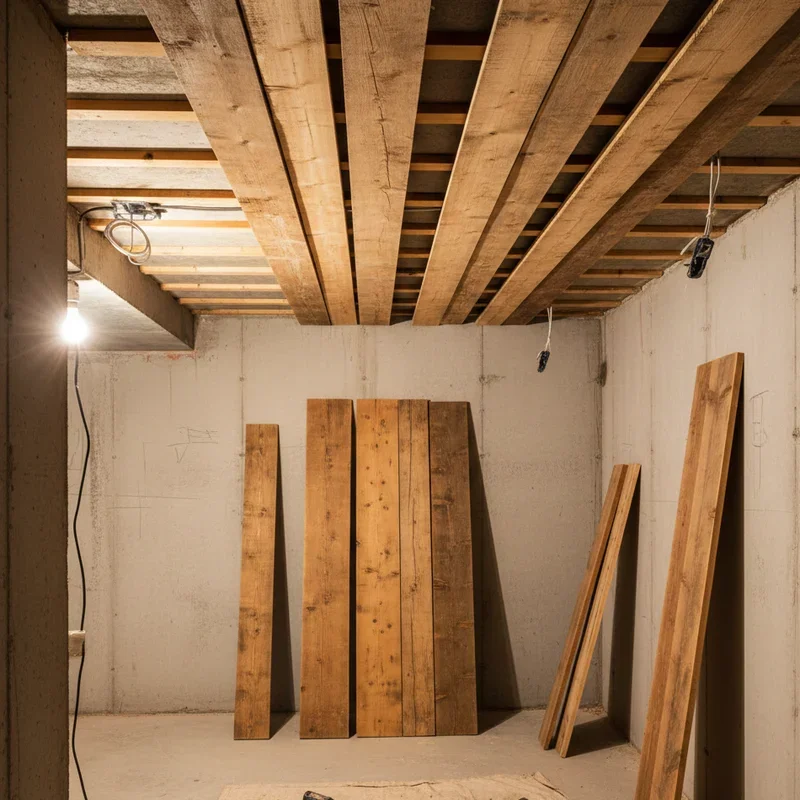
Add warmth through wood plank ceilings that bring natural beauty overhead while transforming basements into inviting living spaces worth occupying. Tongue-and-groove planks, shiplap boards, or simple lumber install directly to joists creating continuous wooden surfaces throughout ceiling areas. Various wood species and finishes allow customization from rustic reclaimed appearances to sleek contemporary stained treatments throughout designs. The natural material helps absorb sound, improving basement acoustics that hard surfaces often make problematic throughout finished spaces. Consider whitewashed, natural, or dark stained finishes that complement overall basement design directions throughout material selections. Wood planking adds perceived value while creating genuinely attractive overhead surfaces that enhance basement livability significantly throughout renovations. Wood plank ceilings prove that natural materials elevate basement spaces.
7. Coffered Ceiling Construction
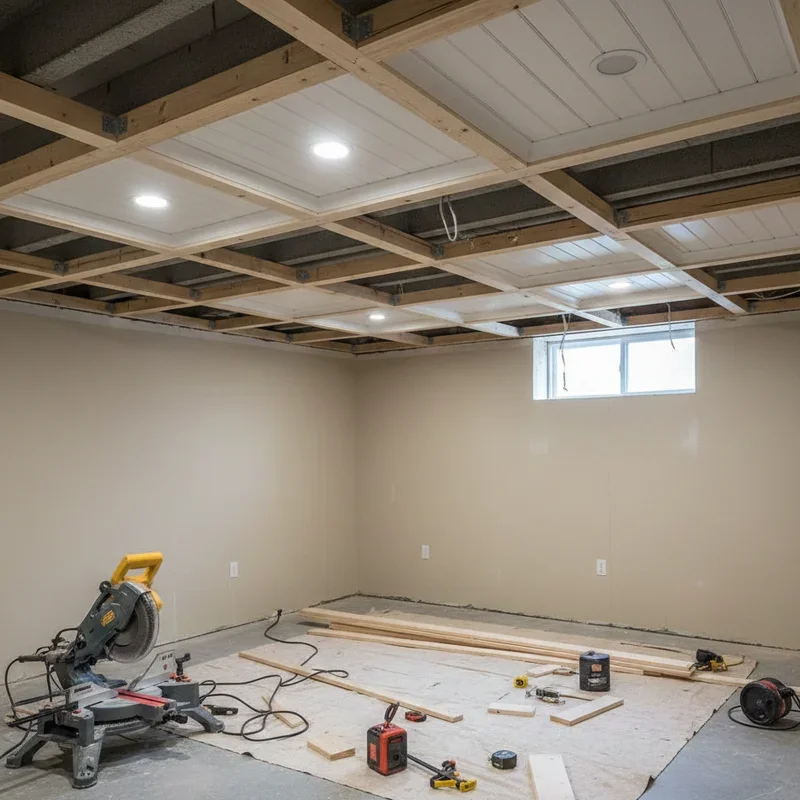
Add architectural elegance through coffered ceiling construction that creates dimensional grid patterns transforming flat overhead surfaces into design features. Build coffered patterns using lumber creating raised grid frameworks that add visual interest and perceived height throughout ceiling areas. The construction conceals mechanical systems within coffer cavities while providing sophisticated appearances associated with higher-end home construction traditionally. Paint treatments including contrasting coffer interiors and framework colors maximize visual impact throughout coffered installations impressively. The project requires intermediate carpentry skills including precise measurements and mitered joints creating professional-quality results throughout construction. Consider simplified coffer designs using applied moldings that create coffered appearances without complex framing requirements throughout approaches. Coffered ceilings prove that architectural details elevate basement sophistication.
8. Tin Ceiling Tile Application
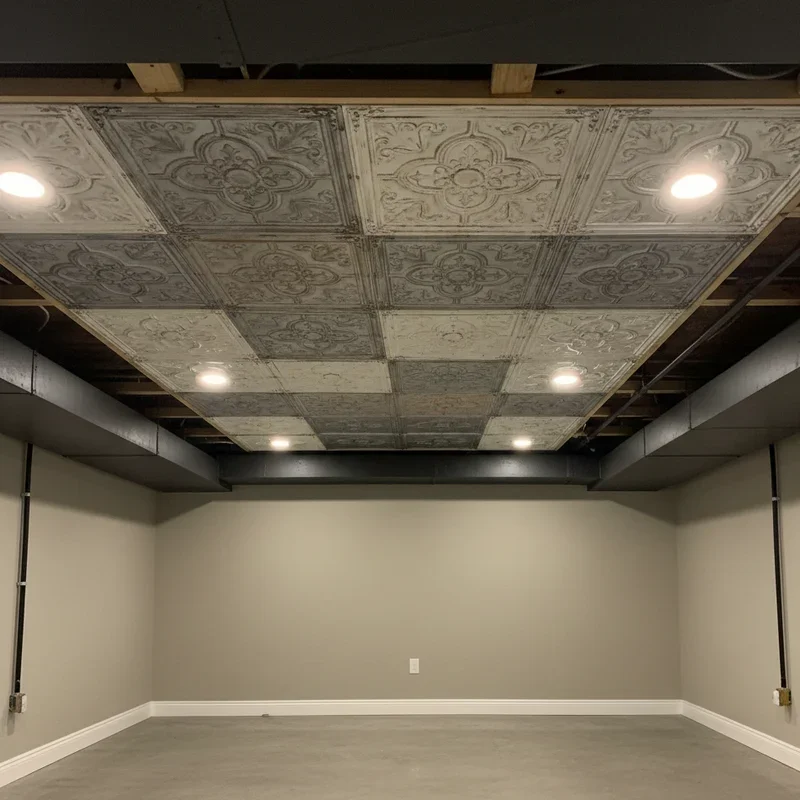
Channel vintage charm through tin ceiling tiles that bring Victorian elegance into basement spaces through pressed metal patterns installed overhead. These decorative panels feature embossed patterns ranging from simple geometric designs to elaborate ornamental motifs throughout available selections. Modern reproductions in aluminum or steel install easily using adhesive or nail applications creating authentic vintage appearances affordably. The metallic surface reflects light effectively, brightening basements while adding visual interest through dimensional pattern work throughout installations. Tin tiles work particularly well in basement bars, entertainment areas, or vintage-themed spaces where period aesthetics enhance design visions appropriately. Include proper underlayment ensuring flat installation surfaces that pressed tin patterns require for best appearances throughout applications. Tin ceiling tiles prove that vintage materials create distinctive basement characters.
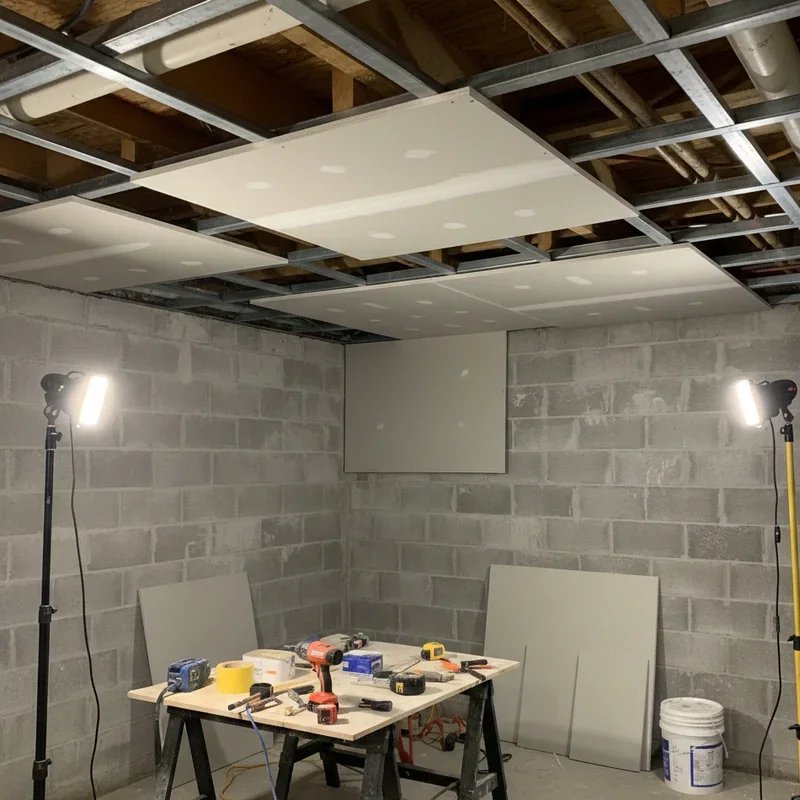
9. Drywall Ceiling Installation
Achieve conventional finished appearances through drywall ceiling installation that creates smooth surfaces matching standard room constructions throughout homes. Install drywall panels directly to ceiling joists, taping joints and applying compound creating seamless overhead planes throughout basement ceilings. The finished surface accepts any paint color or texture treatment matching your design vision throughout basement spaces completely. Drywall provides excellent sound isolation between basement and upper floors when properly installed with appropriate techniques throughout applications. The material cost remains affordable while professional-quality results require patience learning proper taping and finishing techniques throughout projects. Include access panels in strategic locations maintaining mechanical system access without visible doors disrupting ceiling continuity throughout designs. Drywall ceilings prove that conventional approaches create polished basement finishes.
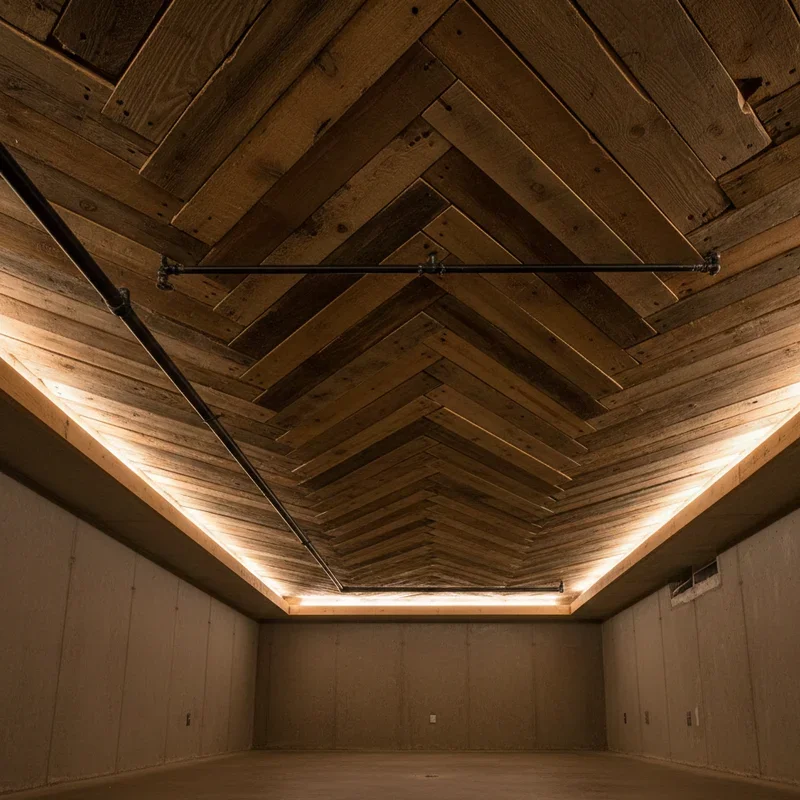
10. Pallet Wood Rustic Ceiling
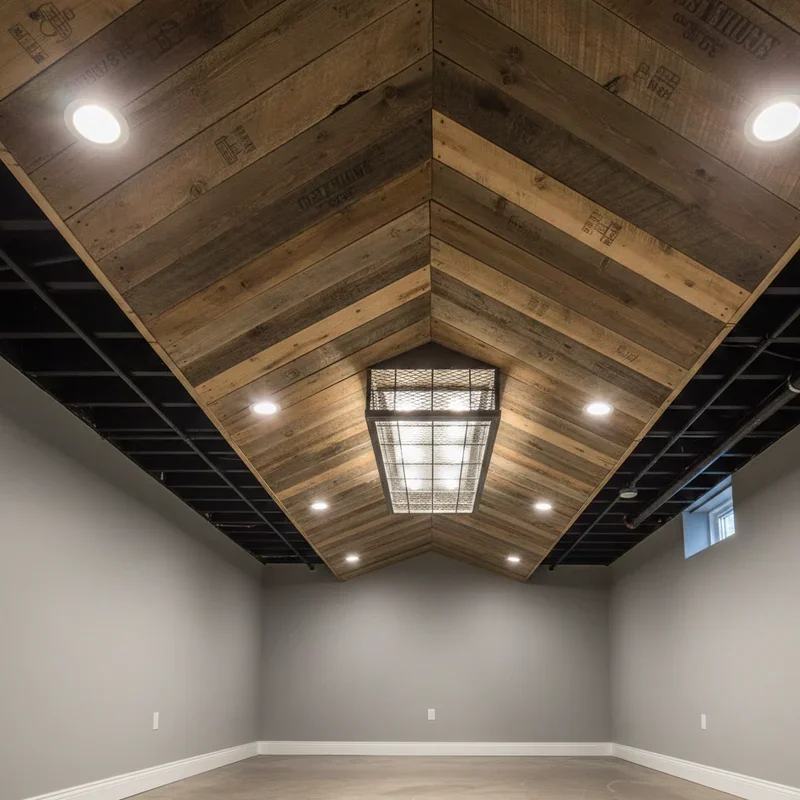
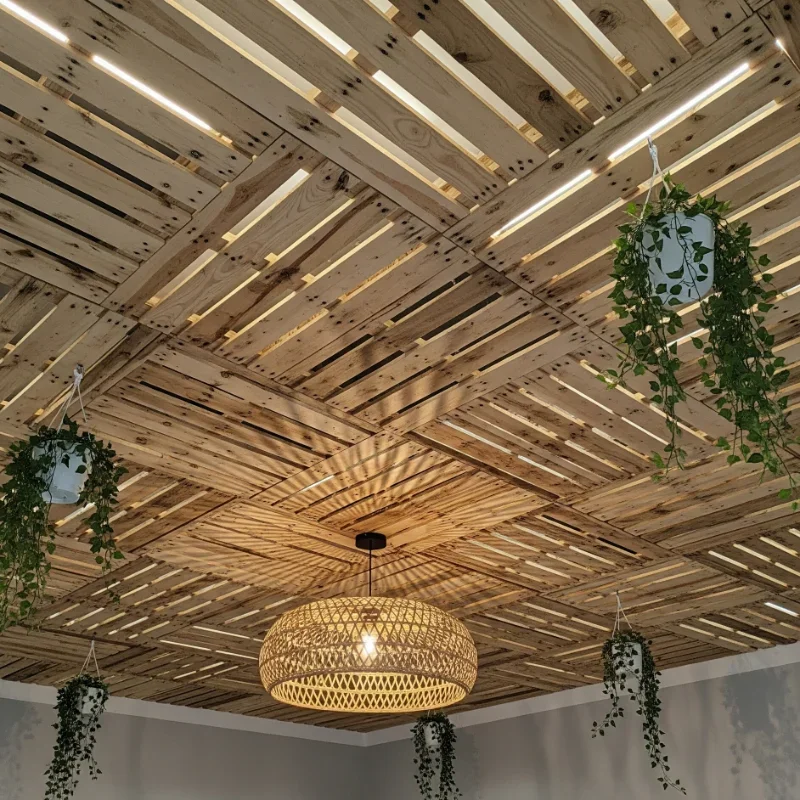
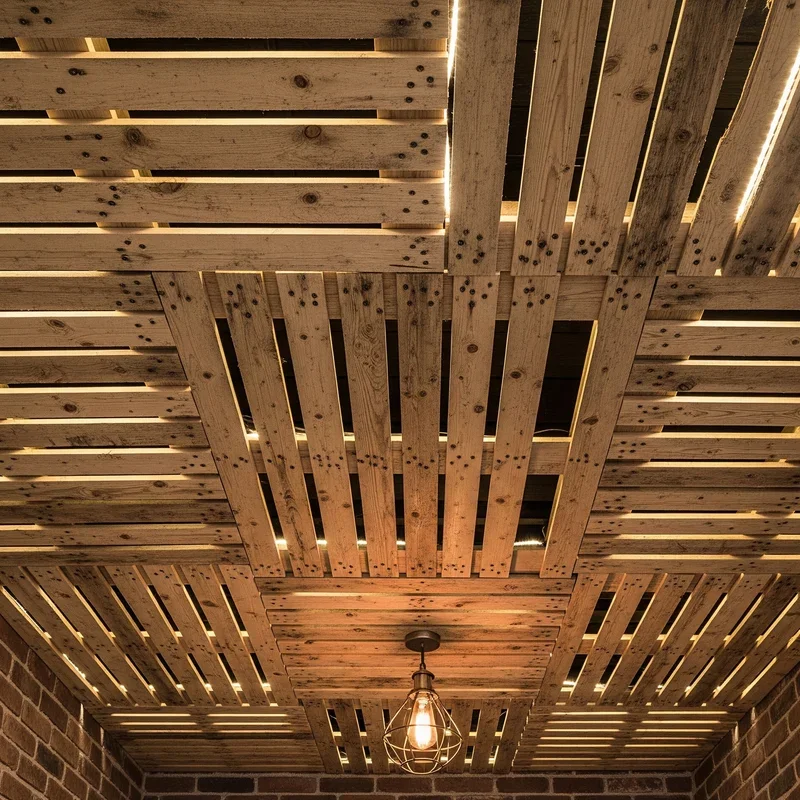
Embrace rustic character through pallet wood ceilings that repurpose free shipping materials into distinctive overhead treatments sustainably. Disassemble pallets carefully, cleaning and preparing boards for ceiling installation throughout material preparation processes. The weathered wood character adds visual interest impossible with new materials while demonstrating creative resourcefulness throughout basement designs. Install pallet boards directly to joists or furring strips creating continuous wooden surfaces with authentic reclaimed aesthetics throughout ceilings. Sand surfaces removing splinters while preserving natural distressed character that defines the rustic appeal throughout installations appropriately. The virtually free material cost allows creating substantial ceiling treatments without significant budget allocation throughout project planning. Pallet wood ceilings prove that reclaimed materials create unique basement characters.
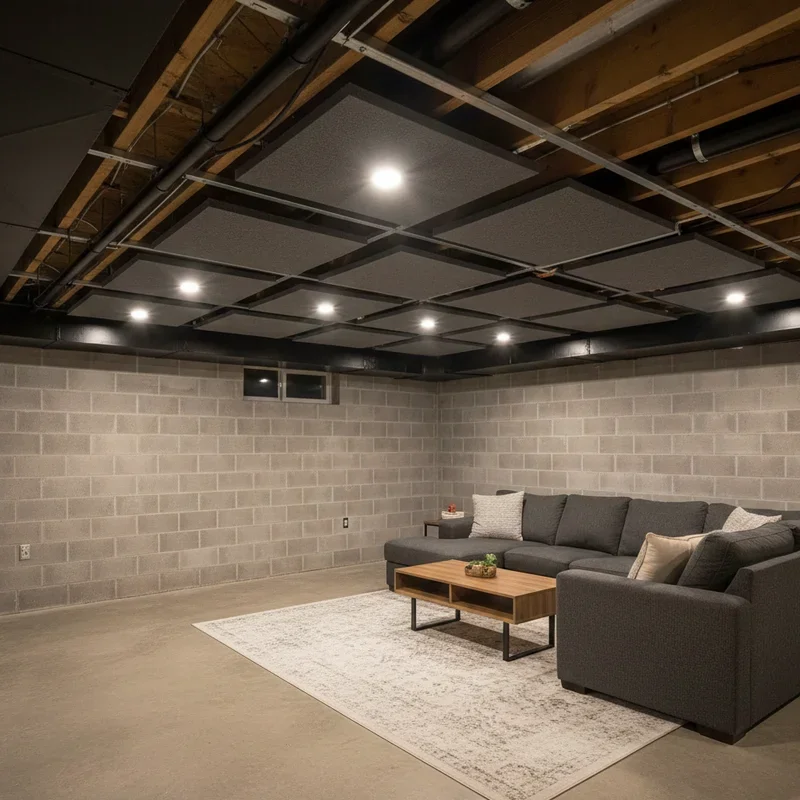
11. Acoustic Panel Ceiling Treatment
Improve basement sound quality through acoustic panel installations that control noise while creating attractive contemporary ceiling treatments overhead. These sound-absorbing panels reduce echo and noise transmission improving basement environments for media rooms, music spaces, or home theaters specifically. Modern acoustic panels offer attractive fabric-wrapped appearances beyond institutional ugliness associated with older sound treatment options throughout selections. Install panels in strategic patterns that maximize acoustic improvement while creating visual interest through panel arrangement throughout ceiling designs. The lightweight panels handle easily during installation, suitable for DIY approaches without specialized equipment requirements throughout projects. Consider combining acoustic treatments with other ceiling elements creating hybrid solutions addressing both aesthetic and functional requirements simultaneously. Acoustic panels prove that functional treatments enhance basement usability.
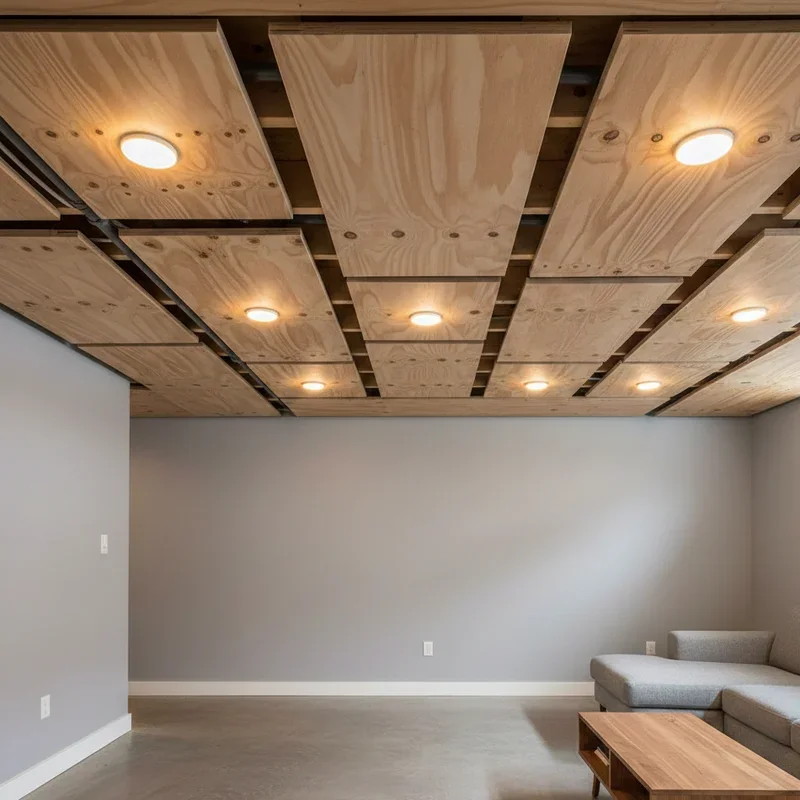
12. Plywood Panel Ceiling Design
Create clean modern aesthetics through plywood panel ceilings that provide smooth surfaces while maintaining affordable material costs throughout installations. Cut plywood sheets into manageable panels, installing them to ceiling joists using screws creating continuous overhead planes throughout basement areas. Various plywood grades from finished birch to rustic CDX offer different aesthetic options matching design visions throughout material selections. Stained plywood reveals attractive wood grain patterns while painted applications create smooth contemporary surfaces throughout finishing approaches. The straightforward installation suits DIY skill levels while producing professional-quality results through proper technique application throughout projects. Consider panel layout patterns including brick, grid, or diagonal arrangements that add visual interest beyond simple continuous installations throughout designs. Plywood ceilings prove that sheet goods create effective basement treatments.
13. Exposed Industrial Aesthetic
Embrace industrial design through intentionally exposed ceilings that celebrate rather than conceal mechanical systems as design features throughout basements. Clean and organize visible elements including painting pipes, wrapping ducts, and routing wires neatly creating intentional rather than neglected appearances overhead. Add industrial lighting fixtures, exposed conduit, and metal accents that reinforce the aesthetic direction throughout ceiling treatment approaches. The approach maintains complete mechanical access while transforming potential eyesores into celebrated design elements throughout basement spaces. Industrial aesthetics suit basement bars, workshops, and entertainment spaces where urban edge enhances rather than contradicts intended uses appropriately. Consider color-coding different systems creating visual interest while maintaining practical identification throughout organized exposed installations. Industrial aesthetics prove that exposed systems become design features.
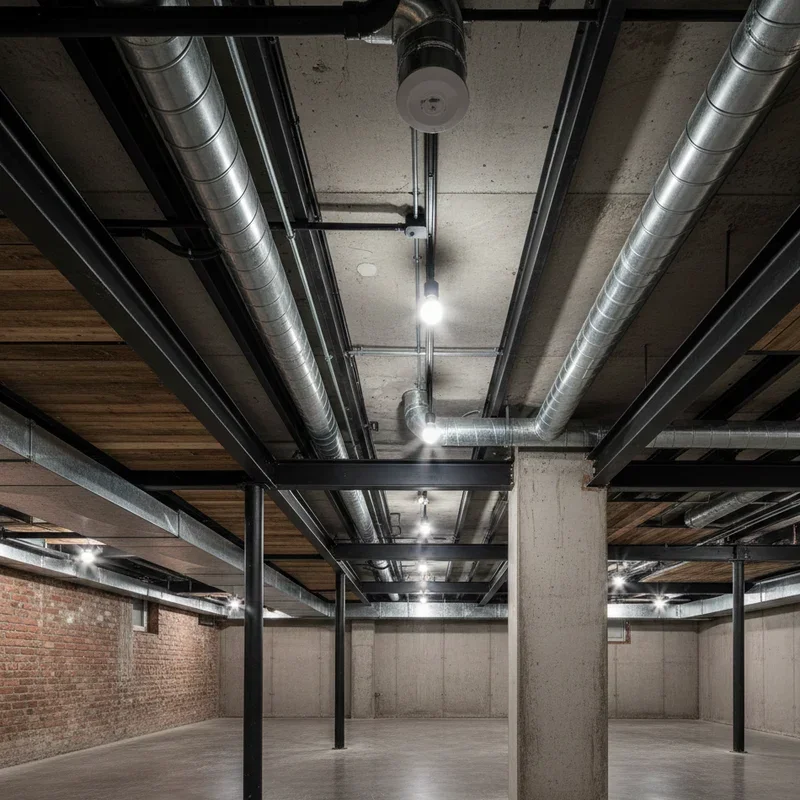
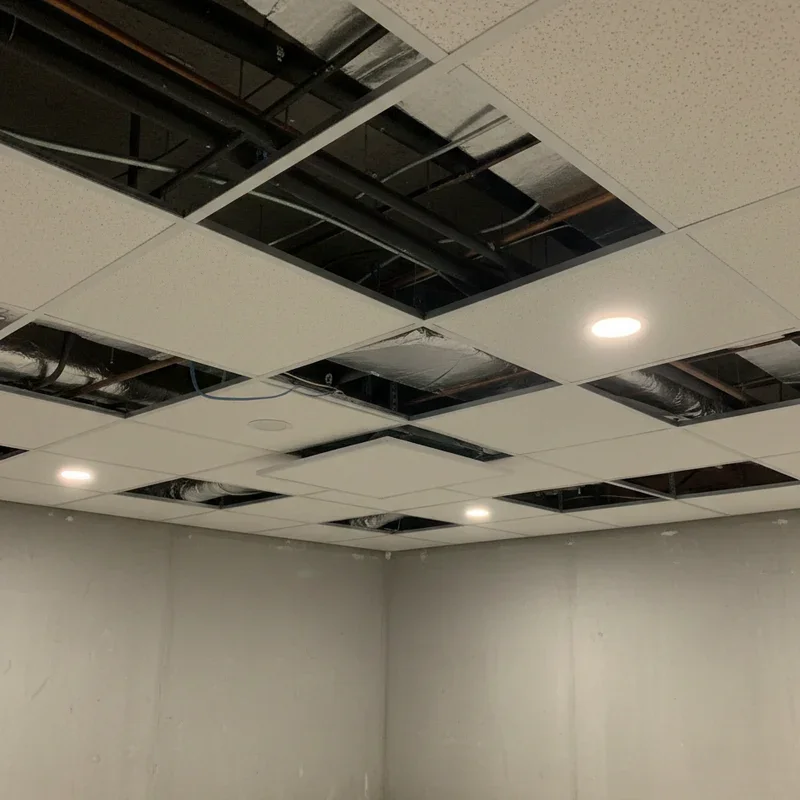
14. Ceiling Grid with Removable Panels
Combine concealment with access through custom ceiling grids featuring removable panels that hide infrastructure while allowing easy maintenance throughout usage. Build wooden grid frameworks installed to ceiling joists, then fill openings with removable panels that lift out when access becomes necessary. The approach provides cleaner aesthetics than commercial drop ceilings while maintaining practical access that drywall installations sacrifice throughout finishing. Custom grids allow incorporating various panel materials including fabric, wood, or painted surfaces matching design preferences throughout installations. The DIY-friendly construction requires basic carpentry skills while producing professional-appearing results throughout completed projects. Consider varying grid sizes and panel treatments creating custom patterns that distinguish your ceiling throughout basement designs. Custom grids prove that DIY solutions balance aesthetics with practicality.
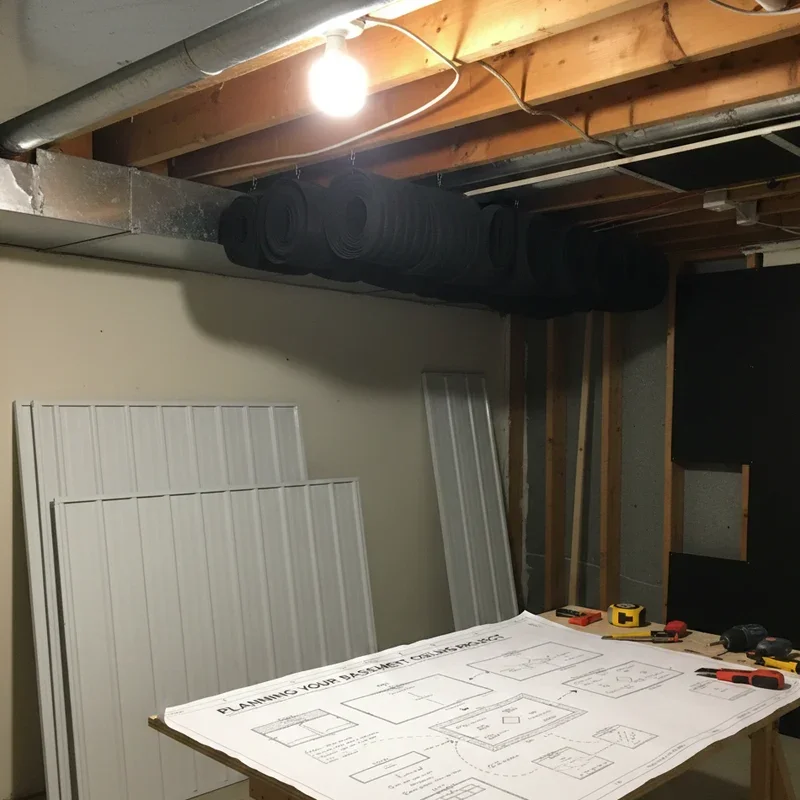
15. Planning Your Basement Ceiling Project
Ensure project success through comprehensive planning addressing height requirements, access needs, and material selections before beginning construction throughout preparations. Measure ceiling heights carefully, selecting treatments that maximize livable headroom without violating building codes requiring minimum clearances throughout spaces. Map mechanical systems determining access requirements that influence treatment choices throughout planning processes appropriately. Calculate material quantities accurately, adding overage allowances that accommodate cutting waste and mistakes throughout project execution. Research local building codes ensuring your chosen ceiling treatment meets requirements for occupied basement spaces throughout installations. Consider lighting integration early, planning fixture placement and wiring before ceiling installation limits access throughout construction sequences. Complete planning proves that preparation ensures basement ceiling project success.
Conclusion
DIY basement ceiling ideas prove that underground spaces transform from neglected storage areas into stunning living spaces through thoughtful overhead treatments. These 15 approaches demonstrate remarkable range, from simple paint applications to ambitious coffered constructions, ensuring options exist for every skill level and budget. Whether you embrace industrial exposed aesthetics or prefer polished drywall finishes, ceiling treatments determine whether basements feel like proper rooms or unfinished afterthoughts. Your basement represents valuable square footage deserving the same design attention you'd give any other space in your home. Start with one inspiring concept and unlock your basement's hidden potential through ceiling upgrades you complete yourself.
Read next: 15 DIY Cheap Ceiling Ideas for Budget Makeovers
Frequently Asked Questions
Q1: What's the minimum ceiling height required for finished basements?
A1: Most building codes require seven feet minimum, though requirements vary by location specifically.
Q2: How do I maintain access to plumbing and electrical in finished ceilings?
A2: Install access panels, use removable ceiling tiles, or choose exposed treatments maintaining visibility.
Q3: What's the most budget-friendly basement ceiling option?
A3: Painting exposed ceilings costs least while creating dramatic transformations using basic materials affordably.
Q4: Can I install basement ceilings myself without professional help?
A4: Yes, most options suit DIY installation with basic tools and intermediate skill levels.
Q5: How do I handle basement ceiling moisture and humidity concerns?
A5: Choose moisture-resistant materials and ensure proper ventilation throughout basement ceiling installations carefully.
Stay up to date with our latest ideas!