15 DIY Range Hood Cover Ideas to Refresh Your Kitchen
Explore 15 creative DIY range hood cover ideas that transform your kitchen instantly. Budget-friendly projects for stunning results!
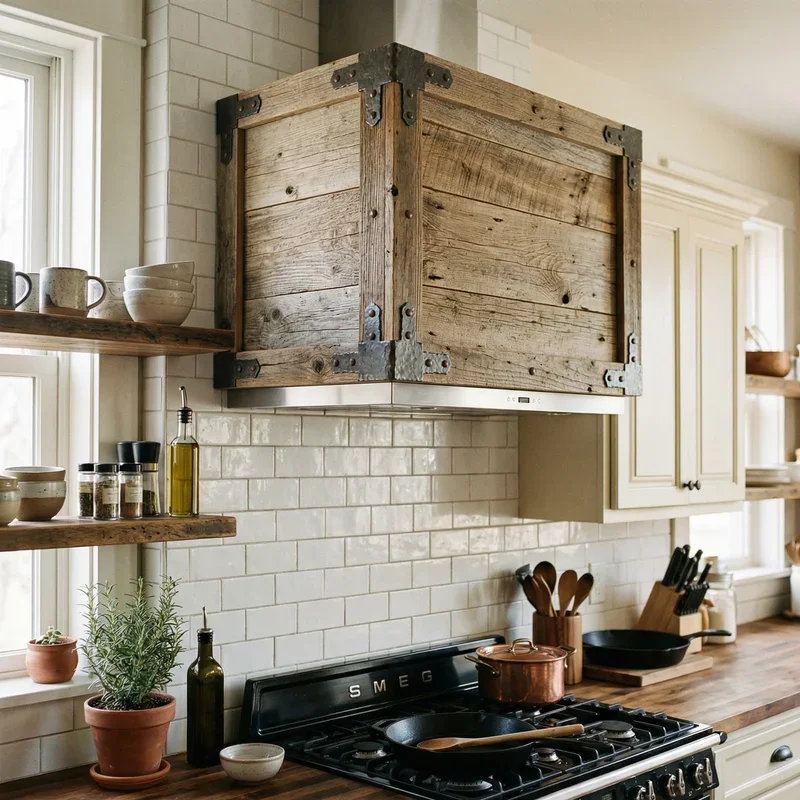
Your range hood might be the hardest working appliance above your stove, but that doesn't mean it has to look like industrial equipment escaped from a commercial kitchen. The exposed metal or plastic ventilation cover dominating your cooking space screams for a makeover that transforms functionality into design feature worth admiring daily. DIY range hood covers have become the renovation secret that designers use to elevate kitchens from ordinary to extraordinary without the contractor price tags that custom installations typically demand. Think of your range hood as a blank canvas positioned at the visual heart of your kitchen, waiting for creative expression that reflects your personal style perfectly. Whether your taste runs toward rustic farmhouse warmth, sleek contemporary minimalism, or something entirely unique, a weekend project can completely transform how your kitchen looks and feels. Ready to turn that eyesore into eye candy?
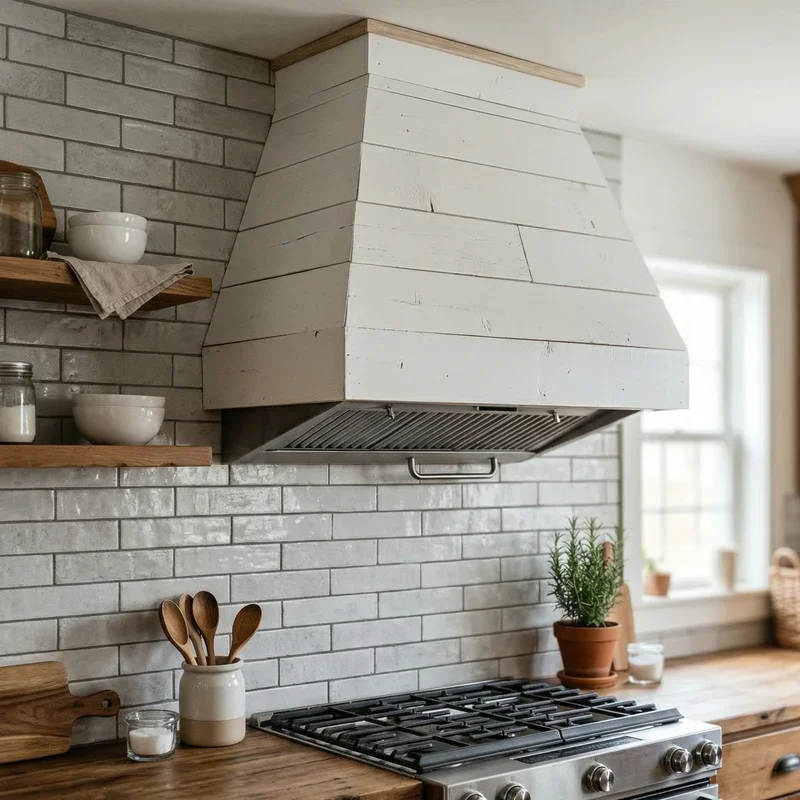
1. Shiplap Farmhouse Cover
Capture that coveted farmhouse aesthetic by wrapping your range hood in horizontal shiplap planks that instantly warm up any kitchen with cottage charm. The characteristic gaps between boards create shadow lines that add visual depth and texture beyond what smooth surfaces ever achieve. Start by building a simple wooden frame around your existing hood using standard two-by-four lumber that provides attachment points for planking. Cut shiplap to length and secure with brad nails, working from bottom to top for clean, consistent spacing throughout your installation. Paint the completed cover in crisp white for classic farmhouse appeal, or try soft gray or sage green for updated takes on the traditional style. The affordable material cost and straightforward construction make shiplap covers perfect entry points for DIY beginners nervous about tackling more complex projects. Your shiplap hood brings instant farmhouse character that transforms entire kitchen atmospheres.
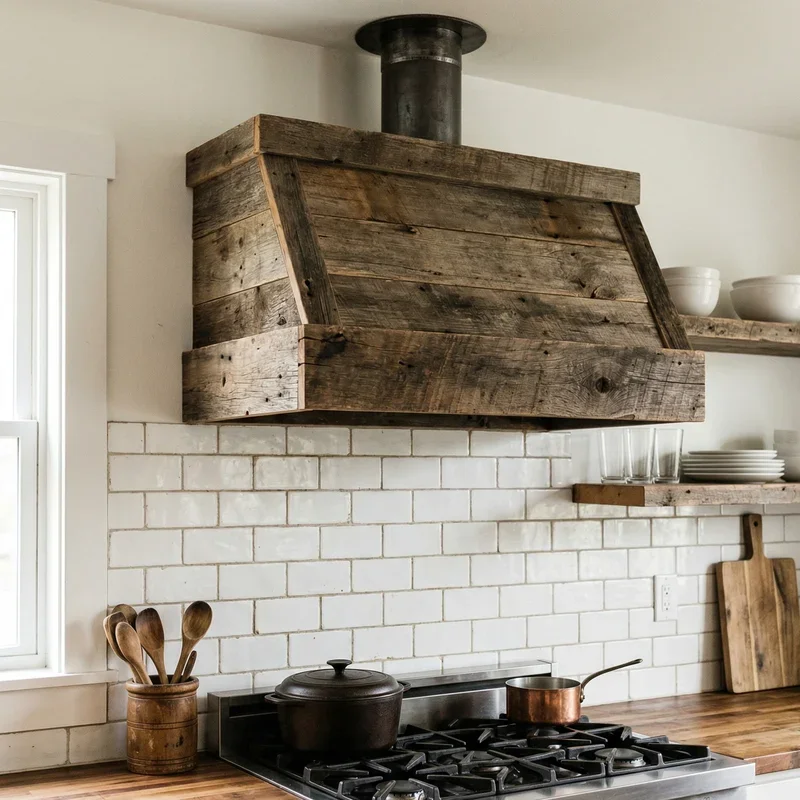
2. Reclaimed Wood Rustic Hood
Infuse your kitchen with authentic character by sourcing weathered barn wood that carries decades of history in every plank's unique patina and texture. No two pieces of reclaimed wood match exactly, creating one-of-a-kind hoods that factory-produced alternatives cannot replicate regardless of price point. Hunt for materials at architectural salvage yards, demolition sites, or specialty dealers who stock aged lumber specifically for design-conscious renovators. Build sturdy frames that accommodate reclaimed wood's often irregular dimensions, adapting construction methods to available materials rather than demanding uniformity. Apply protective sealant that guards against grease absorption while allowing the wood's natural character to show through finished surfaces. The environmental benefit of repurposing existing materials appeals to sustainability-minded homeowners seeking eco-friendly renovation choices throughout their homes. Your reclaimed wood hood tells stories through every weathered grain line and nail hole visible.
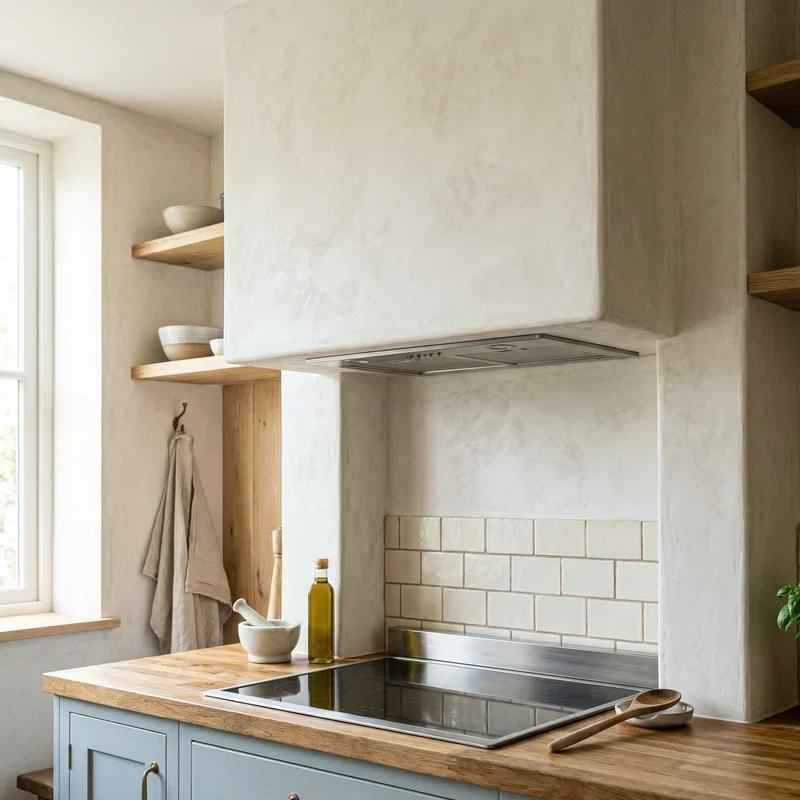
3. Smooth Plaster Finish Design
Achieve European sophistication through seamless plaster finishes that make range hoods appear carved from single pieces of stone rather than constructed from components. The plaster approach suits curved or arched hood shapes that reference Mediterranean or French country kitchen traditions beautifully. Build underlying structures from metal or wood framing, then apply layers of drywall and joint compound that create smooth surfaces for final plaster treatment. The finishing process requires patience as multiple coats dry, get sanded, and receive additional applications until perfection emerges. Color-integrated plaster eliminates painting needs while providing surfaces that age gracefully with subtle variation developing over years. The monolithic appearance suggests expensive custom construction while actually requiring skilled finishing techniques rather than exotic expensive materials. Your plastered hood becomes the architectural element that anchors kitchen design through refined simplicity.
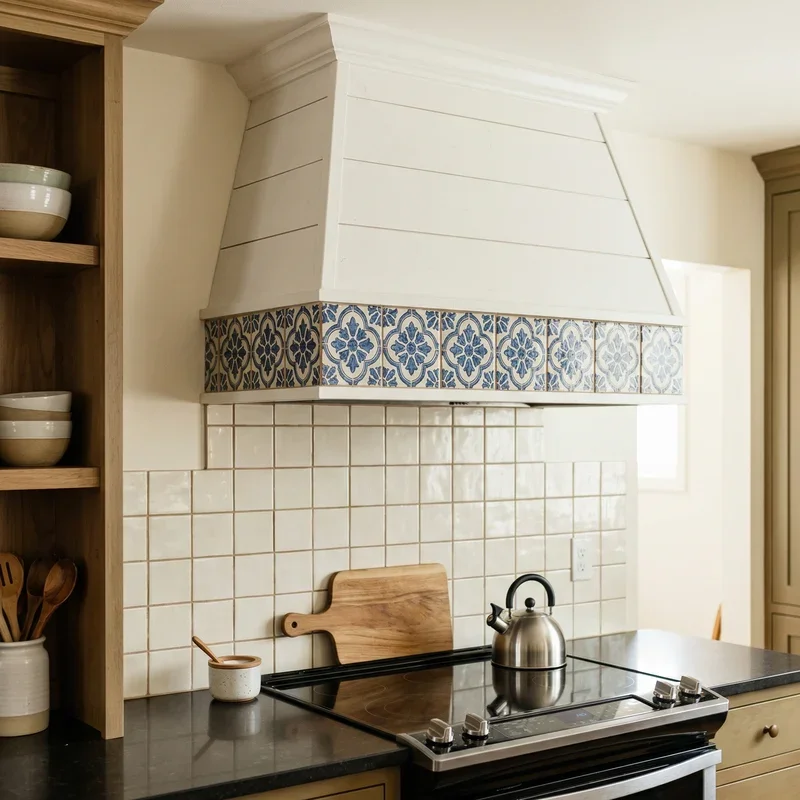
4. Decorative Tile Surround
Transform your hood into a functional art piece by applying decorative tiles that introduce color, pattern, and personality lacking in standard ventilation equipment. Hand-painted tiles from Spain, Morocco, or Portugal bring global design influences that transport kitchen atmospheres across continents visually. Apply tiles to cement board substrates attached securely to hood framing, using appropriate adhesives and grout for durable installations lasting decades. Consider extending tile treatment onto surrounding backsplash areas that create cohesive design zones rather than isolated decorative statements. The heat and grease resistance of quality tiles makes them practical choices for cooking environments where lesser materials might degrade quickly. Plan tile layouts carefully on paper before beginning installation, ensuring patterns align properly and cuts fall in less visible locations. Your tiled hood becomes the conversation piece that guests remember and photograph long after meals conclude.
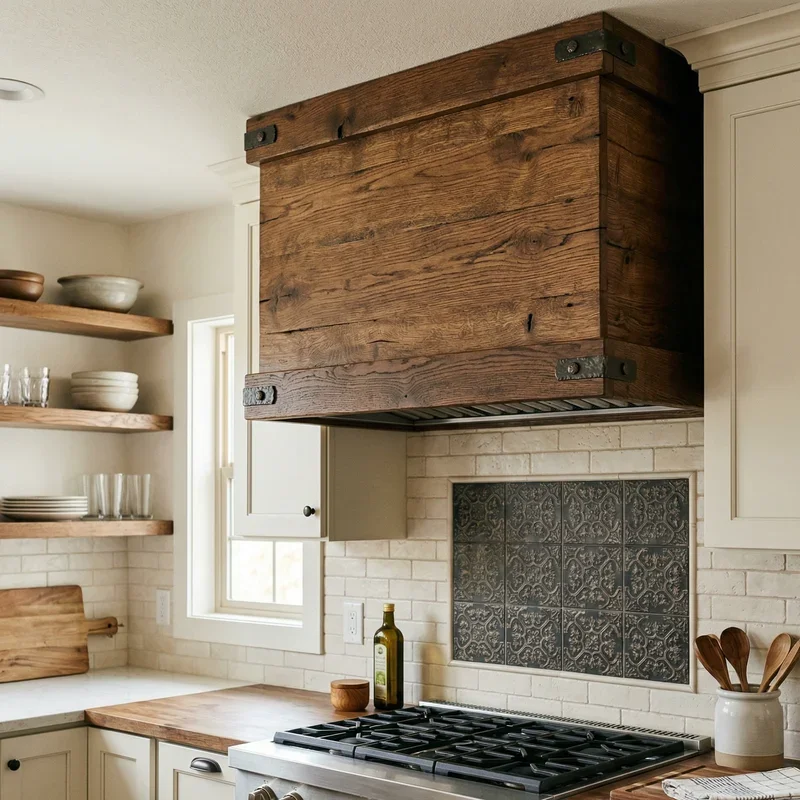
5. Stained Oak Beam Style
Create the impression of substantial timber construction through solid oak boards that suggest structural support while providing purely decorative hood coverage. The natural grain patterns in quality oak add visual interest that painted surfaces cannot match regardless of color or technique choices. Select boards with interesting figure, or embrace character marks like knots and mineral streaks that contribute rustic authenticity throughout. Build dimensional layering that steps outward from walls, creating depth that suggests genuine beam weight supporting kitchen structures. Apply stain colors that complement existing cabinetry, flooring, or furniture present throughout your kitchen's design scheme. Multiple coats of polyurethane protect wood from kitchen moisture and grease while enhancing grain visibility that makes oak so desirable. Your oak beam hood anchors kitchens with substantial presence suggesting generations of craftsmanship tradition.
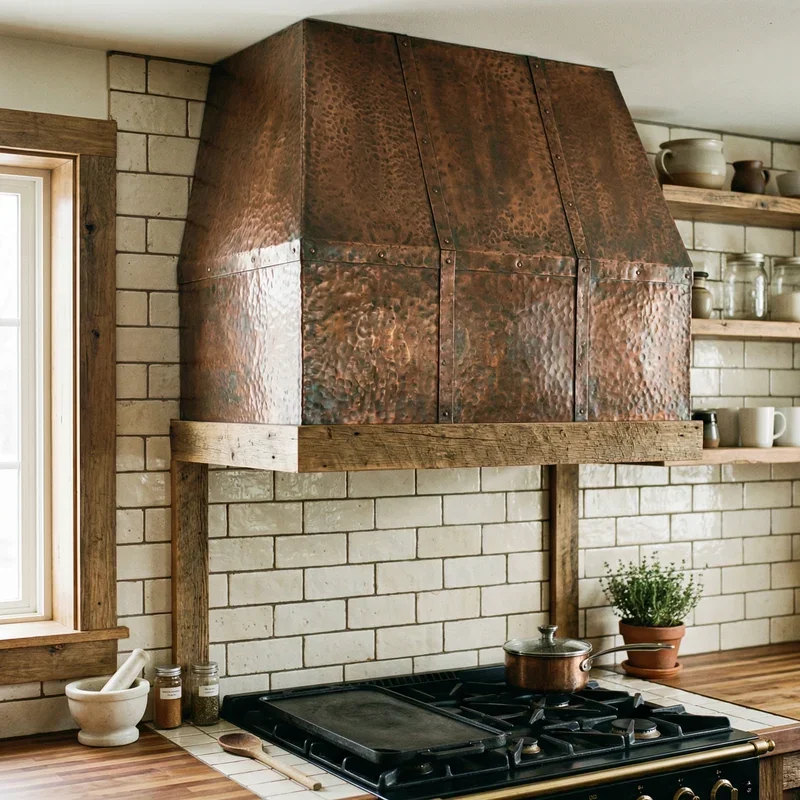
6. Hammered Copper Panels
Introduce warm metallic glow through hammered copper panels that add texture, reflection, and artisanal character to range hood surfaces dramatically. The hand-hammered texture catches light differently across surfaces, creating visual movement that flat metal finishes cannot achieve naturally. Source copper panels from metal suppliers or specialty retailers who stock decorative metals specifically for architectural applications. Attach panels to wooden frames using appropriate fasteners that accommodate copper's tendency to expand and contract with temperature changes. The living finish of copper evolves over time, developing patina that some homeowners embrace while others maintain through regular polishing. Pair copper hoods with copper pots, light fixtures, or hardware that create cohesive metallic accents throughout kitchen designs comprehensively. Your copper hood adds warmth and artisanal quality that transforms kitchens into spaces suggesting professional culinary environments.
7. White Painted Classic Cover
Achieve timeless elegance through simple white-painted covers that brighten kitchens while providing sophisticated backdrops for cooking activities unfolding below. Build clean box shapes using MDF or quality plywood that accepts paint smoothly without grain telegraphing through finished surfaces. Add architectural interest through applied moldings along edges and transitions that suggest custom cabinetry construction throughout. Sand between multiple paint coats for glass-smooth finishes that appear professionally sprayed rather than brush-applied by amateurs. Choose semi-gloss or satin sheens that resist grease accumulation while remaining easy to wipe clean during regular kitchen maintenance. White works universally across kitchen styles from contemporary to traditional, providing safe design choices for homeowners uncertain about bolder directions. Your white hood establishes the classic foundation that never dates while allowing surrounding elements to command attention.
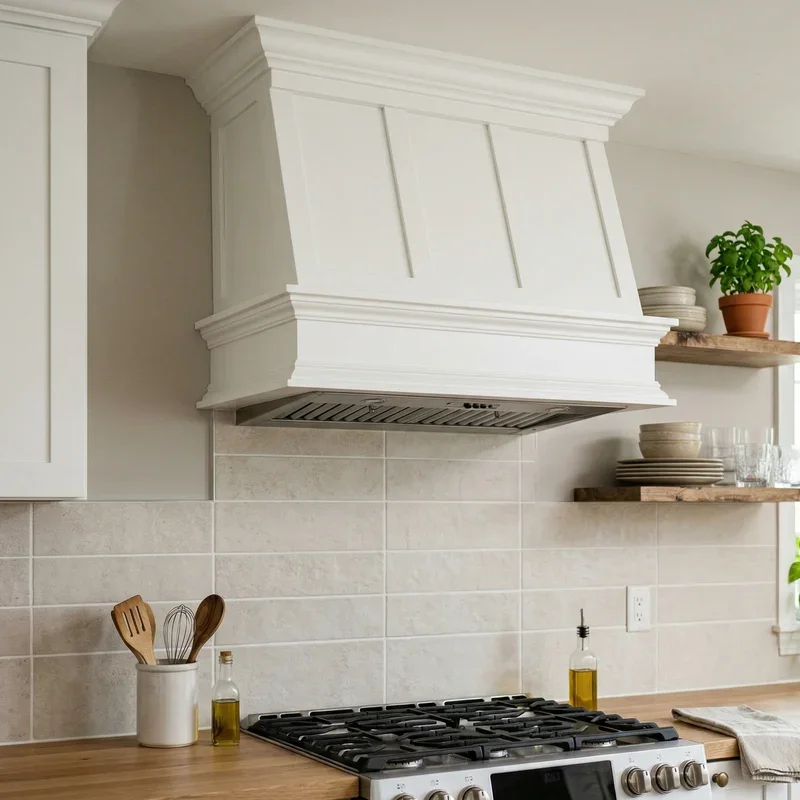
8. Natural Stone Veneer Hood
Add geological weight and texture through stone veneer products that suggest masonry construction without requiring structural modifications that full stone would demand. Lightweight veneer panels apply directly to substrates using construction adhesive and mortar, creating authentic stone appearances through manageable installation processes. Choose from stacked ledgestone, river rock, or various quarried stone profiles that create different textures across hood surfaces impressively. The natural variation in stone coloring eliminates concerns about perfect matching that manufactured materials require for cohesive results. Stone hoods pair beautifully with stone backsplashes, fireplace surrounds, or outdoor connections that create visual continuity throughout home design. The texture generates shadow play as light changes throughout days, adding interest that smooth surfaces lack entirely. Your stone hood grounds kitchens with geological permanence that suggests ancient architectural traditions.
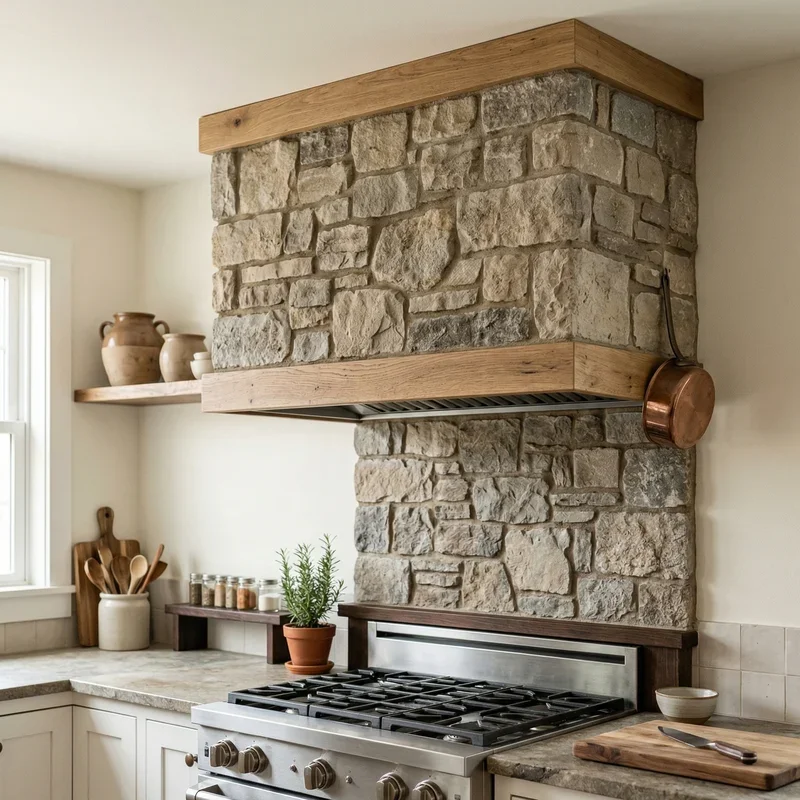
9. Tongue and Groove Planking
Create clean horizontal lines through tongue and groove boards that interlock seamlessly for smooth appearances without the gaps that shiplap deliberately features. The tight joints between planks suit contemporary and transitional kitchens where farmhouse character might feel too rustic for established aesthetics. Pine tongue and groove provides affordable options while cedar or hardwoods offer enhanced durability and finer grain patterns worth the premium costs. Install planks running horizontally for traditional appearances, or try vertical installations that draw eyes upward toward vaulted ceilings dramatically. Stain natural for warm wood character or paint any color that complements existing kitchen palettes throughout surrounding spaces. The straightforward installation process suits beginners who want precise results without the complexity that some covering approaches demand. Your tongue and groove hood delivers refined wood character through construction methods that ensure quality results.
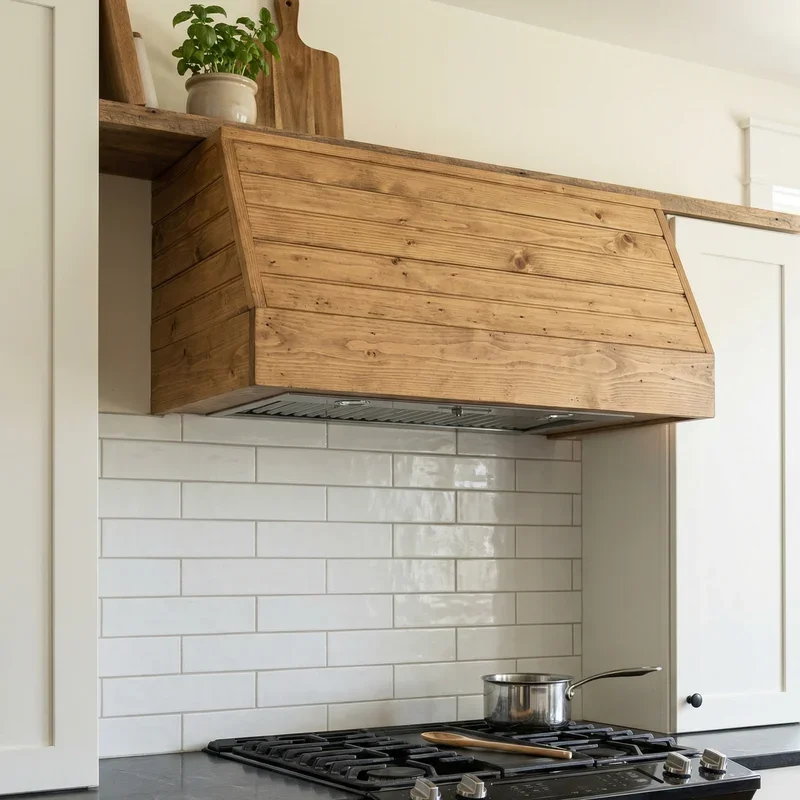
10. Industrial Metal Sheeting
Embrace factory aesthetic through corrugated or flat metal panels that introduce industrial edge to kitchens seeking contemporary character beyond traditional warmth. Galvanized steel, blackened steel, and zinc each offer distinct appearances that suit different visions for industrial-influenced kitchen designs. The reflective quality of polished metals bounces light throughout spaces while matte finishes provide subtler presence without overwhelming brightness. Apply panels to wooden substrates using screws that become visible design elements or hidden fasteners that maintain clean appearances. Raw metal develops patina over time that living finishes embrace, while powder-coated options maintain consistent appearances indefinitely. Industrial hoods pair naturally with exposed brick, concrete counters, and open shelving that complete loft-inspired kitchen transformations. Your metal hood brings factory-floor authenticity that counterbalances softer residential elements with harder-edged visual interest.
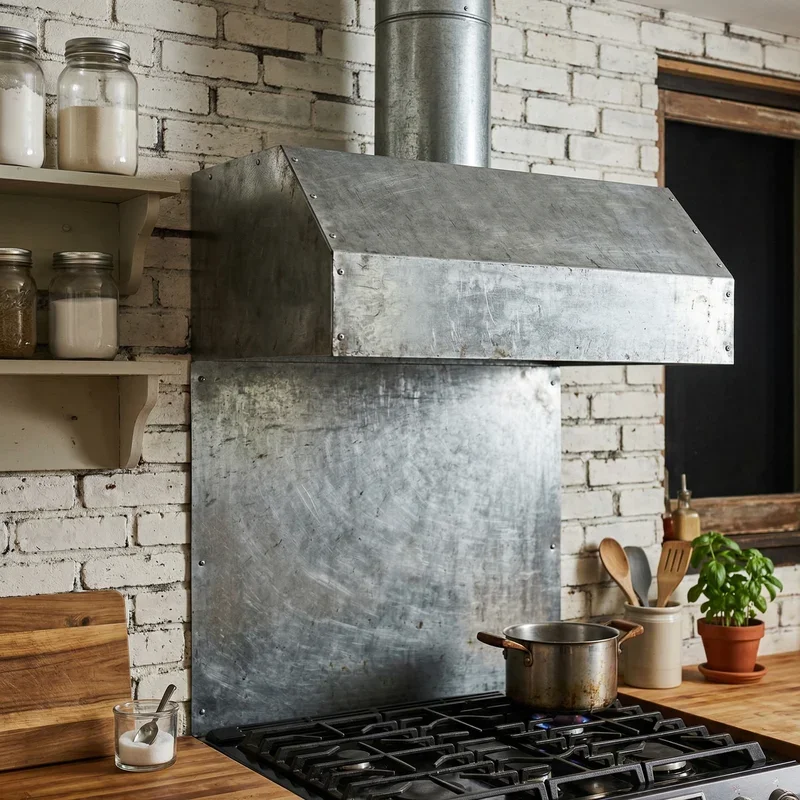
11. Carved Corbel Accents
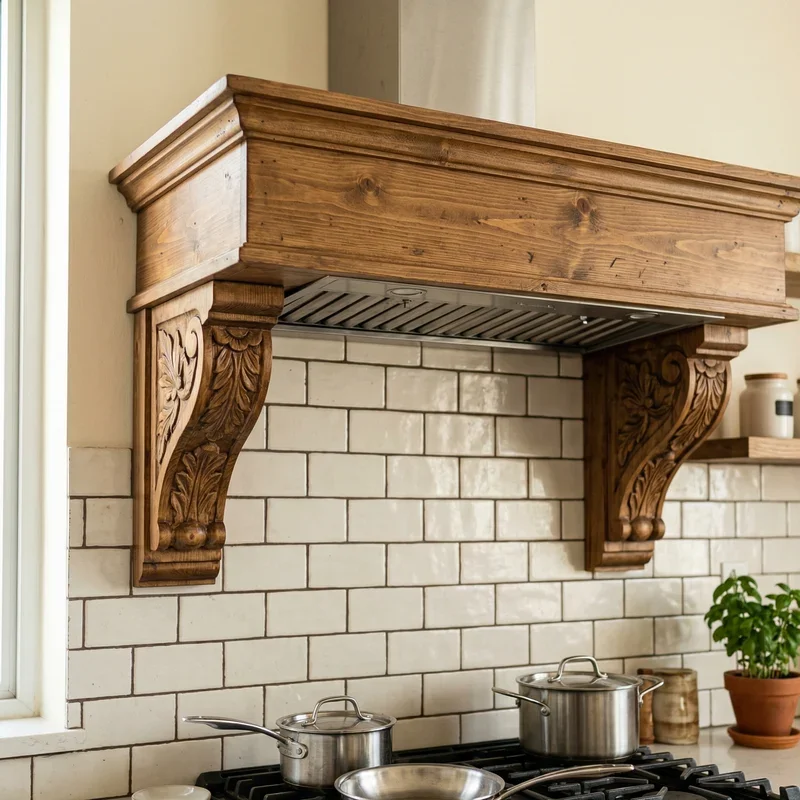
Elevate basic hood construction through decorative corbels that suggest structural support while providing purely aesthetic enhancement along hood edges. Position substantial corbels at corners where they appear to bear weight, adding architectural gravitas that simple boxes lack without additional decoration. Source corbels from millwork suppliers offering various profiles from ornate traditional to clean contemporary that suit different kitchen styles. Stain or paint corbels matching hood covering materials for unified appearances, or contrast deliberately for visual interest highlighting decorative elements specifically. The addition transforms utilitarian boxes into furniture-quality pieces that suggest expensive custom cabinetry throughout kitchen installations. Proper proportioning matters: corbels must appear substantial enough to support visual weight that hoods present above cooktops. Your corbel-enhanced hood demonstrates attention to architectural detail that distinguishes thoughtful renovations from basic improvements.
12. Brick Facade Treatment
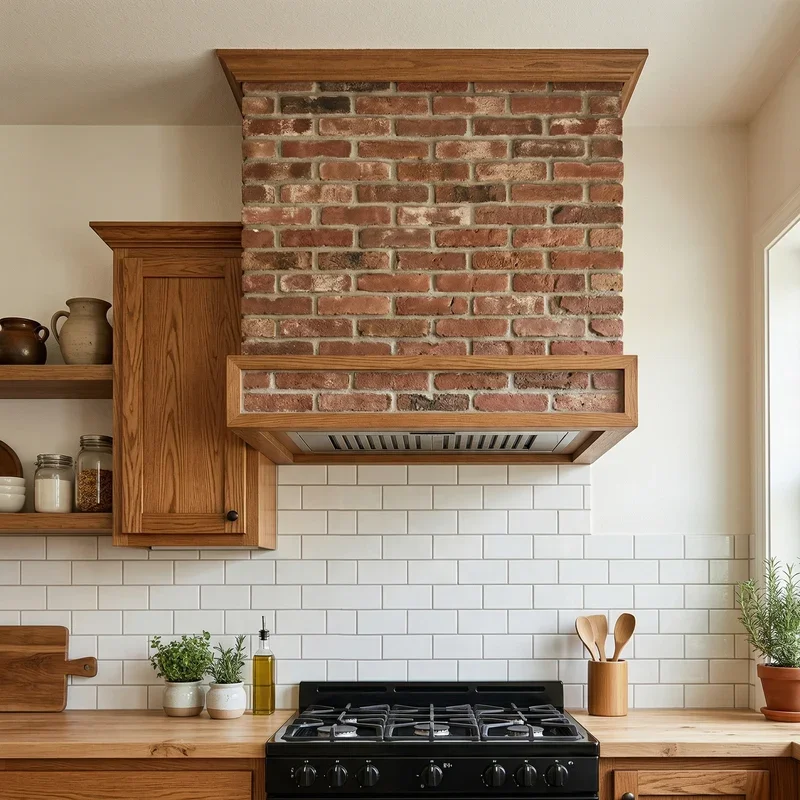
Capture urban loft appeal through thin brick veneer that adds authentic masonry texture and warm terracotta coloring without structural complications. Brick veneer products install directly onto substrates using adhesive and mortar techniques that actual brick laying would demand at much greater difficulty. Choose from antique profiles featuring worn edges and color variation, or cleaner contemporary bricks presenting more uniform appearances throughout. Consider whitewashing or limewashing completed installations for softer appearances suiting some kitchen aesthetics better than raw brick. The texture creates visual interest through dimensional surfaces that flat finishes cannot replicate regardless of color or pattern. Brick hoods work particularly well in kitchens featuring exposed brick elsewhere that hood treatment can reference for design cohesion. Your brick hood brings urban warmth that transforms suburban kitchens into spaces suggesting converted industrial buildings.
13. Herringbone Wood Pattern
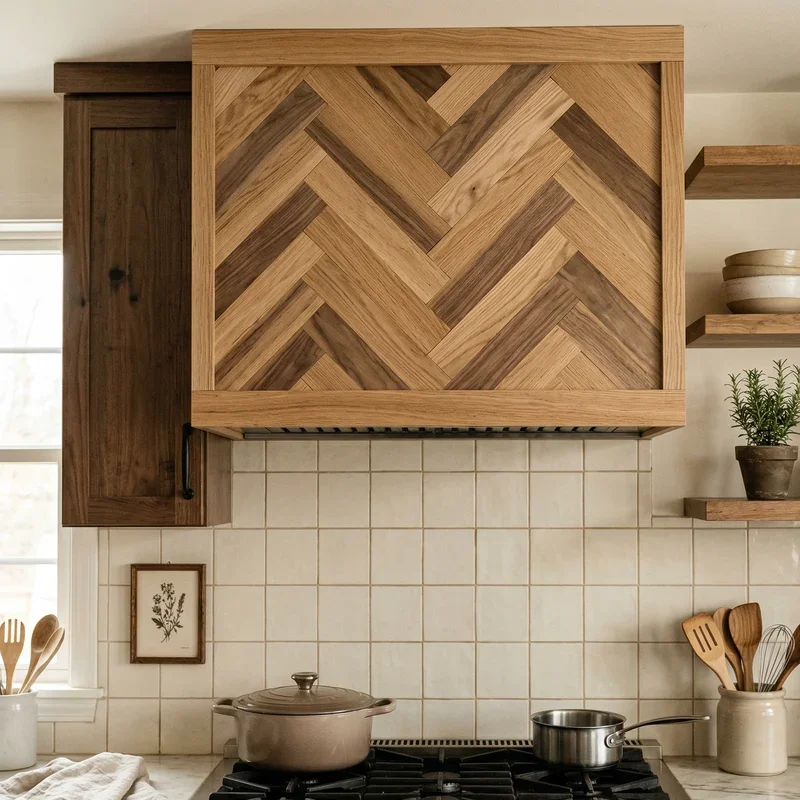
Break from horizontal monotony through diagonal herringbone patterns that add geometric interest and sophisticated visual complexity to hood surfaces. The V-shaped pattern requires precise cutting and careful installation but produces results that standard plank orientations cannot match impressively. Plan patterns on paper before cutting materials, ensuring angles align properly and pattern centers appropriately across hood faces. Use contrasting wood tones between herringbone planks and surrounding frames that emphasize pattern geometry deliberately. The labor-intensive nature of herringbone work rewards patience through unique results that no simple covering approach achieves regardless of material quality. Seal completed patterns thoroughly since the numerous joints create potential grease entry points requiring protection against penetration. Your herringbone hood transforms functional covering into geometric artwork that elevates kitchen design standards.
14. Venetian Plaster Finish
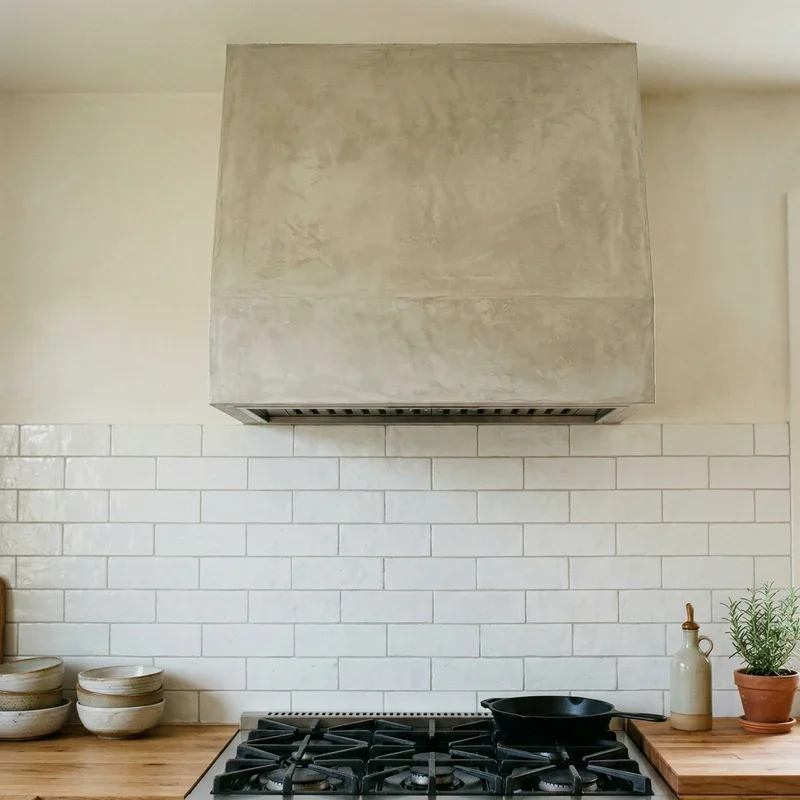
Achieve old-world elegance through Venetian plaster techniques that create polished stone appearances through layered application of specialized finishing materials. The multi-coat process builds depth and subtle color variation that single-application finishes cannot develop regardless of technique quality. Prepare smooth drywall substrates that Venetian plaster requires for proper adhesion and finish quality throughout completed surfaces. Apply base coats, then build finish layers using specialized trowels that create the burnished appearances characterizing authentic Venetian work. Color options range from soft neutrals to dramatic deep tones that become focal points rather than background elements within kitchens. The labor-intensive technique requires practice, so consider testing on sample boards before committing to visible kitchen installations. Your Venetian plaster hood brings Mediterranean sophistication that suggests centuries of European artisan tradition.
15. Board and Batten Design
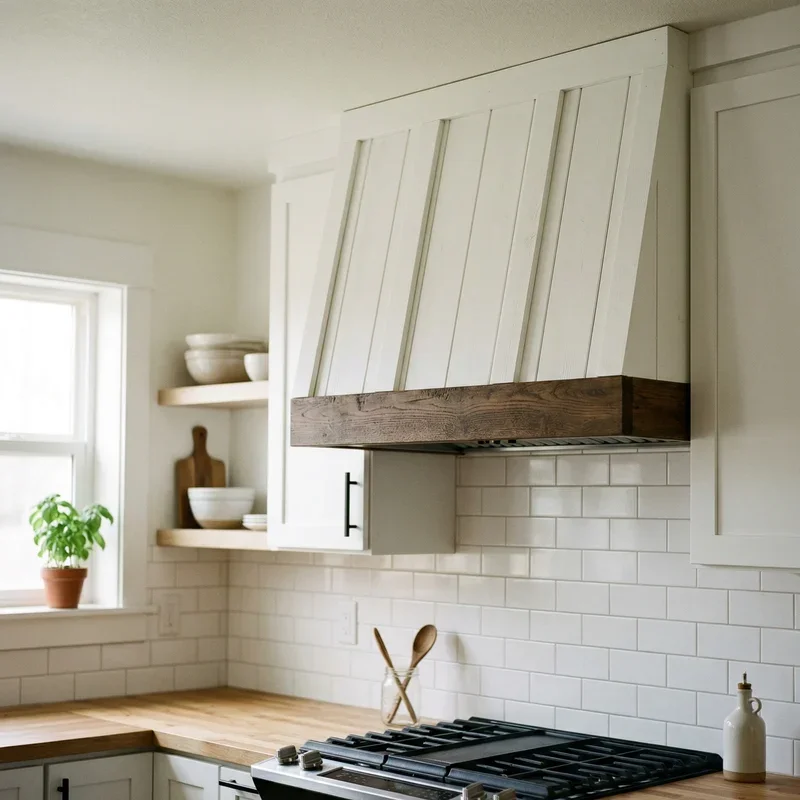
Create dimensional interest through board and batten patterns featuring vertical boards with applied battens that generate shadow lines and architectural rhythm. The traditional technique dates to agricultural buildings where functional patterns have since become purely decorative in contemporary applications. Build flat substrates then apply battens at regular intervals that create the characteristic vertical emphasis defining this classic approach. Paint uniformly for clean appearances or use contrasting colors between boards and battens that emphasize dimensional pattern elements deliberately. Board and batten suits various kitchen styles from farmhouse to coastal to transitional where vertical emphasis complements design directions. The straightforward construction process requires only basic tools and techniques that beginners accomplish confidently on first attempts. Your board and batten hood brings architectural tradition to kitchen spaces through accessible DIY methods.
Conclusion
DIY range hood covers represent transformative projects that deliver dramatic kitchen improvements through manageable weekend investments of time and materials. These fifteen ideas demonstrate remarkable variety available for personalizing kitchen focal points that factory options cannot match regardless of cost. The satisfaction of crafting custom covers with your own hands adds meaning beyond aesthetic improvements that purchased solutions provide. Consider your existing kitchen style, personal skill level, and maintenance preferences when selecting approaches that align with your specific situation and capabilities. Proper planning, precise measurement, and realistic project assessment prevent frustrations that ambitious undertakings sometimes generate unexpectedly. Your completed hood cover proclaims that thoughtful design attention extends throughout every corner of your carefully considered kitchen space.
Read next: 15 DIY Ways to Cover Open Shelves with Style
Frequently Asked Questions
Q1: How much clearance do I need between my hood cover and cooktop?
A: Maintain manufacturer-recommended minimum distances, typically 24 to 30 inches for most residential installations.
Q2: Can I build a hood cover around my existing ventilation unit?
A: Yes, most DIY covers frame around existing hoods while preserving complete ventilation functionality throughout operation.
Q3: What materials best resist heat and grease near cooking surfaces?
A: Sealed wood, metal, stone, tile, and properly finished plaster all handle kitchen conditions when installed correctly.
Q4: Do I need professional help for DIY range hood cover projects?
A: Most covers suit capable DIYers, though complex designs may benefit from professional carpentry assistance.
Q5: How do I ensure my hood cover meets fire safety requirements?
A: Follow local building codes, maintain proper clearances, and use fire-resistant materials near heat sources always.
Stay up to date with our latest ideas!