15 Golf Club Craft Ideas to Repurpose Old Equipment
Discover 15 creative golf club craft ideas that transform old equipment into stunning home decor and useful items. Upcycle today!
That bag of outdated golf clubs gathering dust in your garage represents untapped creative potential that deserves better than landfill destiny or eternal storage purgatory. Those obsolete drivers, worn putters, and bent irons contain materials and shapes perfectly suited for transformation into functional art, home decor, and conversation pieces that honor their sporting heritage while serving entirely new purposes. Golfers develop emotional attachments to clubs that carried them through memorable rounds, making disposal feel like betraying old friends who served faithfully across countless fairways. Repurposing offers the perfect middle ground: preservation through transformation that keeps beloved equipment visible while contributing useful beauty to living spaces. The unique shapes, quality materials, and sporting associations that golf clubs carry make them ideal candidates for creative projects that non-golfers also appreciate aesthetically. Ready to give those retired clubs new life through projects that celebrate rather than discard their history?
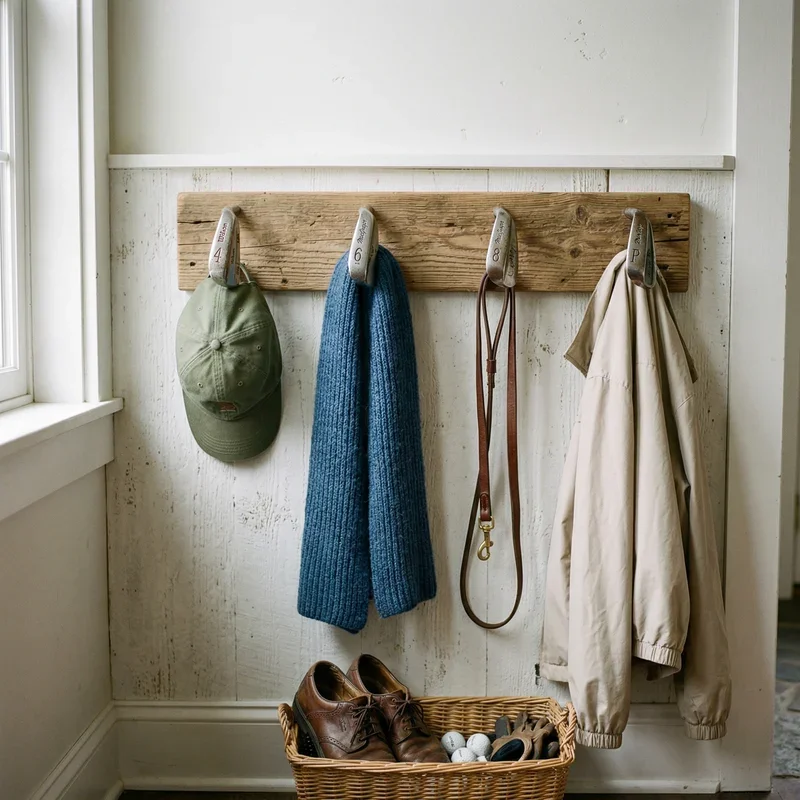
1. Golf Club Coat Rack
Transform retired clubs into functional entryway organization by mounting them horizontally to create unique coat racks that greet visitors with sporting personality. Position three to five clubs at angles resembling a golf bag arrangement, then attach them to a wooden backboard that hangs easily on entryway walls. The club heads become natural hooks perfectly sized for jackets, bags, hats, and umbrellas that accumulate near doorways throughout daily life. Sand and refinish wooden clubs for restored beauty, or embrace the weathered patina that years of play have developed naturally. The conversation-starting design immediately identifies households where golf enthusiasm extends beyond the course into home decor decisions. Mount securely using appropriate hardware since loaded coat racks bear significant weight that inadequate fasteners cannot support safely. Your club coat rack transforms functional necessity into sporting art that welcomes everyone entering your home.
2. Vintage Club Wall Art Display
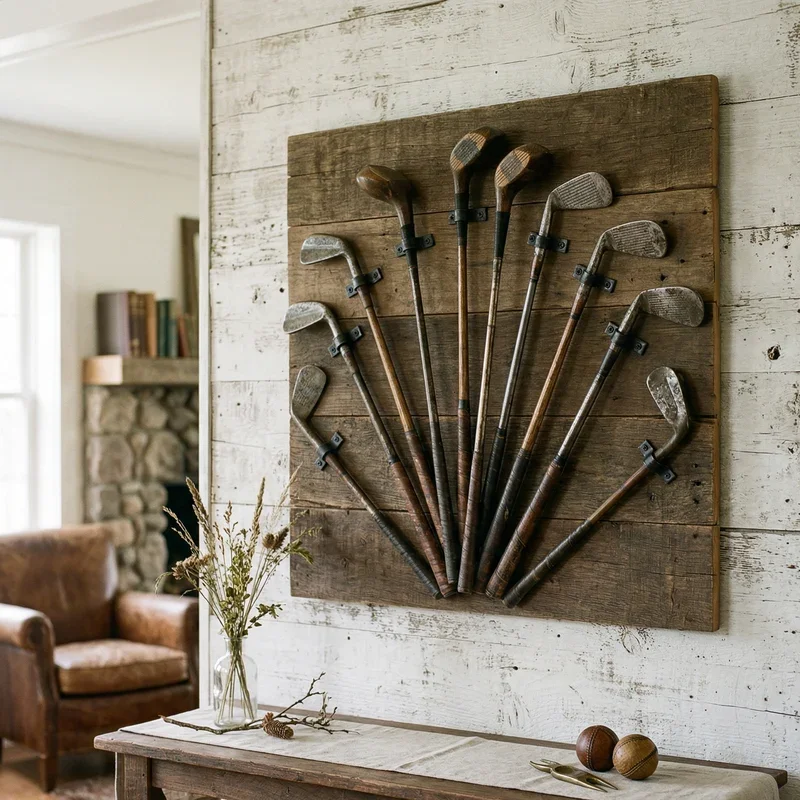
Celebrate golf history by arranging antique or vintage clubs into wall displays that function as sculptural art rather than mere equipment storage. Classic hickory-shafted clubs, persimmon woods, and blade putters carry aesthetic beauty that modern equipment often sacrifices for performance optimization. Arrange clubs in geometric patterns, radiating designs, or flowing compositions that create visual interest across wall spaces. Mount individual clubs using discrete hardware that supports weight while remaining largely invisible against displayed equipment. The aged materials, classic shapes, and historical associations these clubs carry add depth beyond purely decorative considerations. Combine clubs with vintage golf balls, scorecards, or photographs that create comprehensive displays honoring the sport's rich heritage. Your vintage display transforms wall space into golf museum galleries that honor the game's evolution through authentic equipment.
3. Garden Border Edging
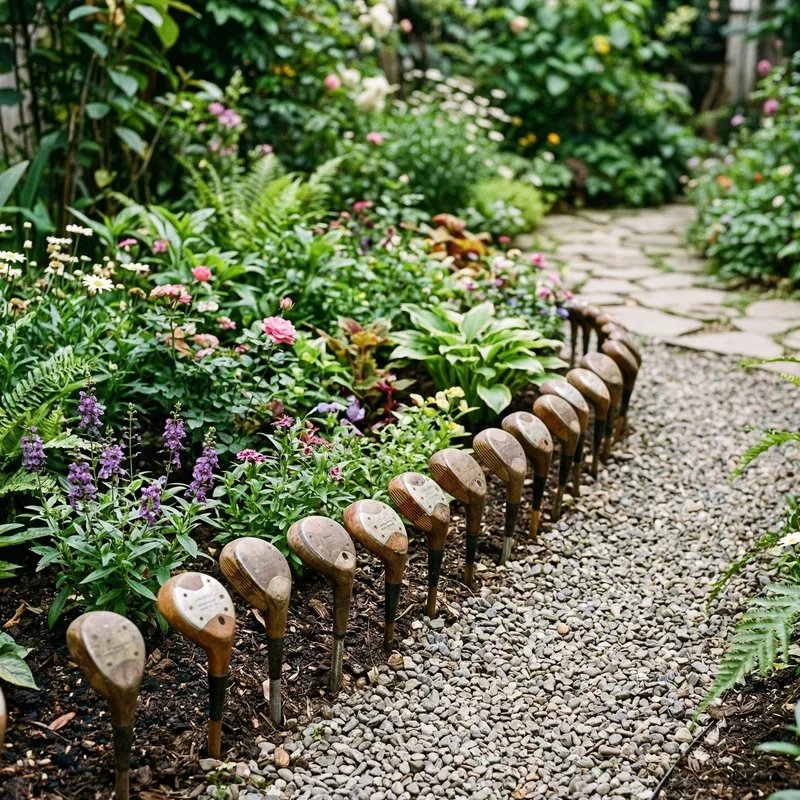
Define garden beds and pathways by inserting club shafts into soil as decorative edging that adds whimsy while serving practical landscaping functions. Cut shafts to uniform lengths or vary heights for wave-like effects that add visual interest along garden borders throughout. The metal and graphite materials that modern shafts contain resist soil moisture and decay that wooden borders eventually succumb to over seasons. Position clubs with heads facing upward for sculptural interest, or bury heads below soil level for cleaner shaft-only appearances along edges. Space clubs consistently for formal looks, or vary spacing for casual cottage garden aesthetics that feel less structured deliberately. The durability of golf club materials ensures borders last years longer than traditional wooden alternatives that require regular replacement eventually. Your club borders transform retired equipment into permanent landscape features that golfers and gardeners both appreciate.
4. Wine Bottle Holder
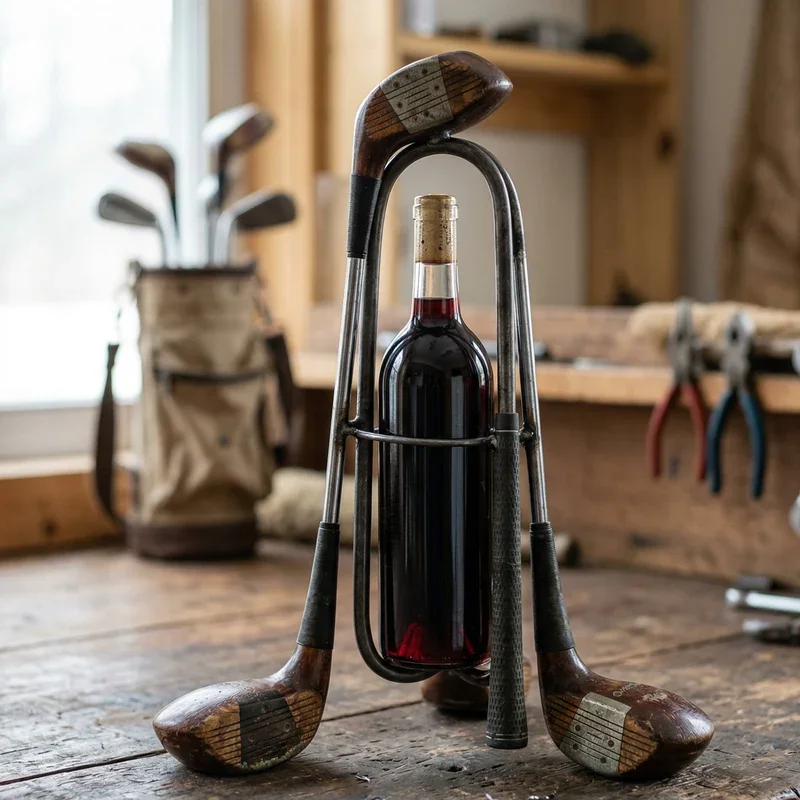
Craft sculptural wine storage by positioning club heads to cradle bottles in displays that combine sporting passion with sophisticated entertaining elements. Weld or bolt multiple club heads together creating frameworks that hold single bottles or entire collections securely upright. The curved shapes of many club heads naturally accommodate bottle neck dimensions that slot into spaces between heads perfectly. Iron heads work particularly well since their weight provides stability that lightweight materials cannot match when supporting full bottles. Sand and seal metal surfaces to prevent rust that wet bottle condensation might otherwise promote over extended display periods. Position completed holders on countertops, bars, or dining areas where they serve functional storage while starting conversations simultaneously. Your wine holder transforms obsolete equipment into entertaining centerpieces that reflect dual passions for golf and good wine.
5. Club Head Drawer Pulls
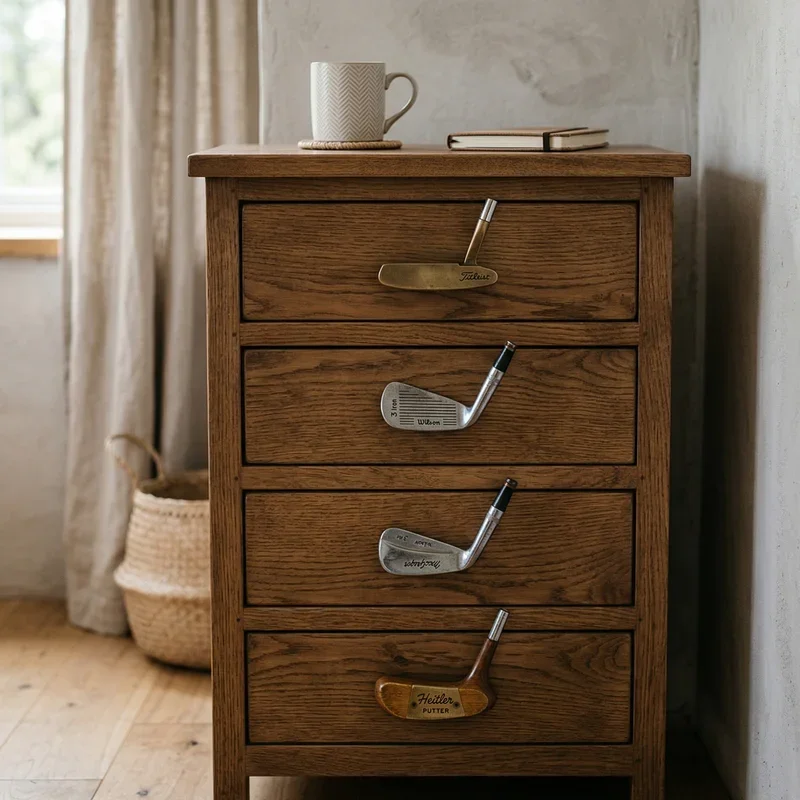
Replace standard cabinet hardware with golf club heads that transform kitchen, bathroom, or furniture drawers into sporting statements throughout your home. Remove shafts from heads, then attach screws through the hosels that connect heads to drawer surfaces securely. The weight and quality of club heads exceeds typical hardware, providing premium feel that mass-produced pulls cannot match tactilely. Mix head styles for eclectic appearances, or use matching heads throughout spaces for cohesive looks that feel intentionally designed. Iron heads, wood heads, and putter heads each offer different aesthetic options that suit various furniture styles and room characters. The project requires only basic tools and minimal time while producing results that transform ordinary storage into sporting-themed furniture features. Your club head pulls bring golf passion into daily interactions with cabinets and drawers throughout living spaces.
6. Photo Display Stand
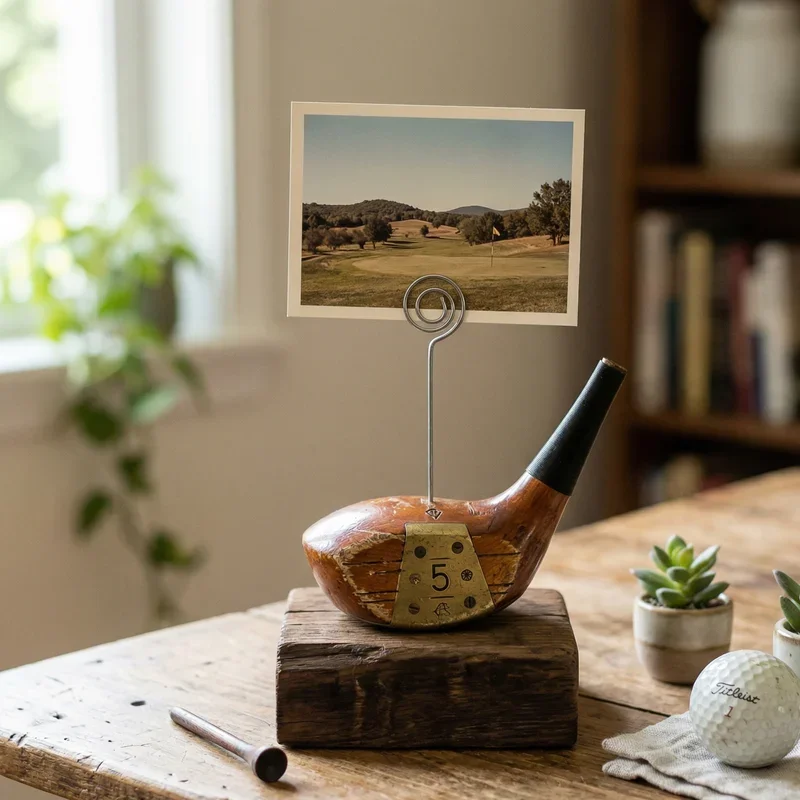
Create unique photo frames by attaching club heads to bases that support displayed images through sporting elements rather than traditional frame materials. Position club heads with faces angled to hold photos, postcards, or small artwork pieces that lean against the hitting surface visibly. The weighty metal base that club heads provide ensures stability that prevents displayed items from toppling during breezes or bumps. Vintage wooden heads add warmth while modern metal heads contribute contemporary character depending on display context preferences. Add small clips or grooves that secure photos more firmly than simple leaning allows for frequently moved displays. Group multiple head stands together for gallery effects that display photo collections through sporting themes consistently. Your photo stand transforms scoring equipment into memory display devices that honor both golf passion and captured moments.
7. Table Lamp Conversion
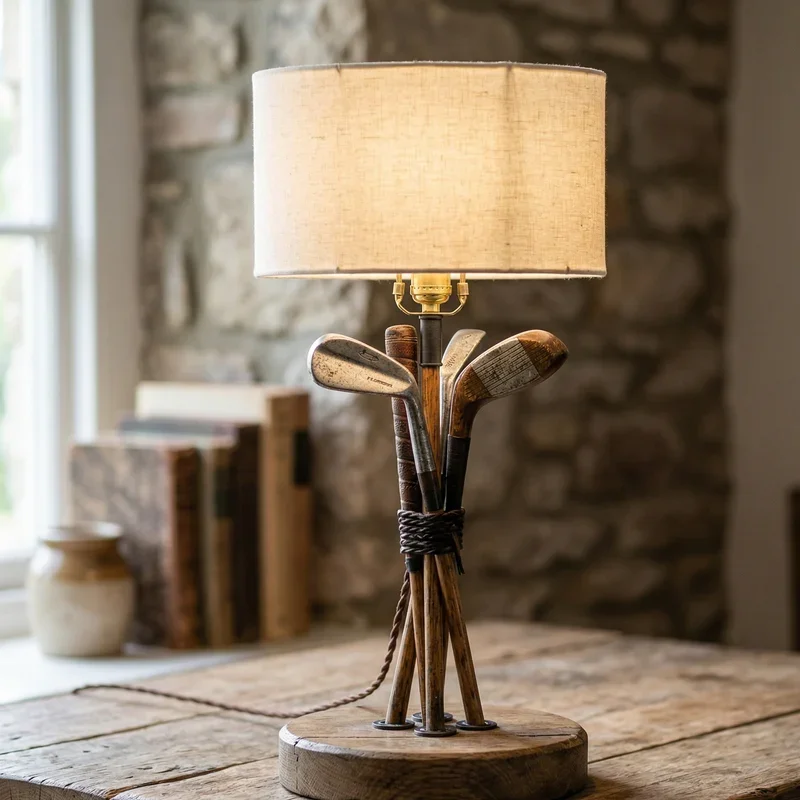
Illuminate rooms through lamp conversions that use golf club shafts as lamp bases bringing sporting character to functional lighting fixtures. Drill shafts to accommodate electrical wiring that runs internally from base to socket, then add lamp hardware that connects components properly. The length of standard shafts creates tall table lamps that provide excellent reading light from desk or end table positions. Club heads at bases add sculptural interest while providing weight that prevents tall lamps from tipping easily during use. Choose lampshades that complement the sporting theme through golf motifs, or select neutral shades that allow club elements to command attention alone. The project requires basic electrical skills that most DIYers possess, though professional assistance remains available for those uncertain about wiring safety. Your club lamp transforms retired equipment into functional lighting that illuminates while celebrating golf passion visually.
8. Outdoor Plant Stakes
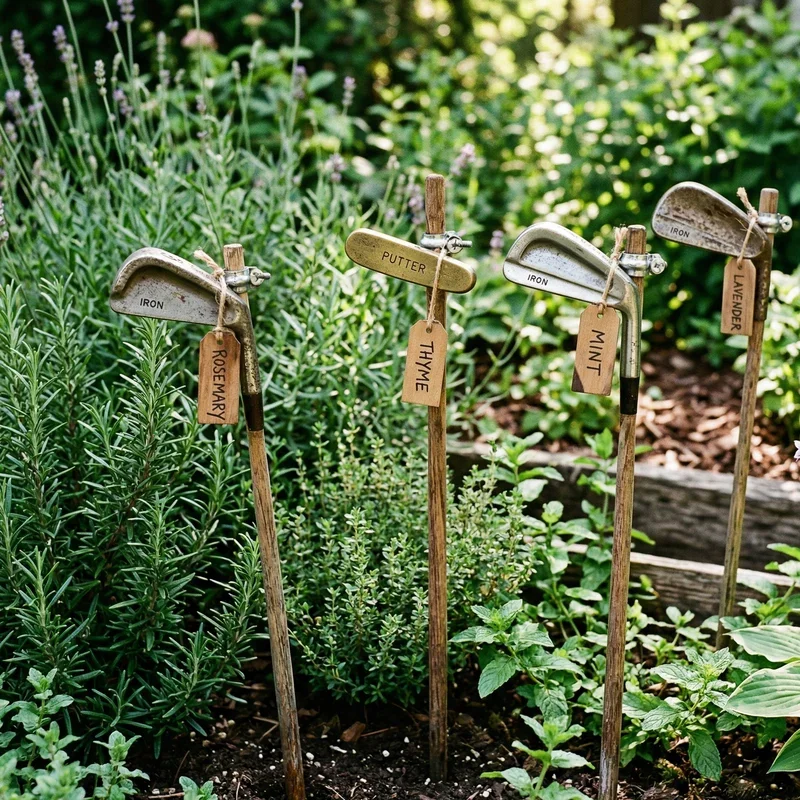
Support growing plants by repurposing club shafts as garden stakes that guide tomatoes, climbing flowers, and other vertical growers upward successfully. The durability of steel and graphite shafts exceeds wooden stakes that rot after single seasons in soil moisture conditions. Cut shafts to appropriate lengths for different plant heights, or leave full length for supporting the tallest vegetable garden climbers. Insert shafts deeply enough to resist wind forces that would topple lesser stakes supporting heavy plant loads throughout growing seasons. Club heads left attached become decorative toppers that add whimsy to vegetable gardens or flower beds where they support growing things. The smooth shaft surfaces allow ties to slide freely as plants grow, unlike rough wooden surfaces that sometimes bind and restrict growth. Your club stakes transform obsolete equipment into garden infrastructure that supports food production or flower displays reliably.
9. Fireplace Tool Set
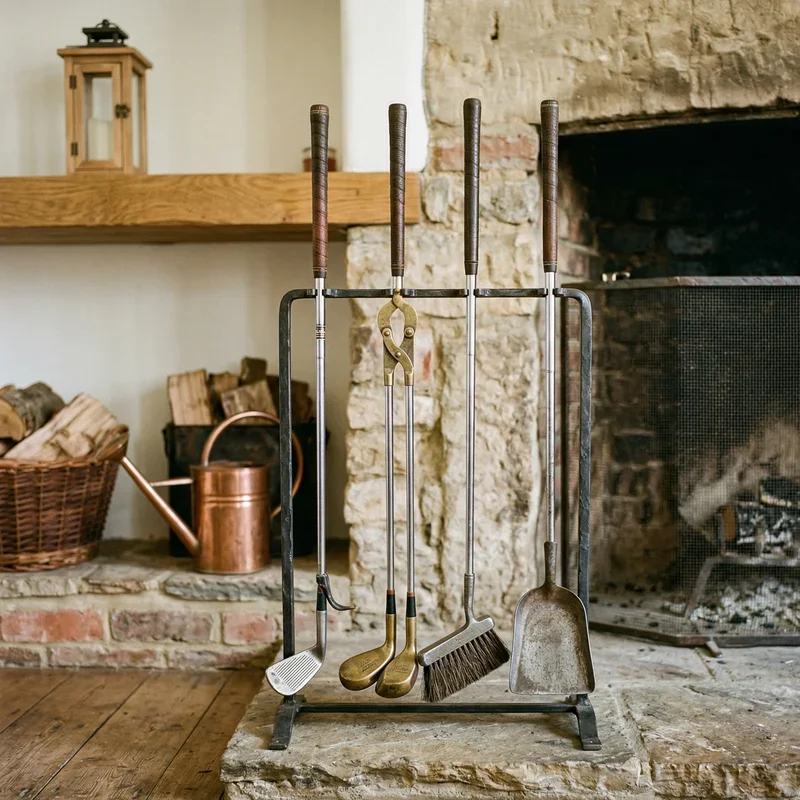
Forge sophisticated hearth accessories by converting clubs into fireplace pokers, log hooks, and ash tools that serve practical functions stylishly. The length of standard shafts provides perfect reach for manipulating logs and coals without approaching uncomfortably close to fire heat. Club heads become functional tool ends: drivers push logs, irons hook and lift, and wedges scrape ash effectively across various fireplace tasks. Modify head angles as needed for optimal functionality that stock configurations might not provide without adjustment for hearth purposes. Create coordinating stands from additional clubs that hold tools upright beside fireplaces when not actively in use. The heat-resistant properties of club materials suit fireplace proximity that some alternative materials cannot tolerate safely. Your club tools transform sporting equipment into hearth accessories that serve functional needs while celebrating golf heritage visually.
10. Clock Face Design
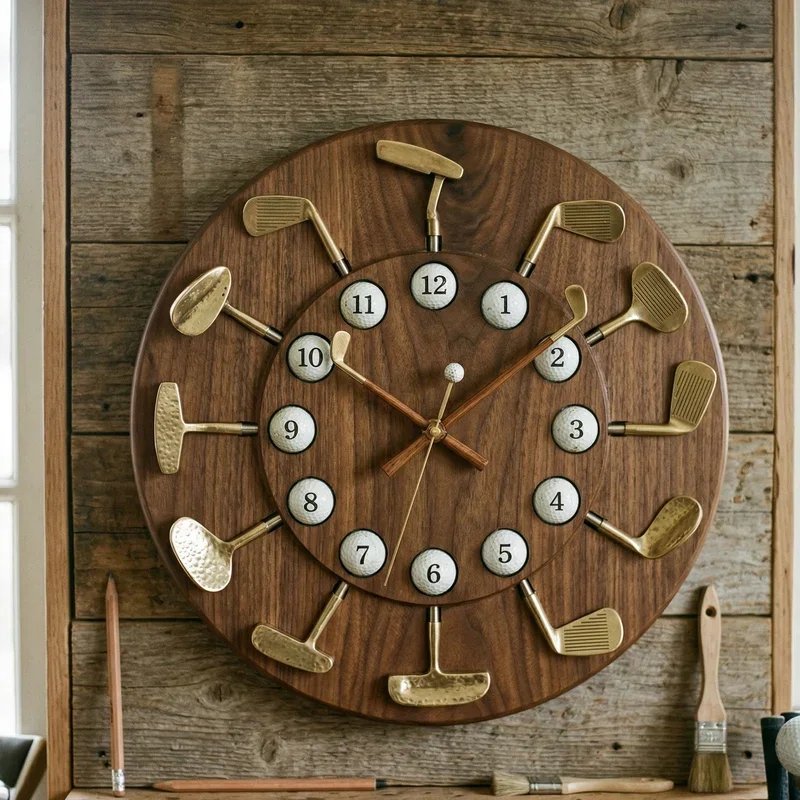
Mark time through wall clocks featuring club faces or arrangements that tell hours through sporting elements rather than traditional clock face designs. Mount a clock mechanism behind a club head face where the hitting surface becomes the clock face that hands rotate across continuously. Alternatively, arrange multiple clubs radiating from center points like sun rays, with hour positions marked by individual club heads around perimeters. The unique shapes create statement pieces that serve functional timekeeping while establishing sporting themes throughout rooms where they hang. Choose vintage clubs for nostalgic character or modern equipment for contemporary aesthetics that suit different interior design directions. Battery-operated clock mechanisms simplify construction by eliminating electrical wiring concerns that plug-in alternatives would require addressing. Your club clock transforms equipment into functional art that marks passing time through sporting themes.
11. Towel Bar Installation
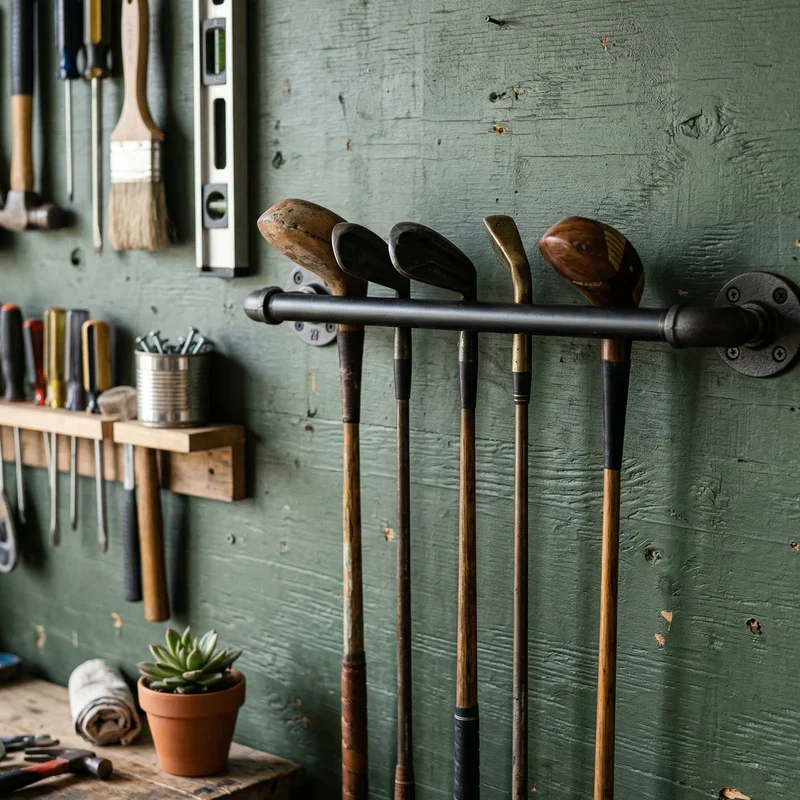
Mount club shafts horizontally to create bathroom towel bars or kitchen rack rails that serve everyday functions through sporting materials. The chrome plating on many steel shafts provides bathroom-ready finishes that resist moisture better than unfinished metal alternatives. Cut shafts to appropriate lengths for installation spaces, then mount using brackets that support weight when towels hang fully loaded. Position club heads at one or both ends for decorative accents that prevent towels from sliding off bar ends accidentally. The smooth shaft surfaces allow towels to slide freely when removing for use, unlike textured bars that sometimes grip fabric unnecessarily. Multiple parallel bars create ladder arrangements that accommodate several towels simultaneously within single installation footprints. Your club towel bar transforms retired equipment into bathroom hardware that serves daily needs while declaring sporting passions.
12. Bookend Set Creation
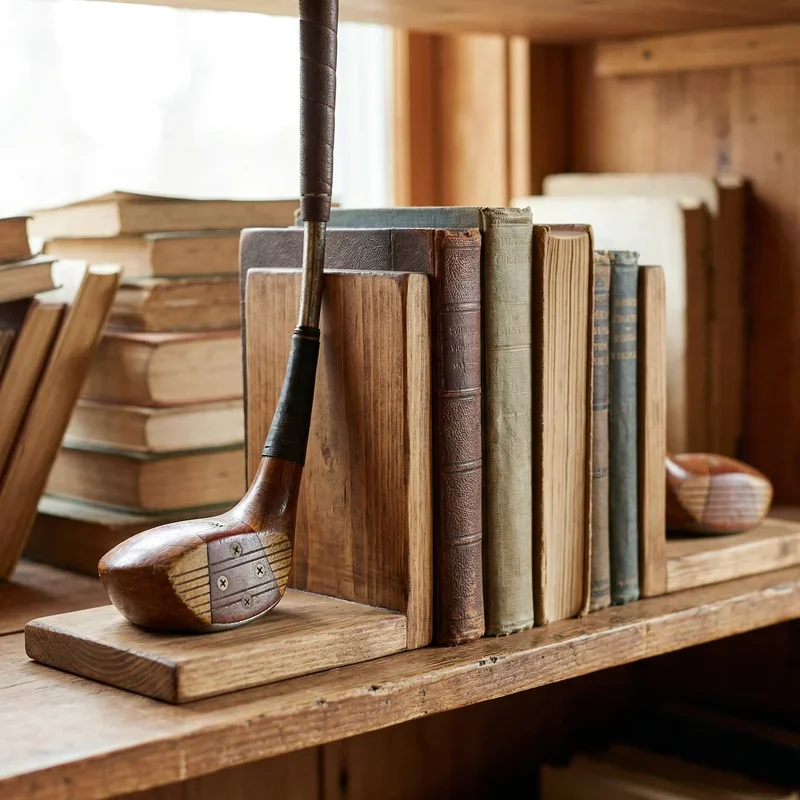
Anchor book collections by converting club heads into weighted bookends that prevent shelved volumes from toppling while adding sporting character to libraries. Remove heads from shafts, then attach them to flat bases that provide stable platforms preventing heads from rolling off shelf surfaces. The significant weight of metal club heads provides the mass needed to support substantial book collections without sliding under pressure. Position heads facing outward for sculptural presentations, or angle inward where they visually bracket books between sporting elements. Match head styles for coordinated pairs, or use intentionally mismatched heads that create eclectic character appealing to some decorating sensibilities. Felt bottoms protect shelf surfaces from scratches that bare metal bases might otherwise create during use or adjustment. Your club bookends transform hitting tools into literary supporters that honor both golf and reading passions simultaneously.
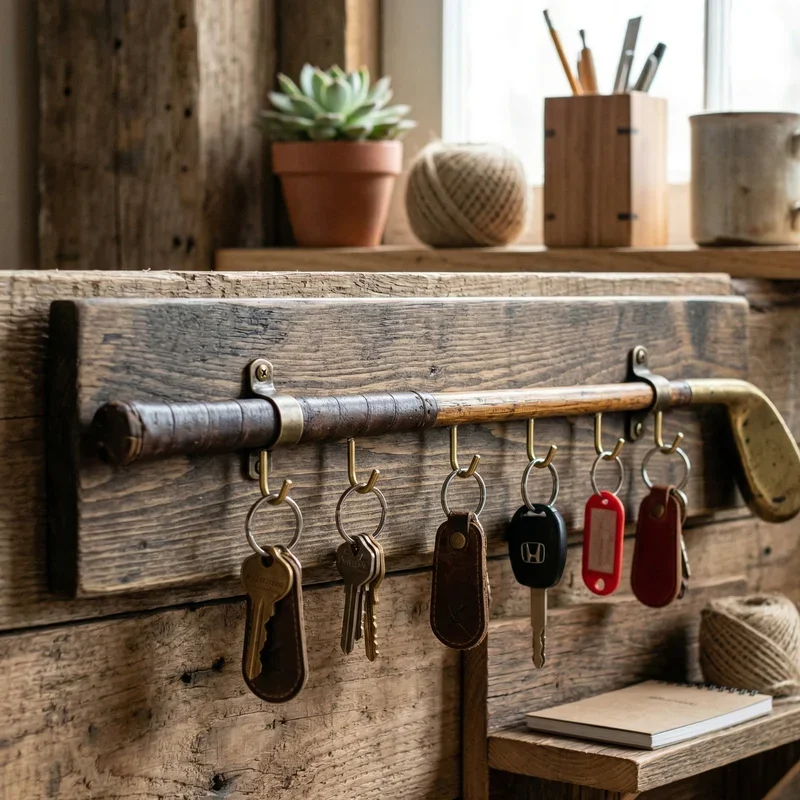
13. Jewelry and Key Holder
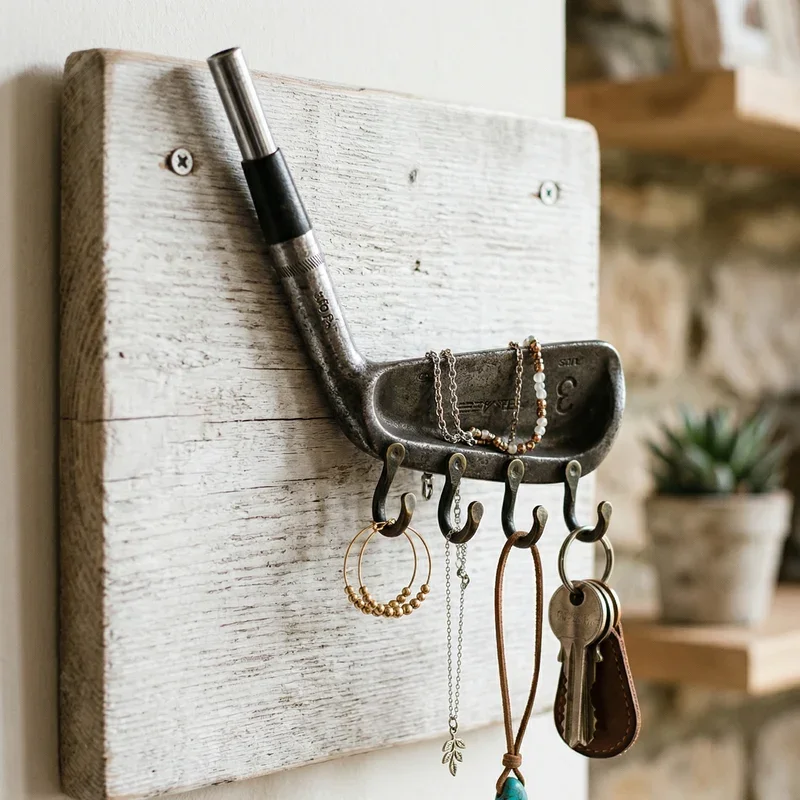
Organize small items by mounting club heads to boards where they serve as hooks for necklaces, bracelets, keys, and other frequently accessed accessories. The curved shapes of iron heads create natural hook formations that jewelry chains drape across without sliding off unexpectedly. Mount several heads across attractive backing boards that hang in entryways, bedrooms, or closets where accessory organization matters most. The weight of club heads provides substantial feel that flimsy commercial hooks lack entirely when handling daily use demands. Designate specific heads for specific items, creating organizational systems that family members recognize and follow consistently. The sporting character adds personality to utilitarian organization that generic hook systems cannot provide regardless of functional quality. Your club holder transforms equipment into accessory management systems that serve practical needs while expressing golf identity.
14. Putter Curtain Rod
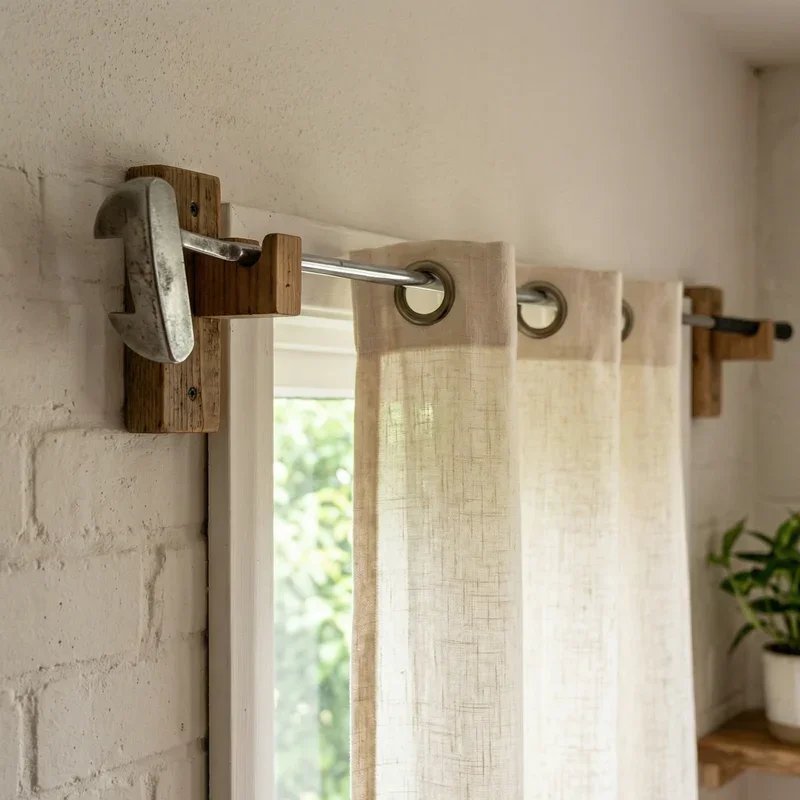
Span windows using putter shafts as curtain rods that support fabric panels through sporting materials rather than standard hardware store options. The straight shafts that putters feature suit curtain rod applications perfectly, sliding through rod pockets smoothly across their lengths. Mount using standard curtain rod brackets sized appropriately for shaft diameters that vary depending on putter age and style. Position putter heads at visible ends where they become decorative finials that standard rods require purchasing separately anyway. The metal construction supports heavier curtain fabrics that lightweight rods might sag beneath over extended hanging periods. Consider using matched putters for symmetrical installations, or mix styles for deliberately eclectic presentations that celebrate club variety. Your putter rod transforms putting equipment into window treatment hardware that serves functional needs through sporting character.
15. Memorial Shadow Box
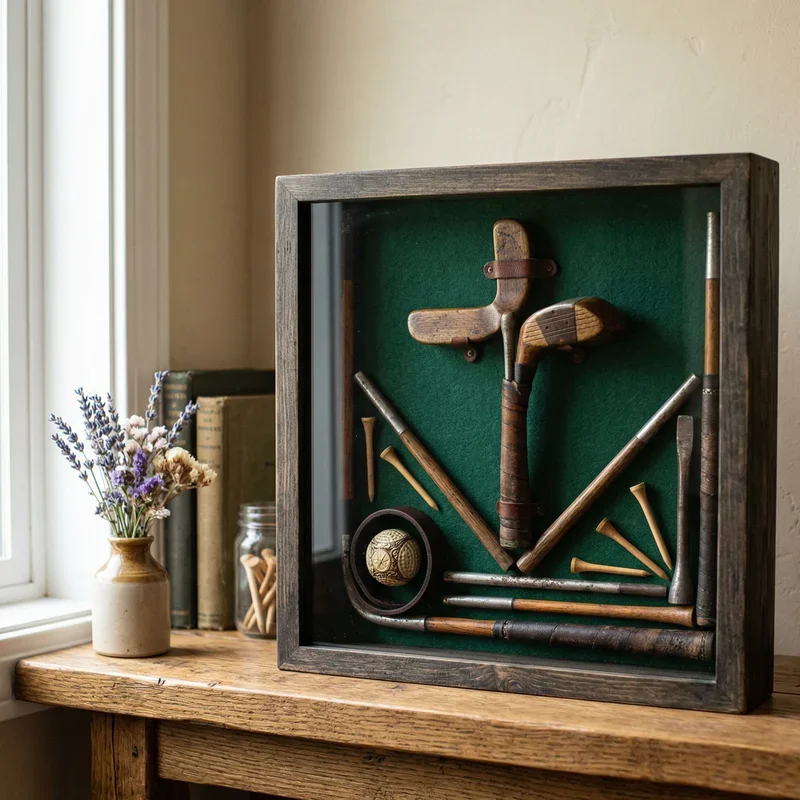
Honor memorable rounds, achievements, or beloved golfers by creating shadow box displays incorporating clubs alongside photographs, scorecards, and memorabilia. Arrange significant items within deep frames that accommodate club lengths while protecting contents behind glass from dust and damage. Include clubs used during special rounds, hole-in-one accomplishments, or tournament victories that deserve permanent commemoration within home displays. Add photographs, course maps, flags, and written descriptions that provide context for displayed equipment and explain their significance. The preservation aspect suits clubs carrying emotional importance too great for repurposing into functional items that might suffer wear. Professional framing services can create custom boxes sized for specific collections, though DIY construction remains possible for those with woodworking capabilities. Your shadow box transforms equipment into memorial displays that honor golf memories deserving permanent preservation and celebration.
Conclusion
Retired golf clubs deserve better than forgotten corners where their sporting service goes unrecognized and their material potential goes unrealized entirely. These fifteen ideas demonstrate remarkable versatility within golf club repurposing, from functional coat racks to memorial shadow boxes that celebrate achievements permanently. The quality materials, unique shapes, and sporting associations that clubs carry make them ideal candidates for creative transformation into items that golfers and non-golfers both appreciate. Consider the emotional significance of specific clubs when selecting project directions that honor or utilize equipment appropriately based on personal attachments. Start with simpler projects like plant stakes or drawer pulls before advancing to complex conversions requiring specialized skills or tools. Your repurposed clubs extend equipment lifecycles while creating conversation pieces that celebrate golf passion throughout living spaces.
Frequently Asked Questions
Q1: Where can I find old golf clubs for repurposing craft projects?
A: Thrift stores, garage sales, golf course lost-and-found, and online marketplaces offer affordable old club options.
Q2: What tools do I need for most golf club craft projects?
A: Basic tools include hacksaw, drill, sandpaper, and appropriate fasteners for most repurposing projects listed.
Q3: Can I repurpose graphite shafts or only steel ones?
A: Both materials work, though graphite requires careful cutting techniques to prevent splintering during modification.
Q4: How do I remove club heads from shafts safely?
A: Apply heat to ferrules, then twist firmly, or use shaft pullers available at golf repair shops.
Q5: Are vintage clubs more valuable for repurposing or selling to collectors?
A: Research values before repurposing since some vintage clubs command significant collector prices worth preserving.
Stay up to date with our latest ideas!