10 Home Upgrades for December 2025: Energy Savings and Comfort
Planning home improvements? These 10 upgrades deliver real value before year-end. From energy efficiency to space-saving solutions.

Most homeowners waste money on upgrades that don't deliver. You paint a room and realize nothing changed. You buy trendy furniture that doesn't fit your actual life. You ignore your HVAC until it breaks in the middle of winter.
This December, change that approach. These 10 upgrades work because they solve real problems. Lower energy bills. Better comfort. Smarter space use. Real value that sticks around.
December is when you make home improvement decisions for 2026. You've had a year to notice what bothers you. Your heating bills are highest now, so efficiency upgrades feel urgent. You're thinking about entertaining guests and how your space actually functions.
Here's what works.
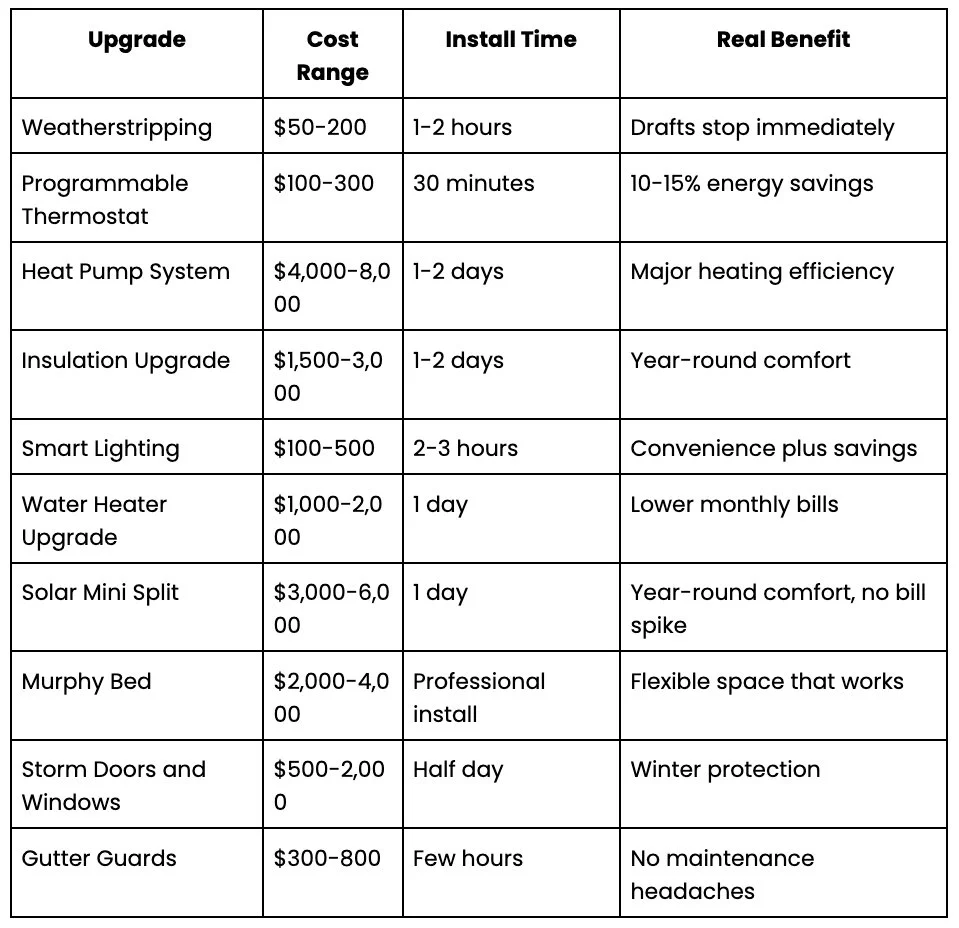
10 UPGRADES AT A GLANCE
#1 – WEATHERSTRIPPING: THE CHEAP FIX THAT WORKS
Stop heating the neighborhood. Weatherstripping seals gaps around doors and windows where cold air sneaks in. Takes 2 hours. Costs $50-200. You'll feel the difference immediately.
Most homes leak air around every door and window. Cold air comes in. Warm air goes out. Your heating system works overtime. Weatherstripping stops that.
This is the upgrade you do first because it's fast, cheap, and delivers results you notice on day one.
#2 – PROGRAMMABLE THERMOSTAT: AUTOMATE YOUR COMFORT
A smart thermostat learns your schedule and adjusts the temperature automatically. You're sleeping? It lowers the heat. You're at work? Temperature drops further. You're heading home? It warms up before you arrive.
You save 10-15% on heating costs without doing anything. The installation takes 30 minutes. Payoff starts immediately.
#3 – INSULATION UPGRADE: THE FOUNDATION OF HOME COMFORT
Most homes are underinsulated. People focus on windows and doors but ignore the attic and walls where most heat actually escapes.
Add insulation to your attic, walls, or basement, and your heating system works less hard. Your house stays warmer in winter, cooler in summer. One-time cost. Lifetime benefit.
#4 – SMART LIGHTING: CONTROL AND SAVINGS
LED smart bulbs give you remote control plus energy savings. Dim the lights from your phone. Set schedules. Reduce energy use by 75% compared to old incandescent bulbs. Install gradually as bulbs burn out or all at once.
Your living room gets warmer evening light. Your bedroom gets cooler morning light. You're never fumbling for a light switch again.
#5 – WATER HEATER UPGRADE: HOT WATER WITHOUT WASTE
Old water heaters run 24/7, keeping water hot even when nobody's home. New models with better insulation and efficiency can significantly reduce your water-heating costs.
This is a replacement you'll do anyway. Do it now with an efficient model and start saving immediately.
#6 – HEAT PUMP SYSTEM: THE HVAC REVOLUTION
Here's what most homeowners miss: heat pump for sale options are now affordable and efficient.
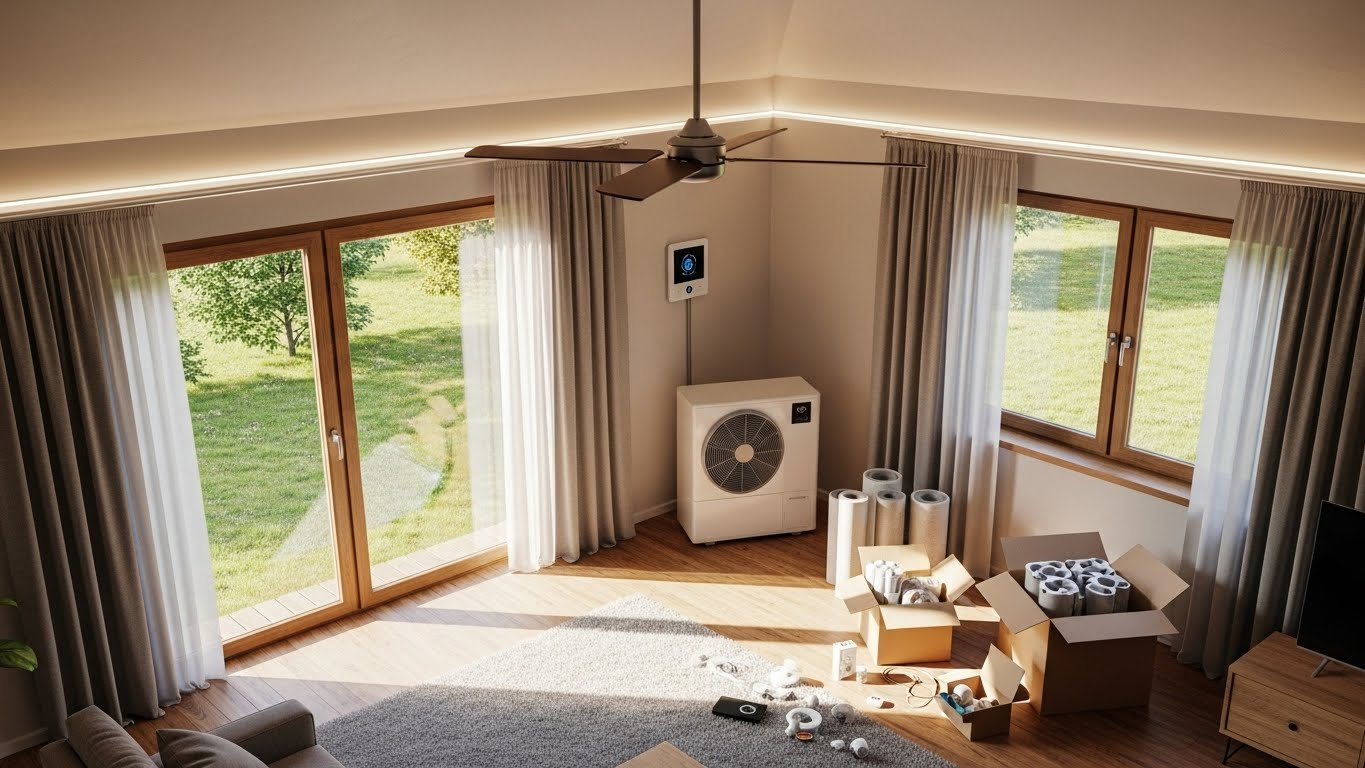
Heat pumps work in both heating and cooling modes. They move warm air instead of generating it, which uses far less energy. They're more efficient than traditional furnaces and air conditioners combined.
Installing a heat pump system costs $4,000-8,000 but cuts your heating and cooling costs by 30-50%. This is the upgrade that pays for itself through energy savings. After the payoff period, you're just collecting savings.
#7 – SOLAR-POWERED MINI SPLIT: YEAR-ROUND COMFORT WITHOUT THE BILL
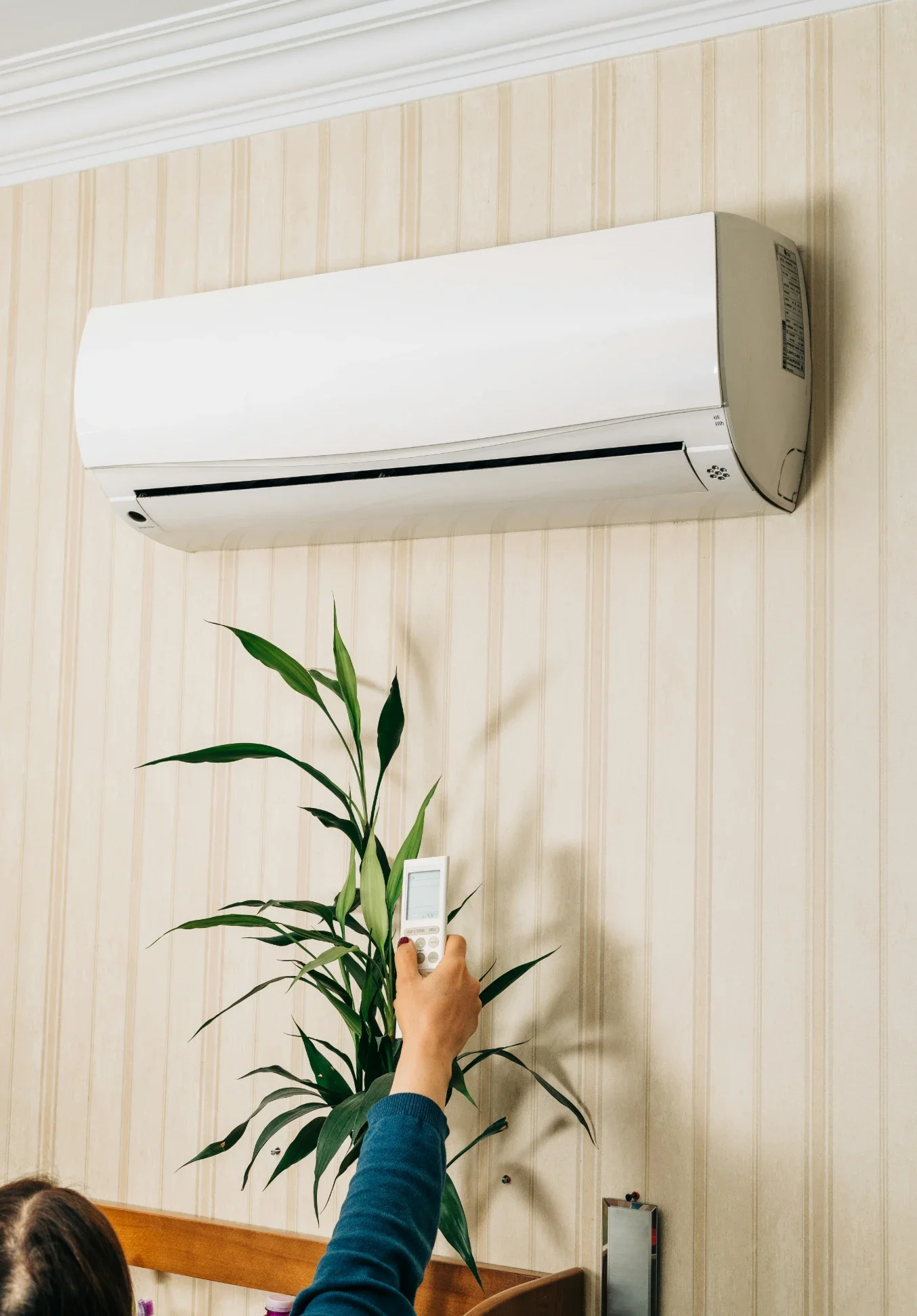
Solar-powered mini split systems are the future of home comfort. They heat and cool specific zones without the massive energy drain of traditional HVAC.
The solar component means your power comes from the sun. Your energy bills drop. You get zone control; heat the bedroom, cool the living room, leave the basement alone. No need to heat or cool your entire house when you're only using half of it.
The installation takes a day. Costs $3,000-6,000. Savings start immediately and compound over the years.
This is the upgrade that transforms your home. You go from worrying about energy bills to barely thinking about them.
#8 – MURPHY BED: SPACE THAT WORKS HARDER
Your guest room sits empty 50 weeks a year. You've got a furniture graveyard that you never use.
A Monarch Murphy Bed transforms your space into a flexible room that works for your actual life.
Murphy beds fold into the wall, giving you day space. Lower it down, and you've got a full bed. Modern designs look like real furniture, not a novelty. You get a home office, workout room, or living space that actually gets used.
When guests come, you fold down the bed. When they leave, you fold it back up. Your space does double duty.
#9 – STORM DOORS AND WINDOWS: WINTER PROTECTION
Single-pane windows leak cold air. Storm doors and windows create a buffer zone that stops drafts and condensation. You'll notice the difference on the first cold day.
Condensation disappears. Cold spots around windows vanish. Your heating system doesn't work as hard. Costs $500-2,000 depending on how many you install.
#10 – GUTTER GUARDS: SET IT AND FORGET IT
Gutter maintenance is the upgrade nobody thinks about until leaves clog their gutters and water damages the foundation. You're standing on a ladder in October, pulling out leaves, asking yourself why you didn't fix this.
Gutter guards prevent debris from blocking gutters. The installation takes a few hours. Cost is $300-800. The benefit is zero maintenance and no water damage to your foundation.
Why December Is The Righ Time
December is when you make home improvement decisions for 2026. You've had a year to notice what bothers you. Your heating bills are highest now, so efficiency upgrades feel urgent. You're thinking about entertaining and space needs.
More important, Many of these upgrades qualify for tax credits or energy rebates. Check your local programs before year-end. Money that's sitting on the table in December disappears in January.
Do It Yourself Or Hire A Professional
Some upgrades you handle yourself. Others need a pro.
DIY-friendly:
Weatherstripping (seriously easy)
Smart lighting (just swap the bulbs)
Programmable thermostat (follow the instructions)
Gutter guards (if you're comfortable on a ladder)
Hire a professional:
Heat pump installation (complex, safety matters)
Solar mini split (electrical work required)
Insulation upgrade (needs proper technique)
Water heater replacement (gas/electric connections)
Murphy bed installation (precision matters for function)
Preventative maintenance done right costs $1,000-1,500 in December. Ignored maintenance costs $5,000-10,000 in emergency repairs in February.
Questions Homeowners Ask
Which upgrade should I do first?
Weatherstripping and thermostat first; quick, cheap, immediate impact. Then move to bigger projects like heat pump or a solar mini split based on your budget.
Do energy-efficient upgrades really pay for themselves?
Yes. Heat pumps and solar mini splits pay for themselves in 5-10 years through energy savings. After that, it's pure savings. And you're more comfortable the entire time.
Can I do these gradually or should I do them all at once?
Gradually is fine. Start with quick wins. Move to bigger projects as budget allows. Each upgrade compounds the benefits of the others.
What's the real ROI on a Murphy bed?
Not in energy savings, but in space. You gain usable square footage. If you work from home or entertain, that flexibility is valuable. Plus, modern Murphy beds look good; they're not an ugly fold-out anymore.
Should I wait until spring or do this now?
Do it now. Energy rebates expire at year-end. You'll benefit from upgrades all winter while they're paying for themselves. And winter is when you notice heating problems most.
Your Home Can Work Better
These 10 upgrades work because they solve real problems. Lower energy bills. Better comfort. Smarter space use. December is when you commit to fixing what's been bothering you all year.
Start with the easy wins. Weatherstripping and a programmable thermostat take an afternoon and cut your heating bill. Build toward the bigger investments. By spring 2026, your home will work better, feel more comfortable, and cost less to operate.
That's not just an upgrade. That's a better home.
Stay up to date with our latest ideas!